


Spring Boot now runs somewhere between 58% and 72% of active Java projects. That number makes sense it's faster to set up, easier to deploy, and lets small teams ship without a dedicated DevOps engineer. But that speed comes with tradeoffs. Enterprise systems that need fine-grained control over their servlet container, legacy integrations, or highly customized security configurations keep reaching for Spring Framework ,backend frameworks and for good reason. This breakdown covers exactly where each one wins, with real configuration examples so you can make the call for your specific project.
Understanding Spring Framework
Spring Framework has been the backbone of enterprise Java development since 2003. It gives developers full control over how beans are wired, how security is configured, and how the application context is managed none of which is abstracted away. That control is exactly why large financial institutions, government platforms, and legacy enterprise systems still run on it. According to recent data, 7,197 live websites currently use Spring not because it's the easiest option, but because it's the most configurable one.
With seamless integration into the Oracle Java Java Development Kit and modern Java runtime, the Java Spring Framework remains one of the most reliable backend frameworks, especially for projects involving REST APIs and microservices in Java. According to recent data, there are 7,197 live websites currently using Spring, which highlights its widespread adoption among businesses and developers globally.
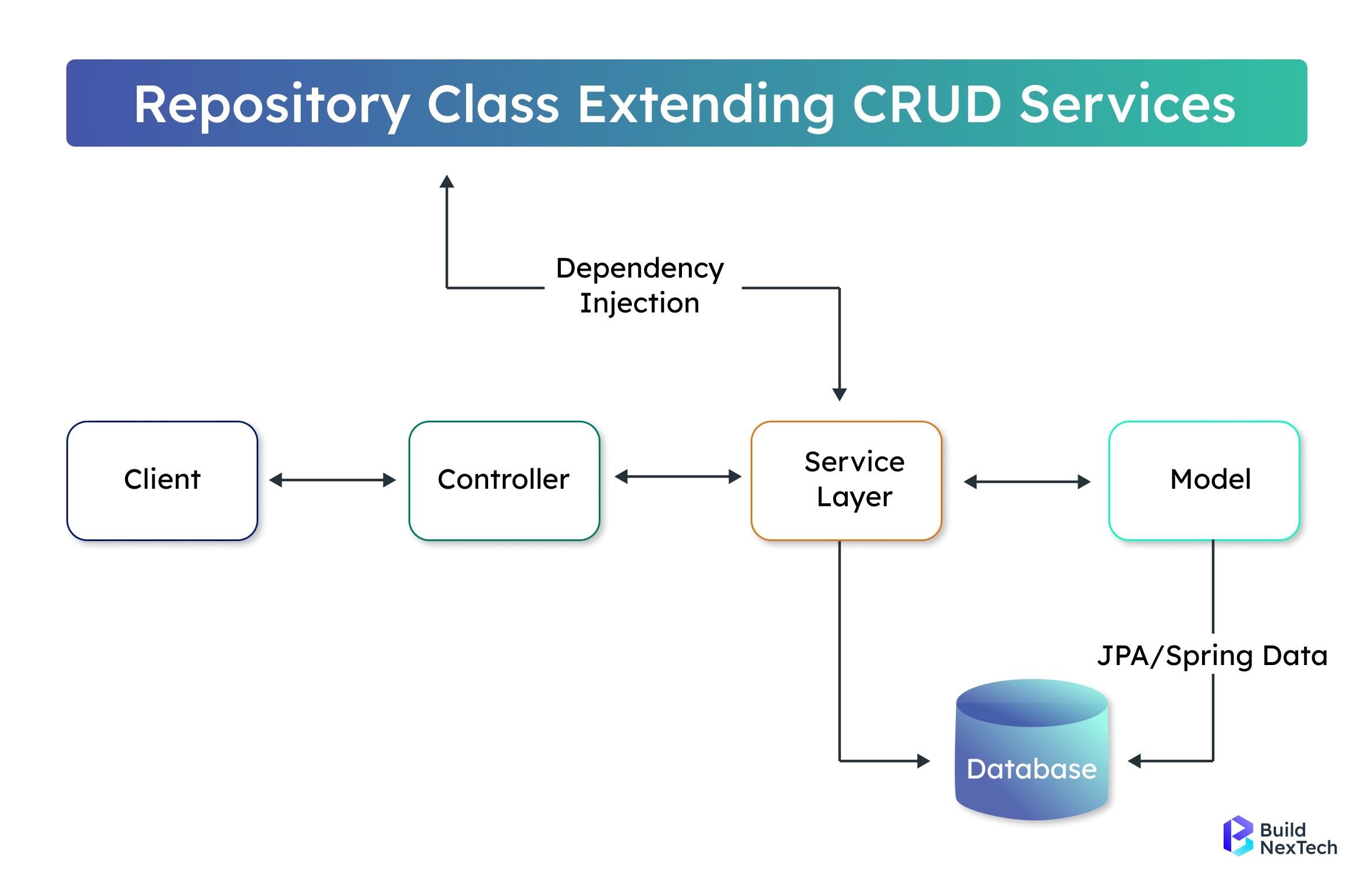
The Spring Framework architecture employs a layered approach, enhancing flexibility and scalability. Its Core Container manages beans and contexts, the data access layer supports JDBC, ORM, and transactions, while the web layer powers both Spring MVC and WebFlux. Add-ons like Spring Security, Spring Cloud, and Spring Batch make it suitable for building modern REST API services and distributed Java microservices.
- Dependency Injection (DI): Objects are wired through the IoC container rather than instantiated directly — keeping classes loosely coupled and unit-testable without mocking infrastructure.
- Aspect-Oriented Programming (AOP): Separates concerns such as security, logging, and transactions.
- Spring MVC and WebFlux: MVC handles traditional synchronous request processing; WebFlux adds reactive, non-blocking support for high-concurrency workloads.
- Spring Cloud integration: Extends the core framework with service discovery (Eureka), config management, API gateways, and circuit breakers for distributed architectures.
- Modular by design: You include only the modules your project needs — no mandatory dependencies pulled in automatically.
Understanding Spring Boot
Spring Boot strips out the manual configuration that makes Spring Framework slow to start. Instead of writing XML or Java config classes to wire up your beans, Spring Boot reads your dependencies and configures them automatically. An embedded Tomcat or Jetty server ships inside the JAR — so deployment is a single command rather than a WAR file dropped into a server. For most teams starting a new project in 2025, Spring Boot is the default starting point unless there's a specific reason to need more control.
With tools like Spring Boot Initializr and integration with the Oracle Java JDK and modern Java runtime, Spring Boot allows faster development of production-ready applications. Recent industry reports show that Spring Boot usage ranges between 58% and 72%, indicating its dominance in modern microservices development and Java Spring Boot microservices projects.
Key Features of Spring Boot:
- Auto-Configuration: In Spring Boot microservices, required components are set up automatically from project dependencies, reducing the need for manual setup.
- Spring Boot Starter Dependencies: Provides pre-configured libraries for building REST API services and database integration effortlessly.
- Spring Boot Actuator: Offers monitoring and management endpoints for real-time insights into application health and microservice management.
- Embedded Servers: Enable applications to run with embedded Tomcat, Jetty, or Undertow, eliminating the need for external servers.
- Spring Boot Initializr: Quickly generates ready-to-use Spring Boot Java project structures for efficient Java software development.
Core Differences Between Spring and Spring Boot Frameworks
The Java Spring Framework and Spring Boot are both widely used Java web frameworks for backend development and microservices architecture, but they are designed for different needs. While the Spring Java framework provides full control and flexibility, making it ideal for enterprise-grade applications and complex microservices patterns, Spring Boot focuses on simplicity, rapid setup, and built-in tools for cloud-native development and server-client communication.
To help developers and businesses make informed choices, here’s a detailed comparison of the two frameworks across the most important aspects:
Comparing Developer Experience and Productivity
Deciding between Spring Framework and Spring Boot often comes down to a developer’s skill set and workflow efficiency. Both frameworks are widely used for microservices architecture, REST API development, and enterprise-grade applications, but they differ in how developers configure, deploy, and iterate on projects. Below, we explore these differences with practical examples and explanations.
Configuration and Setup in Real Projects
Spring Framework
Developers working with the Java Spring Framework must manually configure beans, dependencies, and the application context using XML or Java annotations. While this gives full control over microservices in Java and distributed systems, it can increase setup time and the potential for errors.
// Java-based Spring Configuration
@Configuration
public class AppConfig {
   @Bean
   public OrderService orderService() {
        return new OrderService();
   }
}
Spring Boot
It simplifies configuration by offering auto-configuration and starter dependencies. Using Spring Boot Initializer, developers can quickly scaffold projects with minimal setup. This approach not only improves runtime performance but also allows teams to focus on business logic rather than boilerplate code.
@SpringBootApplication
public class DemoApp {
   public static void main(String[] args) {
       SpringApplication.run(DemoApp.class, args);
   }
}
With Spring Boot, new team members can start contributing faster, making it ideal for cloud-native development projects or enterprise application development in global teams.
Deployment and Runtime Environment Explained
Spring Framework
Traditionally, Spring projects require external servers like Tomcat or Jetty for deployment. Developers must manually configure WAR files and ensure compatibility with the Java runtime. While flexible, this approach can slow down deployment cycles.
<!-- web.xml for deploying Spring application on Tomcat -->
<web-app>
   <servlet>
       <servlet-name>dispatcher</servlet-name>
     <servlet-class>org.springframework.web.servlet.DispatcherServlet</servlet-class>
       <load-on-startup>1</load-on-startup>
   </servlet>
</web-app>
Spring Boot
Spring Boot applications run as standalone JARs with embedded servers, making deployment faster and simpler. The spring boot latest version allows monitoring of health, metrics, and microservice management, which is essential for microservice architectures and backend frameworks in production.
Unlike traditional Spring, Spring Boot does not require WAR files for deployment, further reducing setup and maintenance efforts.
Spring Boot’s embedded servers and built-in monitoring reduce operational overhead, making it ideal for cloud deployment and distributed systems where rapid iteration and scaling are necessary.
Improving Development Speed and Productivity
Spring Framework
While powerful, Spring’s manual setup can slow down development. Tasks such as JWT Authentication, REST API creation, or microservice patterns require careful configuration,
@EnableWebSecurity
public class SecurityConfig extends WebSecurityConfigurerAdapter {
    @Override
    protected void configure(HttpSecurity http) throws Exception {
        http.csrf().disable()
            .authorizeRequests()
            .antMatchers("/login").permitAll()
            .anyRequest().authenticated()
            .and()
            .addFilter(new JwtAuthenticationFilter(authenticationManager()));
    }
}
Spring Boot
Spring Boot reduces boilerplate and speeds up development with pre-configured defaults. Features like Spring Data, Spring Integration, and Spring AI allow developers to focus on building microservice applications rather than repetitive setup.
Additionally, Lombok simplifies model creation by removing the need for manual getters, setters, and constructors through annotations such as @Data, @Builder, and @AllArgsConstructor.
// User Entity with Lombok annotations
import lombok.Data;
import lombok.Builder;
import lombok.AllArgsConstructor;
import lombok.NoArgsConstructor;

@Data
@Builder
@AllArgsConstructor
@NoArgsConstructor
public class User {
    private Long id;
    private String name;
    private String email;
}
With Spring Boot, teams achieve higher development speed, better type safety, and faster prototyping. It’s especially beneficial for projects using cloud-native support, frontend frameworks, or complex microservices in Java, improving overall developer experience and productivity.
Best Use Cases for Each Framework
Selecting the right framework depends on your project’s Java application development requirements, team expertise, and deployment strategy. Both Spring Framework and Spring Boot are widely used in the Java ecosystem for microservices in Java, REST API development, and enterprise-grade applications, but each has scenarios where it truly shines.
When to Choose the Spring Framework
The Java Spring Framework is ideal for projects that require full control, enterprise-grade customization, and legacy system integration.
Use Cases:
- Enterprise-grade applications: Large-scale systems benefit from ORM tools, modular architecture, and object mapping for complex data workflows on the Java Platform.
- Legacy system integration: Works seamlessly with Java Servlets, Java Server Pages, and existing Java Database Connectivity layers.
- Highly customized microservices: Projects requiring microservices patterns or specific distributed systems configurations.
- Fine-grained configuration control: Developers who want to manually configure Inversion of Control, data binding APIs, and runtime performance.
- UI-heavy applications: Supports integration with UI components for enterprise dashboards or client-facing platforms in a Java web framework.
When to Choose Spring Boot
Spring Boot is best for projects that prioritize rapid development, productivity, and microservices deployment.
Use Cases:
- Microservices applications: Quickly create Java microservices with built-in monitoring through Spring Boot Actuator.
- REST API development: Fast prototyping and scalable API services for startups and cloud-first applications.
- Cloud-native projects: Ideal for cloud deployment, embedded servers, and in-memory database usage.
- Startup or MVP projects: Small teams can reduce setup time using Spring Boot Initializr and starter dependencies.
- Developer productivity and safety: Auto-configuration, dev tools, and type safety reduce errors and accelerate development.
- Integration with modern services: Compatible with Spring AI, Spring Data, and Spring Integration to build enterprise-ready applications.
Top Advantages of Using Spring Boot
Spring Boot is a widely adopted Java framework that streamlines application development while enabling faster deployment of microservices. Its robust features make it ideal for global teams, startups, and large enterprises leveraging modern cloud providers.
- Auto-Configuration: Spring Boot reads your class path dependencies and configures beans automatically. A project that would take 2–3 hours of Spring XML setup is running in under 10 minutes.
- Embedded Servers: Tomcat or Jetty ships inside the JAR. No external server setup, no WAR deployment, no compatibility checks — one command runs the app anywhere Java is installed.
- Spring Initialize: Generates a ready-to-run project structure at start.spring.io with your chosen dependencies, packaging, and Java version in under a minute.
- Spring Boot Actuator: Exposes health checks, memory usage, thread dumps, and custom metrics via HTTP endpoints — no additional monitoring library required.
- Microservices-ready: Works natively with Spring Cloud for service discovery, distributed config, and API gateway patterns without any additional wiring.
- Support for Microservice Architecture
Optimized for microservice architecture, MVC architecture, and Java web frameworks, enabling scalable, modular, and maintainable enterprise applications for modern Java programming language projects.
Still Not Sure Which One to Use?
Here's the short version. Pick Spring Boot if you're starting a new project, building microservices for the cloud,mobile app development or want your team productive from day one. Pick Spring Framework if you're integrating with an existing enterprise system that has specific server requirements, need manual control over your security or bean lifecycle, or are working in an organisation where the Spring Framework stack is already established and understood. Most new projects in 2025 default to Spring Boot — Spring Framework stays relevant specifically because some problems need the control it provides, not because it's easier.
Conclusion: Choosing the Right Approach in 2025
Choosing between the Spring Framework and Spring Boot depends on your project requirements and team expertise. The Java Spring Framework is best for enterprise-grade applications, legacy system integration, and projects needing fine-grained control over microservices architecture and REST API development. Spring Boot simplifies configuration, accelerates development, and is ideal for cloud-native development and scalable microservices in Java projects.
For productivity-focused teams, Spring Boot offers built-in tools like Spring Boot Actuator, embedded servers, and Spring Initializr, enabling faster deployment and streamlined Java application development. Both frameworks provide robust solutions, but the choice depends on whether your priority is flexibility or rapid implementation for local and global projects.
Choosing between Spring Framework and Spring Boot is straightforward once you know your constraints — team size, custom Java development services,environment, legacy dependencies, and how much configuration control you actually need. If you're working through that decision for a live project right now, we've built on both sides of it at BuildNexTech. Book a free 30-minute call → and we'll help you map the right framework to your actual architecture before you commit to either.
People Also Ask

What is the difference between Gradle and Maven?
Gradle is a flexible build automation tool with faster incremental builds, while Maven relies on XML configurations and predefined lifecycle for project management.
Why use Spring Boot for REST API?
Spring Boot simplifies REST API development with auto-configuration, embedded servers, and built-in tools like Spring Boot Actuator for monitoring.
What is the life cycle of a Spring bean?
A Spring bean’s life cycle includes instantiation, dependency injection, initialization, usage, and destruction managed by the Spring container.
What is Thymeleaf?
Thymeleaf is a modern server-side Java template engine used to build dynamic web pages in Spring applications.
Is Spring Boot better than Go?
Spring Boot excels in Java-based microservices and enterprise applications, whereas Go is lightweight and ideal for high-performance, concurrent systems; the choice depends on project needs.


.webp)
.webp)
.webp)

.webp)
.webp)