

From lightweight no-code automation to enterprise-grade iPaaS - here's an honest look at what's worth your time and budget, and why the choice depends far more on your architecture than your vendor's slide deck.
Pick up almost any list of "best API integration tools", and you'll notice a pattern: every platform is excellent, every category is "growing rapidly", and none of it tells you whether to use Zapier or MuleSoft for your specific situation. This guide tries to be different - practical, opinionated where it counts, and honest about where each tool falls short.
The wrong integration platform doesn't just waste budget - it creates maintenance debt your engineers will still be untangling two years later.
Understanding API Integration
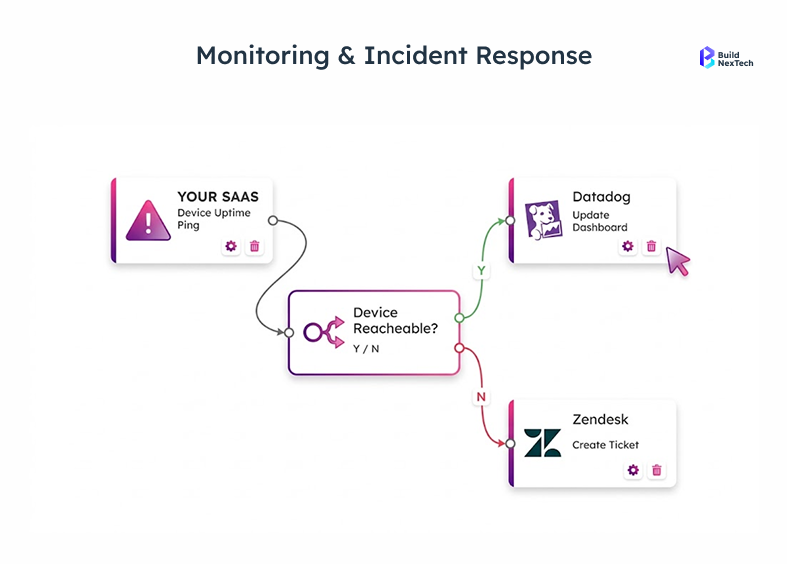
API integrations use application programming interfaces (APIs) to automate tasks, sync databases, or trigger functions across platforms without manual input. At its core, API integration is just two systems agreeing to talk to each other on a schedule or in response to events. A Stripe webhook fires when a payment succeeds; your CRM updates the customer record; your support platform creates a ticket if the payment failed. Simple in concept, messy in execution at scale.
What's changed in the last few years isn't the concept - it's the volume. The average enterprise now runs over 200 SaaS applications. Each one has its own API quirks, rate limits, authentication flows, and schema changes that arrive with zero warning.
Worth knowing
The integration market broadly splits into three categories that serve very different needs: iPaaS platforms for API management gateways for governing APIs you publish, and data integration platforms for moving large volumes between data stores. Many buyers conflate these - buying a data pipeline tool when they need a workflow orchestrator, or vice versa.
For example, a company may integrate its CRM, billing system, marketing automation tools, and analytics platforms. Through API orchestration and workflow automation, these systems exchange data continuously without manual effort.
Without integration tools, companies often struggle with fragmented data models and disconnected platforms. Modern Integration Platform as a Service (iPaaS) solutions eliminate these issues by providing centralised integration infrastructure.
How does API integration benefit businesses?
The most common integration wins are unglamorous - CRM and billing staying in sync, inventory counts not requiring overnight batch jobs, and support tickets auto-created from payment failures. A mid-market SaaS company that integrates its billing platform and support desk typically eliminates 15–20 hours of manual reconciliation per week. The value isn't the technology; it's the hours recovered.
API Integration Tool Example
When a customer places an order on a Shopify storefront, teams without integration must handle the process manually. An operations staff member copies the order details into the accounting system, emails a pick list to the warehouse, updates inventory in a spreadsheet, and later pastes the tracking number into the support platform. This manual workflow is time-consuming, prone to errors at every handoff, and difficult to scale as order volumes increase beyond what one person can manage in a day.
With API integration, these steps are automated. Orders can be synced directly from Shopify to accounting systems such as NetSuite, tracking numbers can be automatically shared with support tools like Zendesk, billing and subscription events can be triggered without manual input, and real-time analytics dashboards can be generated instantly. Behind the scenes, API orchestration engines coordinate multiple API calls to ensure data flows accurately and efficiently across all systems, eliminating repetitive work and improving operational reliability.
12 BEST API INTEGRATION TOOLS
The integration ecosystem includes multiple categories of platforms designed for different use cases.
These categories include:
- iPaaS platforms - workflow automation
- API management platforms - for API governance
- Data integration platforms - for large-scale data pipelines
IPaaS: Workflow automation platforms
IPaaS Platforms
Integration Platform as a Service tools let you connect applications and automate workflows without building point-to-point integrations from scratch. The best ones ship with hundreds of pre-built connectors, visual editors, and the transformation logic to handle mismatched data schemas between system
1. Zapier
Zapier is a no code platforms for workflow automation . It allows businesses to connect thousands of applications and automate repetitive tasks.
Users can create workflows known as Zaps that trigger actions across platforms.
Zapier automation enables teams to:
- Connect apps like Google Sheets, Slack, Shopify, and Zendesk
- Automate CRM syncs and marketing workflows
- Trigger notifications based on API calls
- Deploy automation without writing code
Zapier is ideal for small teams and citizen developers who want to build automation quickly.
However, enterprises with complex integrations often require advanced API orchestration platforms.
Where it shows its limits: complex conditional logic, multi-step transformations with error handling, and anything requiring real-time data processing. Zapier runs on polling intervals, not true event streams, which means for high-frequency operations you're either paying a lot or accepting latency. The pricing model can also become surprisingly expensive once you push past basic usage - something worth modelling before committing.
2. MuleSoft Anypoint Platform
MuleSoft's API-led connectivity model that organizes integrations into experience, process, and system API layers is one of the more coherent architectural frameworks in this space. When implemented well, it creates reusable integration assets instead of the one-off connections that typically accumulate into technical debt.
The tradeoff is real - MuleSoft requires dedicated platform engineers, carries enterprise-tier pricing, and has a learning curve steep enough that underprepared teams frequently abandon implementations mid-project.
3. Dell Boomi
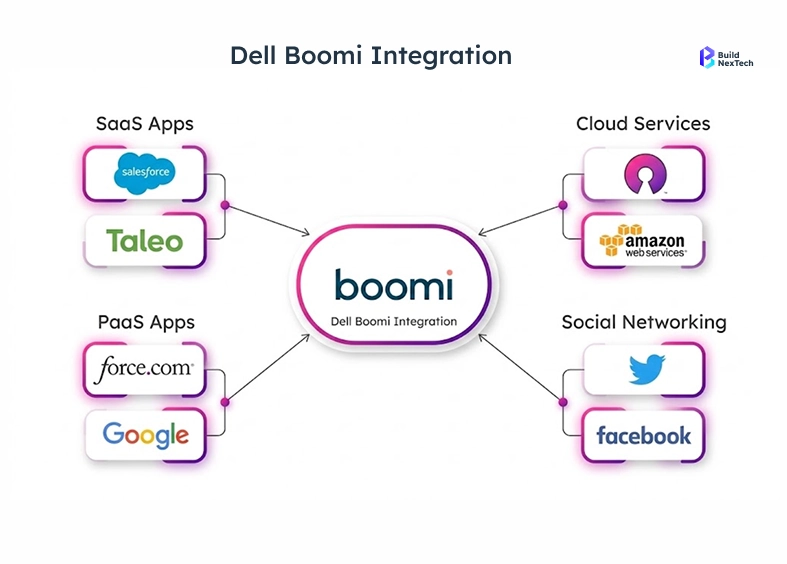
Dell Boomi is a powerful iPaaS platform that helps organizations integrate applications, data sources, and APIs.
Boomi's Atom architecture - lightweight runtimes that can deploy anywhere - gives it real flexibility for hybrid and multi-cloud environments. EDI support is particularly strong, making it a common choice in manufacturing and supply chain contexts where older B2B protocols are still in play.
In practice Boomi handles the workflows most mid-market teams actually face - CRM-to-ERP syncs, EDI with suppliers, hybrid connectivity between cloud and on-premise systems - without requiring a full-time integration engineer. Its UI feels dated compared to newer entrants, and complex transformations can require more configuration than competing low-code platforms.
Enterprises often use Boomi to integrate CRM systems, ERP platforms, and analytics tools across business units. For SMEs running open-source ERPs, dedicated ERPNext integration services can connect CRM, eCommerce, and finance tools directly without a heavy iPaaS layer.
4. Celigo
Celigo has carved a defensible niche in eCommerce and SaaS financial operations - specifically the NetSuite, Shopify, and Salesforce ecosystem. Its pre-built integration templates for these workflows are genuinely time-saving compared to building from scratch on a general-purpose platform.
Outside that sweet spot it's less compelling. If your integration needs extend significantly beyond NetSuite-centric workflows, the connector library gets thin. For businesses deeply embedded in the NetSuite ecosystem, few tools match its depth in that specific area.
Businesses managing subscription platforms and eCommerce operations frequently rely on Celigo integration platforms
API Management Platforms
API management platforms solve a different problem than iPaaS tools. Rather than connecting your internal systems, they govern how external consumers - partners, developers, third-party apps - interact with APIs you expose. Think rate limiting, authentication, versioning, developer portals, and analytics on traffic patterns.
5. Google Cloud API Gateway
Google Cloud API Gateway is a fully managed service that helps organizations build and secure APIs.
The platform integrates seamlessly with other Google Cloud services.
Key features include:
For GCP teams, API Gateway handles proxy and security use cases cleanly - authentication, traffic monitoring, and REST deployment with minimal setup. The honest caveat: if you need advanced developer portal features or API monetisation, Apigee is the more complete product. API Gateway is the right-sized option for teams that don't need the full Apigee feature set.
6. AWS API Gateway
If you're already running workloads on AWS, API Gateway is the path of least resistance for exposing REST or WebSocket APIs. Its deep integration with Lambda, IAM, Cognito, and the rest of the AWS ecosystem means you can wire up authentication, authorization, caching, and logging without leaving the console. The cost model deserves careful attention. API Gateway's per-call pricing works well at lower volumes but can become expensive at scale - this is a well-documented complaint among high-traffic API operators. For teams already in the AWS ecosystem and not pushing massive call volumes, it's excellent. For very high-traffic APIs, running a self-managed Kong or similar alternative may be more economical.
AWS API Gateway is widely used by organizations building cloud-native applications. The platform allows developers to create, publish, and monitor APIs at scale. AWS API Gateway is commonly used in modern microservices architectures.
7. Microsoft Azure API Management
Azure API Management is arguably the most feature-complete managed API gateway in this comparison. Its policy engine - which lets you transform requests and responses, enforce throttling, mock responses, and inject headers through a declarative XML syntax - is more flexible than what AWS and GCP offer out of the box. The developer portal is genuinely well-designed compared to competitors, and the integration with Azure Active Directory makes enterprise authentication straightforward for organisations already in the Microsoft ecosystem.
The caveat that matters: Azure API Management is best evaluated as part of a broader Azure commitment, not as a standalone product. Its pricing tiers (Developer, Basic, Standard, Premium) jump significantly in cost, and the Premium tier - which adds multi-region deployment and VNet integration - is priced for enterprise budgets. Organisations running primarily on AWS or GCP should weigh whether the feature depth justifies managing a cross-cloud dependency or whether their native gateway option is good enough for their actual requirements.
Essential Data Integration Platforms
Data integration platforms focus on ETL/ELT pipelines - extracting data from operational systems, transforming it to fit analytical schemas, and loading it into warehouses or lakes. These are distinct from iPaaS tools in that they're optimized for volume and transformation complexity rather than event-driven workflow automation.
8. Talend
Talend is a leading open-source and enterprise data integration platform.
It provides powerful tools for building scalable ETL pipelines.
Talend enables organizations to:
Talend's strength is ETL depth with built-in data quality scoring - common in regulated industries where audit trails matter as much as throughput. Worth noting: the Qlik acquisition has shifted the product toward a fully commercial model; teams relying on the open-source version should audit new licensing before upgrading
9. Informatica
Informatica's IDMC platform has expanded well beyond its ETL origins - it now covers data quality, governance, master data management, and cataloguing under one umbrella. For large enterprises managing data across multiple cloud providers, that breadth is genuinely valuable.
The honest scope note: Informatica is expensive. If your primary need is ETL, you are paying for MDM and governance capabilities you won't use. It earns its price when data quality and lineage are as critical as data movement itself.
10. SAP Integration Suite
SAP Integration Suite is a cloud-based platform built to connect SAP systems with external applications in a seamless and reliable way. Designed primarily for organizations that operate within the SAP ecosystem, it enables smooth integration across SAP and non-SAP environments. The suite supports integration with SAP Business Technology Platform (BTP), manages the full lifecycle of APIs, and provides workflow automation tools to streamline business processes. It also allows hybrid integration across both cloud and on-premise environments while maintaining strong enterprise-level security and governance. For companies running SAP ERP systems, SAP Integration Suite plays a critical role in ensuring consistent, secure, and scalable connectivity across their digital landscape.
Latest Tools
The integration ecosystem continues evolving with advanced platforms supporting modern digital architectures.
11. IBM API Connect
IBM API Connect covers the full API lifecycle - design, secure, manage, socialise - with governance controls that appeal strongly to regulated industries like banking and insurance. Its integration with IBM DataPower Gateway gives it security enforcement capabilities few competitors match at the network layer.
Outside IBM cloud environments and heavily regulated industries, it's harder to justify against more modern alternatives.
12. Cleo Integration Cloud
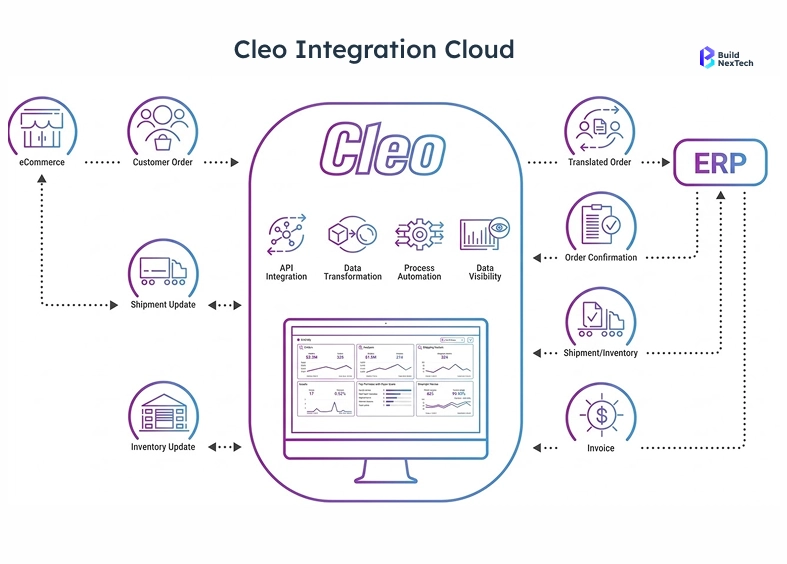
Cleo specialises in B2B integration - the EDI-heavy, partner-facing connectivity that supply chain operations still depend on. Where general-purpose iPaaS platforms treat EDI as an afterthought, Cleo builds around it with strong support for AS2, SFTP, X12, and EDIFACT.
Its end-to-end visibility tools are particularly useful in logistics and retail, where fulfilment depends on reliable supplier data exchange. For pure API-centric integration needs it's the wrong tool - but for supply chain and partner connectivity, it deserves serious evaluation.
How to Choose the Right API Integration Tool
Choosing the right API integration tools requires evaluating technical capabilities and business requirements.
Key factors include:
Beyond category fit, the factors that most often determine long-term success are: connector depth for your specific application stack (not just connector count), total cost of ownership including platform engineers needed to run it, and how well the vendor's roadmap aligns with where your architecture is headed.
For a non-SAP mid-market company connecting fewer than 10 systems at under 1M daily events, Boomi or Celigo solves the problem at a fraction of MuleSoft's cost and complexity. MuleSoft makes sense only once integration becomes core infrastructure with a dedicated team to run it.
Future Trends in API Integration
The most consequential shift right now is reverse ETL - syncing data from warehouses back into operational SaaS tools. This was niche in 2022; by 2025 it became a standard requirement that forced every major ETL vendor to rebuild core features from scratch.
The second trend worth watching: AI-native integration, where LLM APIs and vector databases need to plug into existing data flows - most platforms are bolting on support rather than redesigning for it, which is where the next generation of integration tools will compete.
Before shortlisting vendors, map your actual requirements: which systems need to connect, what data volumes you're moving, and whether your team has integration engineering capacity. That exercise eliminates half the options before you book a single demo.
People Also Ask

What is iPaaS and why is it important?
iPaaS (Integration Platform as a Service) is a cloud-based platform that enables organizations to connect applications, automate workflows, and manage integrations centrally.
What should I look for in an API integration tool?
Run a two-hour internal exercise: list every system that needs to send or receive data, estimate daily event volume per connection, and mark which ones need sub-60-second latency. That output tells you immediately whether you need event streaming or whether Zapier handles it.
Are there free API integration tools available?
Yes, some tools offer free plans or open-source versions. However, enterprise-grade integrations typically require paid platforms with advanced governance and security features.
What are the benefits of integrating e-commerce platforms with backend systems through APIs?
API integration eliminates manual data entry by automatically synchronizing orders, inventory, customer information, billing, and shipping details across systems. This reduces human errors, speeds up order processing, improves data accuracy, enables real-time visibility, and allows businesses to scale operations without increasing manual workload.
Why is API integration important?
Organizations rely on API integration to streamline and automate their workflows across enterprise software systems. For example, organizations can use APIs to integrate business software that tracks inventory levels with software that tracks incoming orders to make essential data more visible to stakeholders.


.webp)
.webp)
.webp)

.webp)
.webp)