- UPONLY provides an "AI-led Business Automation" platform with "AI-infused real-time dashboards and seamless workflows."
- The platform offers a "comprehensive enterprise management suite," including HRMS, Lead Management, Customer Relationship Management, and mobile cloud call center.
- Key applications serve "financial services, NBFCs, insurance, real estate," empowering CXOs, team leads, founders, and IT heads.
- Core features emphasize "Realtime Analytics, Secure Collaboration, Embedded Analytics, Seamless Data Sync, and easy Integrations."
- UPONLY aims to address "bloated, hard to scale" SaaS platforms that lead to "sluggish sales, tangled HR, and frustrated customers."
- The vision is to "innovate at the nexus of sales and innovation, to create AI-native solutions that help guide high performance sales teams, unlock limitless growth."
- The goal is to make "every lead, employee, and customer interaction smoother, smarter, and ready to scale."

Quality Engineering Excellence
Prepared for Kartik & Team
0
Projects Delivered
0%
Client Satisfaction
0+
Years Experience
0%
Bug Reduction
Hi Kartik & Team,
It's clear that UPONLY is at the forefront of "AI-led Business Automation," striving to "shape the future of sales through cutting-edge technology, powered by AI, Automation and Sustainable Innovation." Your mission to deliver "smoother, smarter, and ready to scale" interactions across your comprehensive enterprise management suite, from HRMS to Lead Management and CRM, directly aligns with the need for robust quality assurance. Our proposal outlines a strategic approach to elevate your software quality, ensuring the performance, stability, and reliability required to achieve limitless growth and drive smarter decision-making.
01 Business Context
02 Quality Risks & Gaps (Automation + Performance)
- Scalability Limitations: The "bloated, hard to scale" nature of traditional SaaS platforms, which UPONLY aims to overcome, indicates inherent performance risks for high-growth solutions if not rigorously tested.
- Sluggish Sales & Frustrated Customers: Performance bottlenecks or regressions can directly lead to "sluggish sales" and "frustrated customers," undermining UPONLY's core advantage.
- Regression Introduction: With a "comprehensive enterprise management suite" and "seamless workflows," changes to one module (e.g., HRMS) could unintentionally impact another (e.g., Lead Management) without robust automation.
- Data Consistency & Accuracy: "Seamless Data Sync" and "Realtime Analytics" require flawless data integrity, which can be compromised by functional defects or performance issues during heavy load.
- Real-time Performance Degradation: "AI-infused real-time dashboards" and "instant insights" demand low-latency responses, making performance degradation a critical risk for user experience and decision-making.
- CI/CD Bottlenecks: Without an advanced automation strategy, the pace of "sustainable innovation" and faster releases could be hampered by lengthy, manual regression cycles.
- Untamed Growth Performance: The vision to "unlock limitless growth" implies the need for systems that can handle significantly increased load, posing risks if not proactively tested for concurrency and endurance.
- Flaky Automation: Inadequate design or maintenance of automated tests can lead to "flaky" results, eroding confidence in the test suite and slowing down development cycles.
- Unidentified Bottlenecks: Without dedicated performance testing, critical components like APIs, databases, or caching mechanisms could become bottlenecks under load, impacting the entire "enterprise management suite."
Ready to Strengthen Automation & Performance?
Let’s align on your release pipeline, quality goals, and performance targets.
Limited Q1 2026 Slots Available
03 Value Proposition Summary
| Area | What we do | Tooling/Method | Outcome |
|---|---|---|---|
| Automation Testing | Design, implement, and maintain a robust automation framework for functional and regression validation. | Test Pyramid approach (Unit, API, UI), CI/CD integration, Flaky test reduction strategies | Faster, more confident releases, significantly fewer production regressions. |
| Performance Testing | Identify, simulate, and resolve system performance bottlenecks under various load conditions. | API load testing, concurrency modeling, soak testing, DB/caching analysis | Stable production environment, optimized scalability, measurable SLAs met. |
| Quality Strategy | Establish a holistic QA strategy, integrating testing early into the SDLC and fostering a quality culture. | Shift-left testing principles, KPI-driven reporting, collaboration with Dev & Ops | Enhanced product stability, improved customer experience, accelerated growth. |
04 Automation Testing Strategy
| Layer | What to automate | Approach | KPI impact |
|---|---|---|---|
| API/Service Layer | Core business logic for Lead Management, Deal Management, Employee Solutions, and Seamless Data Sync. | Headless testing of critical APIs, contract testing for integrations, build-level CI gate for every commit. | Early defect detection, faster feedback for developers, reduced flaky UI tests. |
| UI/End-to-End Layer | Critical user journeys (e.g., Lead Capture to Deal Management, Realtime Analytics dashboard view, Payroll processing). | Data-driven tests for key user flows, stable locator strategies, scheduled regression suite execution. | Assurance of critical business process functionality, reduction in production regressions. |
| Smoke Test Suite | Core functionalities: Login across applications, critical dashboard loading, essential data sync triggers. | Rapid execution of a small, stable subset of API and UI tests on every build/deployment. | Immediate build health feedback, prevents broken builds from progressing. |
| Regression Test Suite | Comprehensive set of functional tests covering existing features across UPONLY Wealth, Realestate, NBFC, HRMS, and Client Solutions. | Prioritized automation of high-impact features, continuous integration, regular maintenance for stability. | Increased release confidence, significant reduction in manual regression effort. |
| Flaky Test Reduction | Identification and resolution of non-deterministic automated test failures. | Regular analysis of test execution reports, root cause investigation, framework enhancements, test redesign. | Improved CI/CD pipeline stability, enhanced trust in automation results. |
| Coverage Metrics | Measuring the extent of critical functionality covered by automated tests. | Track automated test case count against critical paths, API endpoint coverage, and identified business risks. | Quantifiable progress in automation, identified gaps for future automation. |
Ready to Strengthen Automation & Performance?
Let’s align on your release pipeline, quality goals, and performance targets.
Limited Q1 2026 Slots Available
05 Performance Testing Strategy
| Scenario | Load Model | Metrics | Acceptance criteria |
|---|---|---|---|
| API Load Test (Critical APIs) | Step-up load from average to peak concurrent API calls for Lead Capture, Realtime Analytics, Data Sync. | API Response Time (Avg, P95, P99), Throughput (RPS), Error Rate (%), Application Server CPU/Memory. | P95 API response time < 500ms under peak load; Throughput meets expected scaling; Error Rate < 0.1%. |
| Concurrency Test (Workflows) | Ramp-up virtual users performing simultaneous high-touch workflows (e.g., Deal Management updates, dashboard viewing). | End-to-End Transaction Response Time, Latency, Resource Utilization (DB, App), Connection Pool usage. | 99% of high-touch workflow transactions complete within 1-2 seconds; No resource exhaustion/deadlocks. |
| Soak Test (System Endurance) | Sustained average load on the entire enterprise management suite for an extended period (e.g., 24-48 hours). | Memory Leaks, JVM Heap Usage, Database Connection Stability, Long-term performance degradation. | System stability maintained for >24 hours without performance degradation or memory leaks detected. |
| DB Bottleneck Analysis | Targeted load on data-intensive operations, specifically for "Seamless Data Sync" and "Realtime Analytics." | Query Execution Times, DB CPU/IOPS, Slow Query Logs, Lock Contention, Index efficiency. | All critical queries execute within defined SLAs (e.g., <100ms); DB resource utilization <80% at peak. |
| Caching Effectiveness | Load scenarios with varying cache states for "Realtime Analytics" and Property Dashboards. | Cache Hit Ratio, Response Time Improvement, Database Load Reduction for cached requests. | Cache hit ratio >80% for read-heavy operations; >50% reduction in DB load due to caching. |
06 90-Day Roadmap
| Phase | Weeks | Activities | Deliverables |
|---|---|---|---|
| 1: Discovery & Strategy Foundation | 1-3 | Kick-off workshops, review existing processes, define critical business flows (Lead, Employee, Client), establish initial performance benchmarks. | Current State QA Assessment, Prioritized Automation Scope, High-Level Performance Test Plan. |
| 2: Framework Setup & Core Automation | 4-8 | Set up API automation framework, automate critical API endpoints (e.g., Lead Capture, Data Sync), develop core UI smoke tests for login/dashboard. | Functional API Automation Framework, Initial 50+ Automated API Tests, Initial 10+ UI Smoke Tests. |
| 3: Performance & Regression Expansion | 9-12 | Script initial API load tests, execute baseline performance tests, expand UI regression suite, analyze and address first flaky tests. | Baseline Performance Test Report, Expanded Automation Test Suite (75+ API, 25+ UI), Flaky Test Reduction Plan. |
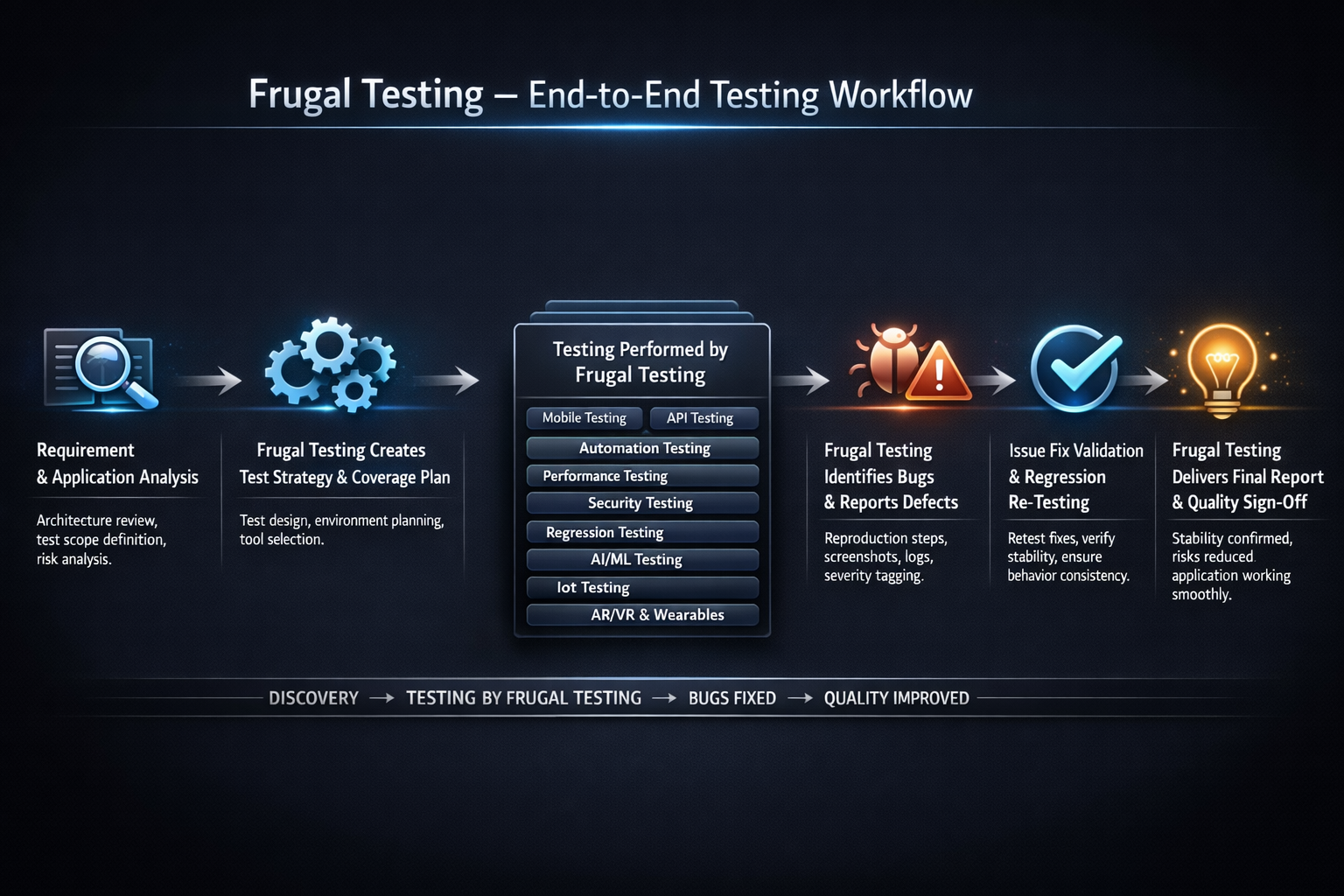
Ready to Strengthen Automation & Performance?
Let’s align on your release pipeline, quality goals, and performance targets.
Limited Q1 2026 Slots Available
07 KPI & Success Metrics
| Metric | Baseline | Target | How measured |
|---|---|---|---|
| Production Regression Defects | To be determined | < 1 critical defect per major release | Post-release defect tracking, severity analysis. |
| Release Cycle Time | To be determined | 25% reduction (e.g., from 4 weeks to 3 weeks) | CI/CD pipeline metrics, release management system data. |
| Automated Test Coverage (Critical) | Currently Low/N/A | > 80% of critical user journeys & API endpoints | Automation framework reports, manual vs. automated test case mapping. |
| P95 API Response Time (Peak Load) | To be determined | < 500ms for all critical APIs | Performance test tool reports, production APM data. |
| Performance-Related Prod Incidents | To be determined | 50% reduction from baseline | Incident management system, root cause analysis logs. |
| Flaky Test Rate in CI/CD | To be determined | < 2% of total automated test runs | Automation test reports, CI/CD pipeline execution logs. |
| Throughput (Requests Per Second) | To be determined | 2x current average throughput under acceptable latency | Performance test tool results. |
08 Engagement Approach & Next Steps
Our engagement model is built on a collaborative partnership, ensuring deep integration with your development and operations teams. We advocate for an iterative delivery approach, prioritizing high-impact areas first and continuously refining our strategy based on your evolving needs and system feedback. Our focus includes active knowledge transfer, empowering your team with sustainable testing practices and tooling expertise.
To initiate this transformation, we propose a discovery workshop with Kartik & Team. This session will allow us to delve deeper into your specific applications (Realestate, NBFC, HRMS, Client Solutions, Lead Solutions), current development workflows, and precise business objectives. This will inform a refined, tailored proposal outlining specific tooling recommendations, resource allocation, and a detailed project plan.
We look forward to partnering with UPONLY to achieve your vision of "limitless growth" with unparalleled quality.
Ready to Strengthen Automation & Performance?
Let’s align on your release pipeline, quality goals, and performance targets.
Limited Q1 2026 Slots Available