- International Business Operations: ROBUSTRADE operates across diverse global markets, including Asia (Hong Kong, Indonesia, India) and Africa, necessitating a reliable and culturally sensitive digital presence to facilitate trade.
- Diverse Product Portfolio: Offering a wide range of products from agricultural machinery and automobiles to hydroelectric equipment and lubricants requires a versatile and accurate digital catalog and transaction system that can handle varied data.
- Strategic Alliances & Partnerships: The business model relies heavily on strategic alliances, implying digital touchpoints for collaboration, product showcasing, and potentially B2B interactions that must be highly stable.
- E-commerce Capabilities: The presence of a "Shopping cart $0.00" on the website suggests an existing or planned e-commerce component for product exploration and potential sales, demanding high availability and flawless functionality.
- Growth & Expansion Mandate: ROBUSTRADE's stated need to "expand its network, stay updated on market trends, and maintain strong relationships" signifies continuous development and feature releases for its digital platforms, which must be rigorously tested.
- Brand Reputation: Maintaining a "beacon of integrity, reliability, and innovation" in global trade requires flawless digital experiences that reflect this commitment and minimize defects.

Quality Engineering Excellence
Prepared for Padma & Team
0
Projects Delivered
0%
Client Satisfaction
0+
Years Experience
0%
Bug Reduction
Hi Padma & Team,
Your 7+ years of expertise in international business, global strategic alliances, and diverse product solutions (from agriculture to hydroelectric equipment and manufacturing & distribution) position ROBUSTRADE for continued growth and market expansion. To sustain this momentum and ensure your digital platforms effectively support global commerce, a robust and proactive Quality Assurance strategy is paramount, specifically focusing on automation and performance testing.
01 Business Context
02 Quality Risks & Gaps (Automation + Performance)
- Regression in Diverse Product Listings: Without automated regression tests, new product additions or updates could inadvertently break existing product displays, search functionality, or category navigation across the wide range of agricultural, automotive, and industrial products.
- Inconsistent User Experience Across Geographies: Global presence implies users accessing the platform from various regions; lack of performance testing could lead to slow load times or broken functionality for users in specific locations, hindering "cultural sensitivity" and global reach.
- Shopping Cart & Transactional Failures: The "Shopping cart" feature, if operational, is critical. Inadequate automation could miss critical bugs in adding items, applying discounts, or processing orders, directly impacting potential revenue and client satisfaction.
- Scalability Issues During Market Expansion: As ROBUSTRADE expands its network and markets, the underlying systems must handle increased user traffic and transaction volumes without degradation. Lack of performance testing exposes the platform to bottlenecks.
- API Integration Fragility: Strategic alliances and partnerships often rely on API integrations for data exchange. Without automated API tests, changes in one system could silently break integrations, impacting "meaningful connections" and "optimal outcomes for clients."
- Database Bottlenecks with Growing Product Data: A "diverse product solutions" catalog implies a growing database. Without performance testing targeting database interactions, queries for products, categories, or supplier information could become slow under load.
- Sustained Performance Degradation: Without soak testing, the platform might experience gradual performance degradation over extended periods of typical usage, leading to an unstable production environment and impacting reliability.
- Flaky Tests Undermining Confidence: Inconsistent or unreliable automated tests can erode trust in the QA process, leading to unnecessary manual retesting, delayed releases, and reduced confidence in quality.
Ready to Strengthen Automation & Performance?
Let’s align on your release pipeline, quality goals, and performance targets.
Limited Q1 2026 Slots Available
03 Value Proposition Summary
| Area | What we do | Tooling/Method (Generalized) | Outcome |
|---|---|---|---|
| Automation Testing | Design, develop, and implement comprehensive automated tests for critical business flows across your digital platform. | Test Automation Frameworks, Scripting, CI/CD Integration | Faster Releases: Reduce manual testing cycles by automating repetitive tasks, accelerating deployment of new features and product updates. Fewer Regressions: Catch defects early and consistently, ensuring existing functionalities (e.g., product catalog, navigation) remain stable after changes. |
| Performance Testing | Identify and resolve system bottlenecks, ensuring your platform scales efficiently to support global growth and user demand. | Load Generators, Performance Monitoring, Analysis & Tuning | Stable Production: Guarantee consistent system responsiveness under peak loads, supporting ROBUSTRADE's global presence and reliability. Measurable SLAs: Establish and meet clear performance targets (e.g., response times for product searches, page loads) critical for user satisfaction and operational excellence. |
| Flaky Test Reduction | Analyze, stabilize, and maintain automation suites to ensure reliable and consistent test outcomes. | Test Refactoring, Data Isolation Techniques, Reporting | Increased Confidence: Build trust in the automation suite, reducing the need for manual re-runs and fostering faster, more confident release decisions. |
| Test Coverage Metrics | Implement metrics to provide visibility into the depth and breadth of test coverage for critical application areas. | Coverage Tools, Reporting Dashboards | Targeted Quality: Ensure comprehensive testing of high-risk or frequently updated components (e.g., shopping cart, product categories), preventing critical defects. |
04 Automation Testing Strategy
| Layer | What to automate | Approach | KPI impact |
|---|---|---|---|
| API/Service | Business logic for product information retrieval, inventory updates, partner data exchange, and other core services. | Develop granular, robust API tests for all critical endpoints, focusing on data integrity, response validation, and error handling. Integrate into CI gates for immediate feedback. | Reduced Integration Defects: Decrease defects found in integrations with partners and internal systems, improving data accuracy across your global network. Faster Feedback: Provide rapid feedback on backend changes, accelerating development cycles. |
| UI (Web) | End-to-end user journeys: product browsing, category navigation, "Explore Shop" functionality, "Shopping cart" interactions, contact forms. | Create resilient UI automation scripts covering critical user flows, utilizing best practices for element identification, test data management, and cross-browser stability. | Fewer User-Facing Regressions: Minimize defects impacting the end-user experience, protecting ROBUSTRADE's brand reputation for reliability. Improved Release Confidence: Ensure core website functionalities are stable across diverse product categories before each release. |
| Smoke Tests | Critical path functionalities (e.g., homepage load, product category access, basic navigation, "Contact Us" form submission, user login if applicable). | Design a lightweight, fast-executing suite of tests that run on every code commit or deployment to ensure basic system health and quick verification of core functionality. | Early Defect Detection: Quickly identify showstopper issues, preventing wasted effort on broken builds and reducing the cost of defect remediation. Reduced Deployment Risk: Ensure the deployed build is fundamentally functional and stable before further testing. |
| Regression Tests | Core business functionalities that must remain stable across releases, including all diverse product categories (e.g., Agriculture, Automobile, Hydro & Electrical Equipment’s, Lubricants, Oil, Machinery, Materials/Chemicals). | Systematically build out a comprehensive suite of automated tests for existing features, prioritizing frequently used or high-risk areas to maintain stability and reliability. | Stabilized Production Environment: Significantly reduce the occurrence of regressions, leading to a more stable and predictable platform. Faster Time to Market: Accelerate release cycles by reducing the need for extensive manual regression testing. |
| CI Gates | Integrate automated tests into the Continuous Integration pipeline. | Configure pipelines to automatically trigger relevant test suites (smoke, API) upon code commits, blocking integration if critical tests fail, ensuring code quality at every stage. | Shift-Left Quality: Catch defects at the earliest possible stage in the development lifecycle, reducing the cost and effort of fixing them later. Consistent Code Quality: Enforce quality standards automatically, maintaining a high bar for all merged code. |
| Test Pyramid (Strategy) | Guide the allocation of testing efforts across different layers (Unit, API, UI) to maximize efficiency and feedback speed. | Advocate for a greater proportion of tests at the lower layers (unit and API) to provide faster feedback and higher reliability, reserving UI tests for critical end-to-end user flows. | Efficient Test Suite: Optimize test suite execution time and maintenance efforts, ensuring a high return on investment for automation. Focused UI Testing: Reserve more expensive UI tests for critical end-to-end scenarios, improving ROI and reducing flakiness. |
Ready to Strengthen Automation & Performance?
Let’s align on your release pipeline, quality goals, and performance targets.
Limited Q1 2026 Slots Available
05 Performance Testing Strategy
| Scenario | Load Model | Metrics | Acceptance criteria (Example) |
|---|---|---|---|
| Product Catalog Browse | Simulate concurrent users browsing diverse product categories (e.g., Agriculture, Automobile, Hydro Equipment). | Average Response Time (p95/p99), Throughput (requests/sec), Error Rate, CPU/Memory Utilization on servers. | All product category pages load within 3 seconds (p95) for 500 concurrent users with <0.1% error rate. |
| "Explore Shop" Activity | Simulate peak traffic for users exploring new product arrivals or specific solutions listed on the site. | Transactions per Second, Latency, Database Connection Pool Usage, I/O Operations, Network Latency. | "Explore Shop" product detail pages load within 2 seconds (p99) for 200 concurrent users exploring different items. |
| Shopping Cart Interaction | Simulate users adding items to a cart, viewing cart contents, and proceeding to checkout. | Response time for add-to-cart, cart update, checkout initiation. Database query times for inventory. | Add-to-cart operation completes within 1 second (p95) for 100 concurrent users. |
| API Load Tests | Simulate high volume of requests to critical backend APIs (e.g., for product data, partnership data exchange, newsletter subscription). | API Response Time, Throughput, Server Resource Utilization, Network Latency, Error Rate. | Key business APIs (e.g., product/category, partner/data) respond within 500ms (p95) under 1000 requests per second. |
| Database Bottleneck Analysis | Identify slowest database queries or operations under load, especially for diverse product searches or filtering. | Query Execution Time, Database CPU/Memory/Disk I/O, Lock Contention, Slow Query Logs. | No single database query for core product or partner data exceeds 200ms execution time under peak expected load. |
| Cache Effectiveness | Monitor cache hit ratios and response times for frequently accessed data (e.g., popular product listings, static content). | Cache Hit Rate, Response Time for cached vs. uncached requests, Bandwidth Utilization. | Cache hit rate for frequently accessed product data and static content should exceed 90% under normal load conditions. |
| Soak Testing | Maintain a moderate, sustained load over an extended period (e.g., 24-48 hours) to detect memory leaks or resource exhaustion. | Long-term CPU/Memory trends, JVM heap usage, Error rates, Database connection stability, Garbage Collection metrics. | System performance (response times) remains stable with no resource degradation or memory leaks over a 24-hour test period. |
06 90-Day Roadmap
| Phase | Weeks | Activities | Deliverables |
|---|---|---|---|
| 1: Discovery & Setup | 1-3 | Week 1: Kick-off meeting with Padma & Team, gather existing documentation, establish access to staging environments, and identify critical business flows (e.g., "Explore Shop," product categories, "Shopping cart"). Week 2-3: Set up initial automation and performance testing environments. Identify key APIs for initial automation related to product data. |
QA Strategy & Test Plan Document, Environment Setup Checklist, Initial API Test Suite (5-10 critical endpoints for product data), Preliminary Performance Test Scenarios. |
| 2: Foundational Automation & Performance Baseline | 4-8 | Week 4-6: Develop core API automation for product information retrieval, inventory updates, and partner interactions. Create initial UI smoke tests for critical web pages (Home, Product Categories, Services). Week 7-8: Execute baseline performance tests for core "Explore Shop" and diverse product browsing scenarios. Analyze results and identify initial system bottlenecks. |
Automated API Regression Suite (covering 20+ key APIs), Web UI Smoke Test Suite (5-7 critical UI flows), Baseline Performance Test Report with identified bottlenecks and recommendations. |
| 3: Expansion & CI Integration | 9-12 | Week 9-10: Expand UI automation for "Shopping cart" interactions, product search/filter, and "Contact Us" form submission. Refine and expand performance tests based on initial findings, including deeper database bottleneck analysis. Week 11-12: Integrate smoke and key API tests into CI/CD pipelines. Review and stabilize flaky tests identified during execution, ensuring reliable test results. |
Expanded UI Automation Suite (covering "Shopping cart" and key user journeys), Detailed Performance Test Report with recommendations for optimization, CI/CD Integration Plan, Flaky Test Reduction Plan. |
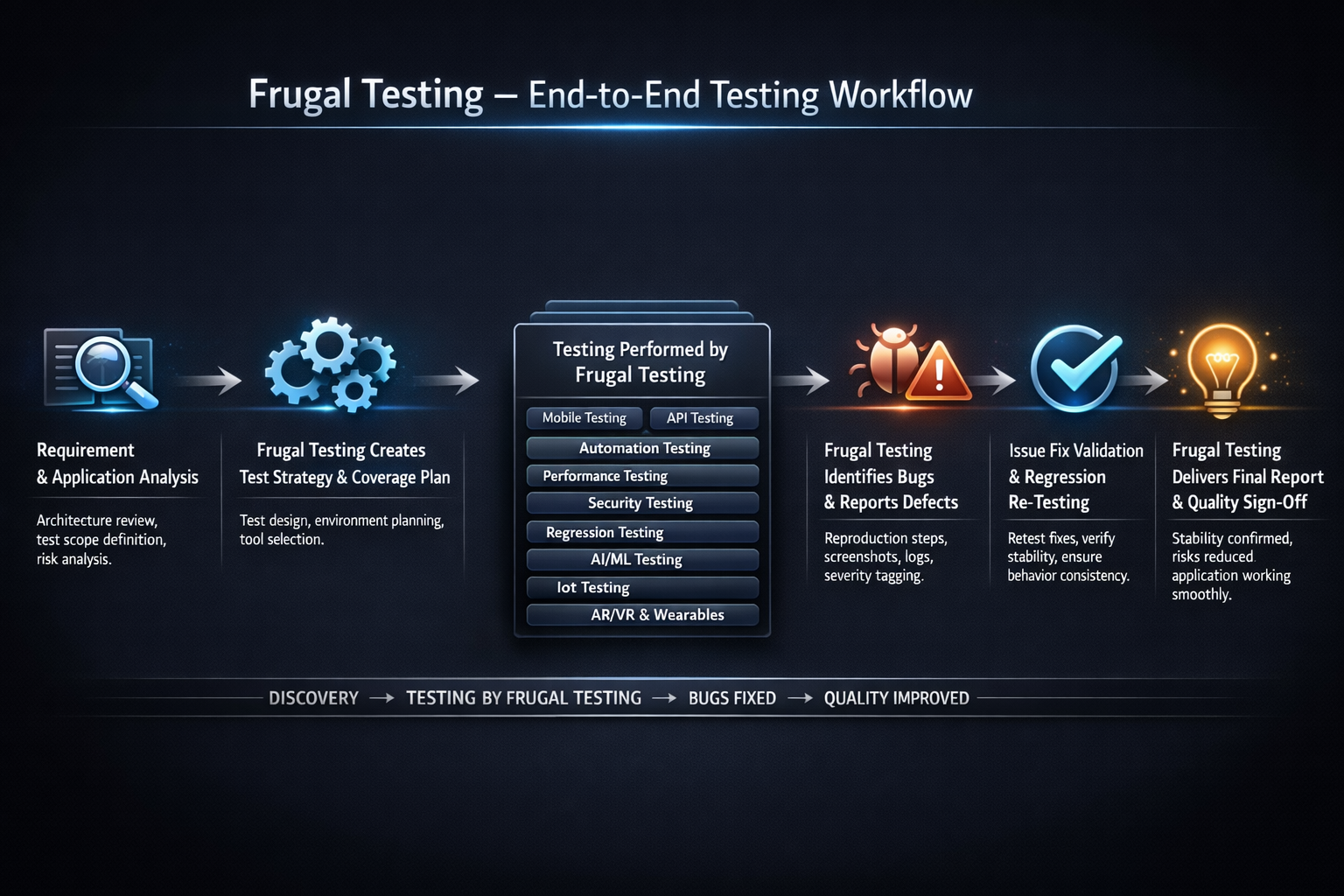
Ready to Strengthen Automation & Performance?
Let’s align on your release pipeline, quality goals, and performance targets.
Limited Q1 2026 Slots Available
07 KPI & Success Metrics
| Metric | Baseline (Initial State) | Target (Measurable SLA) | How measured |
|---|---|---|---|
| Automated Test Coverage | Manual (e.g., 10% of critical paths) | 80% of critical business flows (API + UI) | Automated test reporting tools tracking executed test cases against identified critical paths. |
| Critical Regression Defects | High (e.g., 5-7 per release) | < 1 per release cycle | Tracked via defect management system for production incidents directly linked to regression failures. |
| Release Cycle Time | (To be established during Phase 1) | 20% reduction | Time from code complete to production deployment, tracked in CI/CD pipeline metrics. |
| P95 API Response Time | (To be established during baseline) | < 750ms for critical APIs | Performance testing tools (e.g., JMeter, Gatling) monitoring key API endpoints. |
| Website Load Time (P95) | (To be established during baseline) | < 3 seconds for key pages | Performance testing tools & browser synthetic monitoring for critical pages like Home, Products, About Us. |
| Production Incident Rate | (To be established from current data) | 10% reduction related to performance/regressions | Incident tracking system, categorized by root cause analysis to distinguish performance/regression related issues. |
| Test Automation Pass Rate | (To be established during Phase 2) | > 95% consistently | Automated test reporting tools providing real-time pass/fail metrics across all suites. |
08 Engagement Approach & Next Steps
Our approach is collaborative, transparent, and outcome-oriented, designed to integrate seamlessly with your existing teams and processes. We will work closely with Padma & Team to ensure a shared understanding of ROBUSTRADE's unique operational nuances and strategic goals, particularly for your international trade platforms and diverse product solutions across agriculture, automotive, and hydroelectric sectors.
Key Engagement Principles: * Deep Dive Analysis: Comprehensive assessment of current systems and practices to tailor our solutions effectively. * Agile Integration: Iterative delivery, adapting our strategies and execution to your development cadence and business priorities. * Knowledge Transfer: Empowering your team with robust automation and performance testing best practices, tools, and methodologies. * Continuous Improvement: Regular reviews and adjustments to optimize our QA strategies, ensuring long-term value and sustained quality.
Next Steps: 1. Discovery Workshop: Schedule an initial workshop to delve deeper into ROBUSTRADE's current digital landscape, specific product flows (e.g., for Agriculture, Automobile, Hydro & Electrical Equipment), strategic alliances, and immediate quality challenges. 2. Detailed Solution Design: Based on the workshop, we will refine this proposal into a granular plan, including specific tool recommendations (if applicable) and a precise statement of work tailored to your unique requirements. 3. Mutual Agreement & Onboarding: Formalize the engagement and begin the onboarding process to commence Phase 1 of the 90-Day Roadmap, bringing measurable quality improvements to ROBUSTRADE.
Ready to Strengthen Automation & Performance?
Let’s align on your release pipeline, quality goals, and performance targets.
Limited Q1 2026 Slots Available