- Online Retail Focus: Glam21 operates entirely online, selling a diverse range of beauty products including Lips, Face, Eyes, Nails, and Accessories.
- Frequent Product Introductions: Regular "NEW ARRIVALS" and "BEST SELLERS" indicate a dynamic product catalog requiring efficient and consistent quality checks.
- Promotional Activities: Offers like "Get Extra 5% off for all Prepaid orders" and "Free Shipping on All Orders Above ₹499" are critical for customer acquisition and retention, demanding high system stability.
- Customer Engagement & Reviews: Product listings feature star ratings and review counts (e.g., "4.71 731 Reviews"), highlighting the importance of a smooth user experience to encourage feedback.
- Multi-Channel Customer Support: Contact options via email, WhatsApp, and a contact form underline the need for a stable platform to minimize support queries related to system issues.
- Marketing & Social Presence: Active use of Facebook, Instagram, LinkedIn, and YouTube signifies reliance on the digital platform for brand promotion and sales.
- User Journey Criticality: Core e-commerce functions such as browsing categories, viewing product details, adding to cart, and checkout are central to the business model.

Quality Engineering Excellence
Prepared for Bikash & Team
0
Projects Delivered
0%
Client Satisfaction
0+
Years Experience
0%
Bug Reduction
Hi Bikash & Team,
Glam21 Cosmetics stands out with its commitment to "celebrate individuality" through "luxurious, high-quality, affordable and innovative" products, all delivered via a dynamic online platform. As your digital storefront grows, ensuring a flawless, performant, and reliable customer experience is paramount to maintaining trust, fostering sales, and enabling agile new product launches. This proposal outlines a strategic approach to elevate your quality assurance, focusing specifically on robust Automation and Performance Testing, to support Glam21's continued success and growth.
01 Business Context
02 Quality Risks & Gaps (Automation + Performance)
- Regression Defects: Without comprehensive automation, frequent "NEW ARRIVALS" and site updates risk introducing regressions in existing "BEST SELLERS" or core functionalities like checkout.
- Slow Release Cycles: Manual testing for a vast product catalog (Lips, Face, Eyes, Nails, Accessories, Combos) can delay the launch of new products and marketing campaigns.
- Inconsistent User Experience: Lack of systematic UI automation can lead to visual defects or broken functionalities across different sections (e.g., product variant selection, "Add to Cart").
- Performance Bottlenecks during Promotions: Sales events (e.g., "Get Extra 5% off", "Free Shipping") or spikes in traffic from social media campaigns could overwhelm the system, leading to slow page loads or transaction failures.
- Sub-optimal Conversion Rates: Slow response times for critical actions (e.g., adding to cart, checkout) due to performance issues can directly lead to customer abandonment and lost sales.
- Unidentified Backend Strain: Backend services supporting product listings, order processing, and user authentication could experience performance degradation under load, impacting the overall site responsiveness.
- Scalability Challenges: Without proactive performance testing, Glam21's platform might struggle to scale effectively with increasing customer demand, especially during peak seasons or viral promotions.
- Reactive Issue Resolution: Relying solely on production monitoring or customer reports for critical issues means problems are often discovered by users, leading to brand damage and increased support costs.
Ready to Strengthen Automation & Performance?
Let’s align on your release pipeline, quality goals, and performance targets.
Limited Q1 2026 Slots Available
03 Value Proposition Summary
| Area | What we do | Tooling/Method | Outcome |
|---|---|---|---|
| Automation Testing | Establish a robust, scalable automated test suite for critical user journeys and integrations. | Industry-standard test frameworks (e.g., for UI, API), CI/CD integration. | Faster Releases: Enable quicker, confident deployment of "NEW ARRIVALS" and updates. |
| Reduce manual effort and improve test coverage for regressions and smoke tests. | Test pyramid approach (UI, API, Unit levels) with targeted coverage metrics. | Fewer Regressions: Drastically reduce the chance of existing features breaking. | |
| Proactively identify and resolve flaky tests to ensure reliable feedback. | Test analytics, robust test data management, resilient locators for UI tests. | Stable Feedback: Ensure test results accurately reflect system quality, reducing wasted developer time. | |
| Performance Testing | Simulate realistic user loads for critical e-commerce scenarios. | Load testing tools (e.g., for API, web), scenario-based scripting. | Stable Production: Guarantee the Glam21 platform remains responsive and available during peak traffic. |
| Identify and diagnose performance bottlenecks across the application. | Concurrent user simulations, detailed response time, throughput, and error rate analysis. | Optimized Platform: Pinpoint and fix issues in data retrieval, API calls, or server capacity. | |
| Assess system scalability and stability over extended periods. | Soak testing, monitoring key backend metrics and resource utilization. | Confident Growth: Ensure the platform can handle future growth and sustained high usage. |
04 Automation Testing Strategy
| Layer | What to automate | Approach | KPI impact |
|---|---|---|---|
| UI/End-to-End | Critical customer journeys: Product browsing, adding to cart, checkout, user login/registration, search. | Comprehensive regression suite, smoke tests for every deployment, explicit coverage for key Glam21 categories (Lips, Face, Eyes). | Reduced Defect Escape Rate: Fewer customer-facing bugs post-release. Faster Release Cadence: Confident deployments of "NEW ARRIVALS". |
| Key UI components: Product display, variant selection, promotional banners, navigation menus (Categories, Important Links). | Component-level UI tests, visual regression checks for consistent brand presentation, flaky test reduction via resilient locators. | Improved User Experience (UX): Consistent and functional interface across updates. Reduced Flakiness: Reliable test results, saving developer time. |
|
| API/Service Layer | Product data retrieval, add-to-cart functionality, order creation, user authentication/authorization. | API-level regression tests for all critical endpoints, contract testing for integrations (e.g., payment gateways if applicable). | Enhanced System Stability: Core business logic is robust and performant. Faster Feedback Loop: API tests run quickly, enabling early defect detection. |
| Integration Testing | Interactions between core services: Product search and filtering, customer review submission, contact form submission, email notifications. | Automated tests verifying data flow and communication across different parts of the Glam21 ecosystem. | Seamless Functionality: Ensure different parts of the system work together as intended. Reduced Integration Risks: Fewer issues in interconnected features. |
| CI Gates & Coverage | Integration of automated tests into pre-release pipelines. | Implement automated gates to prevent deployment of code with critical test failures, establish and track coverage metrics for UI and API tests. | Higher Code Quality: Only tested and stable code reaches production. Measurable Quality Progress: Clear insight into testing efforts and gaps. |
Ready to Strengthen Automation & Performance?
Let’s align on your release pipeline, quality goals, and performance targets.
Limited Q1 2026 Slots Available
05 Performance Testing Strategy
| Scenario | Load Model | Metrics | Acceptance criteria |
|---|---|---|---|
| Homepage & Category Browsing | Increasing concurrent users, simulating typical browsing patterns and spikes during marketing campaigns. | Page Load Time (p95, p99), Server Response Time, Throughput (pages/sec), Error Rate. | Homepage Load: < 3 seconds (p95). Category Page Load: < 4 seconds (p95). Error Rate: < 0.1% for all requests. |
| Product Detail Page (PDP) Viewing | Sustained load with users navigating to "NEW ARRIVALS", "BEST SELLERS", and various product PDPs, simulating deep dives into products. | PDP Load Time (p95, p99), API response times for product data retrieval, Image load times. | PDP Load: < 3.5 seconds (p95). Product API Calls: < 500ms (p95). Error Rate: < 0.1%. |
| Add to Cart & Checkout Process | Simulating peak user activity with concurrent users adding items to cart, proceeding through checkout steps, and completing prepaid orders. | Add-to-Cart Response Time (p95, p99), Checkout Step Response Times, Transaction Success Rate, Throughput (orders/minute). | Add-to-Cart: < 1 second (p95). Checkout Completion: < 5 seconds total for critical steps (p95). Transaction Success: > 99.5%. |
| Search & Filtering Functionality | Load test with diverse search queries and filtering options across product categories. | Search Result Response Time (p95, p99), Backend Query Performance (implied for DB bottlenecks). | Search Results: < 2 seconds (p95). Filtering: < 1.5 seconds (p95). Error Rate: < 0.1%. |
| Soak Testing (Endurance) | Sustained moderate load over an extended period (e.g., 4-8 hours) to identify memory leaks, resource exhaustion, or system degradation. | Sustained average response times, resource utilization (CPU, Memory), error rate trends over time. | Stable Performance: No significant degradation in response times or increase in error rates over the test duration. Resource Stability: Consistent resource usage without continuous growth. |
06 90-Day Roadmap
| Phase | Weeks | Activities | Deliverables |
|---|---|---|---|
| 1: Assessment & Foundation | 1-3 | Discovery Workshops: Understand Glam21's current development practices, release cycles, and critical user journeys. Infrastructure & Tooling Review: Assess existing QA tools, environments, and potential for new automation/performance tools. Critical Path Identification: Define core e-commerce workflows for initial automation and performance focus (e.g., Login, Product View, Add to Cart, Checkout). |
Current State QA Report. Recommended Tooling & Environment Setup Plan. Prioritized List of Automation & Performance Scenarios. |
| 2: Core Implementation | 4-8 | Automation Framework Setup: Establish a scalable automation framework for UI and API tests. Initial Regression Suite Development: Automate critical UI and API test cases for key user journeys. Basic Performance Test Scripting: Develop initial load test scripts for Homepage, PDP, and Add-to-Cart. CI Integration (Pilot): Integrate basic smoke tests into a pilot CI pipeline. |
Functional Automation Framework. ~50-70 Core Automated Regression Tests (UI + API). 3-5 Key Performance Test Scenarios (scripts). Basic CI Pipeline Integration for Smoke Tests. |
| 3: Expansion & Optimization | 9-12 | Expand Automation Coverage: Develop additional regression tests, focusing on "NEW ARRIVALS" workflows and category browsing. Refine Performance Tests: Execute load tests, analyze results, identify bottlenecks (e.g., API response times, data retrieval). Flaky Test Reduction: Implement strategies to stabilize initial automated tests. Reporting & Metrics: Establish initial dashboards for automation execution and performance results. |
Expanded Automation Suite (~100-150 tests). Detailed Performance Test Report with identified bottlenecks and recommendations. Stabilized Core Automated Tests. Initial QA Metrics Dashboard (e.g., Test Pass Rate, Critical Page Load Time). |
Ready to Strengthen Automation & Performance?
Let’s align on your release pipeline, quality goals, and performance targets.
Limited Q1 2026 Slots Available
07 KPI & Success Metrics
| Metric | Baseline (Current Estimate) | Target (90 Days) | How measured |
|---|---|---|---|
| Release Frequency (Days) | TBD (Current manual effort) | 7-10 days (or faster) | Count of production deployments per month. |
| Critical Defect Escape Rate (%) | TBD (Post-production bugs) | < 1% | Number of critical defects reported by customers/monitoring in production divided by total releases. |
| Automated Test Coverage (UI & API) | TBD (Low/Manual) | 30% (Key user journeys) | Percentage of critical features covered by automated UI/API tests. |
| Regression Test Execution Time | TBD (Hours/Days for manual) | < 30 minutes | Time taken to execute the full automated regression suite. |
| Homepage Load Time (p95) | TBD (Current performance) | < 3 seconds | Performance testing tools measuring 95th percentile of homepage load time under load. |
| Add to Cart Response Time (p95) | TBD (Current performance) | < 1 second | Performance testing tools measuring 95th percentile of add-to-cart API/UI response time under load. |
| Transaction Success Rate (%) under Load | TBD (No explicit data) | > 99.5% | Performance test reports showing successful order completions during simulated peak load. |
| Flaky Test Rate (%) | TBD (No current tracking) | < 2% | Number of tests that fail inconsistently divided by total automated test runs. |
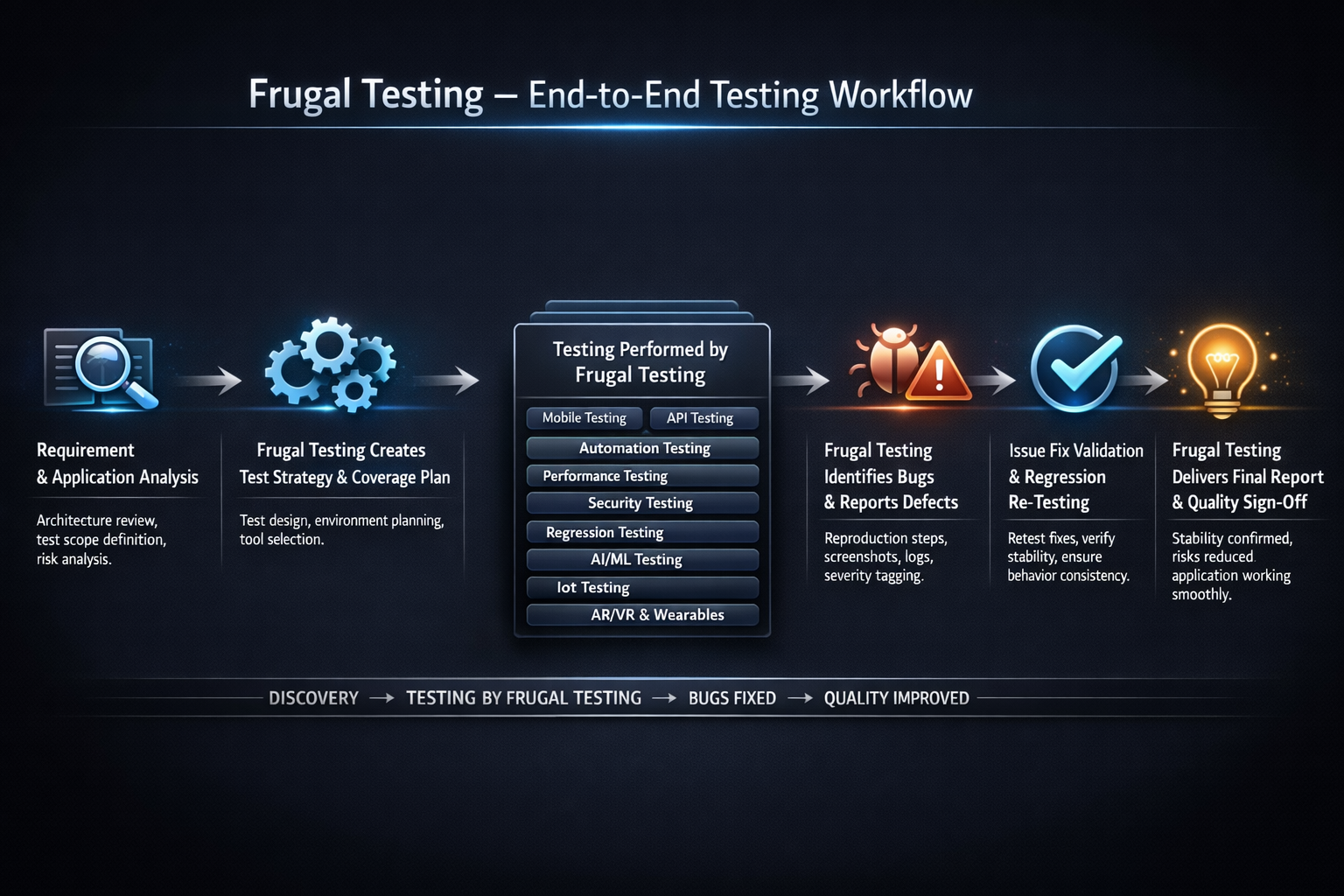
08 Engagement Approach & Next Steps
Our approach is collaborative, transparent, and results-oriented. We will embed with your team to understand Glam21's unique needs, processes, and goals, ensuring that our recommendations and implementations are tailored for maximum impact.
Our proposed next steps are:
- Initial Discovery Call: A 60-minute virtual meeting with Bikash & Team to delve deeper into your current challenges, aspirations, and to answer any initial questions.
- Detailed Assessment: Conduct a hands-on review of your current QA practices, documentation, and existing infrastructure (if any).
- Tailored Plan Presentation: Present a refined, detailed proposal with specific tooling recommendations (if desired), a phased implementation timeline, and a clear pricing structure.
We look forward to partnering with Glam21 Cosmetics to build a robust, high-quality digital experience that truly empowers your customers and accelerates your business growth.
Ready to Strengthen Automation & Performance?
Let’s align on your release pipeline, quality goals, and performance targets.
Limited Q1 2026 Slots Available