- Diverse Online Offerings: AAFT Online provides a wide array of Diploma and Certificate courses, spanning creative arts, business, and health & wellness, each requiring robust functionality.
- Hybrid Learning Model: The blend of live and pre-recorded sessions, alongside self-paced, on-demand interactive learning, necessitates consistent platform availability and responsiveness.
- Recent LMS Upgrade: The mention of an "Upgraded LMS" and a "password reset" process indicates ongoing platform development, which can introduce new functionalities alongside potential quality considerations.
- Global Learner Base & Accessibility: Catering to students, working professionals, and passion pursuers globally requires a stable, high-performing platform accessible from various locations and network conditions.
- Critical User Journeys: Core processes like course enrollment, content access, doubt clearing sessions, and the enquiry/application flow are central to the learner experience and AAFT Online's operational success.
- Brand Reputation & Trust: With "30+ years of education experience," maintaining a high-quality, bug-free, and performant online presence is crucial for preserving AAFT Online's established reputation.

Quality Engineering Excellence
Prepared for Mansi & Team
0
Projects Delivered
0%
Client Satisfaction
0+
Years Experience
0%
Bug Reduction
Hi Mansi & Team,
AAFT Online stands as a beacon of accessible learning, empowering individuals globally through diverse online diploma and certificate courses. As your platform evolves, particularly with recent LMS upgrades, ensuring a seamless, high-quality experience for every learner becomes paramount. This proposal outlines how a focused strategy in Automation and Performance Testing can fortify your online ecosystem, driving faster releases, reducing regressions, and guaranteeing a stable production environment that lives up to your commitment of "empowerment & development for global employability."
01 Business Context
02 Quality Risks & Gaps (Automation + Performance)
- Regression Potential from LMS Upgrades: Frequent platform enhancements, like the recent LMS upgrade, risk introducing unintended side effects or breaking existing functionalities across diverse course types.
- Manual Testing Bottlenecks: Relying heavily on manual testing for a growing number of courses and features can slow down release cycles and increase the likelihood of human error, especially for critical paths like login and course access.
- Inconsistent Performance Under Load: With "live sessions" and "on-demand" content, the platform's ability to handle concurrent learners and peak traffic for various activities (e.g., video playback, interactive elements) may be untested, leading to poor user experience.
- Undetected Performance Degradation: Performance issues, such as slow loading times for course content or unresponsive enquiry forms, may go unnoticed until they impact user satisfaction or engagement metrics.
- Limited Coverage for Core Journeys: Critical user paths, including login, course selection, enrollment via enquiry forms, and accessing learning modules, might lack comprehensive automated checks, increasing the risk of production defects.
- Unstable Production Environment: Without proactive performance monitoring and load testing, unexpected traffic surges or system interactions could lead to outages or significant slowdowns, impacting learning continuity.
- Inefficient Defect Detection: The absence of automated gates in the development and release pipeline could mean defects are found later in the cycle or, worse, by learners in production, leading to increased resolution costs and reputational damage.
- Lack of Measurable Performance SLAs: Without clear performance targets (e.g., response times for critical transactions), it's challenging to objectively assess platform health and ensure a consistently high-quality user experience.
Ready to Strengthen Automation & Performance?
Let’s align on your release pipeline, quality goals, and performance targets.
Limited Q1 2026 Slots Available
03 Value Proposition Summary
| Area | What we do | Tooling/Method | Outcome |
|---|---|---|---|
| Automation Testing | Design & implement comprehensive automated test suites for critical user journeys and integrations. | Industry-standard automation frameworks, test pyramid approach, CI integration. | Faster, more confident releases; significant reduction in regression defects. |
| Performance Testing | Simulate various load conditions for key platform functionalities. | Enterprise-grade load testing tools, concurrency modeling, soak testing. | Stable production environment; platform readiness for peak user demand. |
| Overall Quality | Establish robust quality gates and continuous feedback loops. | Holistic QA consulting, collaborative defect management, KPI tracking. | Measurable improvements in platform stability, user satisfaction, and operational efficiency. |
04 Automation Testing Strategy
| Layer | What to automate | Approach | KPI Impact |
|---|---|---|---|
| UI | Critical User Journeys: Login, course selection, enrollment (via "Enquire Now" forms), password reset, course content access (e.g., video playback, module navigation). | End-to-end tests for key learner flows; cross-browser compatibility checks; smoke tests for release gates. | Reduced defect leakage to production; faster smoke and regression test execution. |
| API | Backend Integrations: User authentication, course catalog retrieval, enrollment processing, support ticket submission, payment initiation (implied by EMI options). | Automated API tests for data integrity and functionality; validation of data exchange between system components. | Enhanced system reliability; quicker identification of integration issues; improved API response times. |
| Data | Data Integrity Checks: Verification of user profiles, course enrollment records, certificate issuance statuses. | Automated scripts to validate data consistency and accuracy across different platform modules. | Minimized data-related errors; ensured accurate learner records and certifications. |
| CI | Continuous Integration Gates: Integrate automated tests into the development pipeline. | Trigger smoke and regression suites on code commits and build completion; provide immediate feedback on build health. | Faster defect detection; prevention of broken code reaching higher environments; shorter release cycles. |
Ready to Strengthen Automation & Performance?
Let’s align on your release pipeline, quality goals, and performance targets.
Limited Q1 2026 Slots Available
05 Performance Testing Strategy
| Scenario | Load Model | Metrics | Acceptance Criteria |
|---|---|---|---|
| LMS Login & Course Access | Gradual ramp-up to peak concurrent users (e.g., 500-1000 users over 10 min), sustained for 1 hour. | Response Time (Avg, p95, p99), Throughput (requests/sec), Error Rate, Concurrent Users. | Login page load < 2 seconds (p95); Course dashboard load < 3 seconds (p95); 0% errors. |
| Enquiry & Enrollment Process | Simulate a sudden surge of "Enquire Now" form submissions and initial enrollment steps (e.g., 200 users submitting per minute). | Response Time (Avg, p95), Throughput (submissions/sec), Error Rate. | Form submission < 3 seconds (p95); Enrollment confirmation < 5 seconds (p95); 0% errors. |
| Live/Recorded Session Access | Varying load for video content streaming and interactive elements (e.g., 500 concurrent learners accessing diverse course materials). | Video stream initiation time, buffering ratio, Response Time for interactive elements (p95). | Video stream initiates < 5 seconds; < 1% buffering; Interactive elements < 2 seconds (p95). |
| System Stability (Soak Test) | Maintain average daily load for an extended period (e.g., 8-12 hours). | Memory utilization, CPU utilization, Database connection pools, Error Rate. | No memory leaks; Stable CPU/DB utilization; 0% sustained error rate over the duration. |
06 90-Day Roadmap
| Phase | Weeks | Activities | Deliverables |
|---|---|---|---|
| 1. Discovery & Assessment | 1-3 | Week 1-2: Conduct workshops with key stakeholders (Product, Dev, Support) to understand critical user journeys, recent changes (LMS upgrade), and current quality processes. Identify existing test assets. Week 3: Analyze identified areas for automation and performance testing. Evaluate current monitoring capabilities. |
Comprehensive Quality Assessment Report (Automation & Performance Gaps); Prioritized Test Automation Candidate List; Performance Test Scope Document. |
| 2. Strategy & Setup | 4-8 | Week 4-5: Define the Automation Framework strategy (e.g., test pyramid focus on UI & API). Select appropriate, generic industry-standard tools for automation and performance testing. Week 6-7: Set up initial automation and performance test environments. Develop foundational test scripts for critical login/LMS access paths. Week 8: Establish baseline performance metrics for key scenarios (login, course access). Develop initial CI integration strategy. |
Automation Framework Design; Performance Test Plan (with load models and metrics); Initial Automated Smoke Test Suite; Performance Test Baseline Report. |
| 3. Initial Implementation & Execution | 9-12 | Week 9-10: Expand automated regression suite for core user flows (e.g., "Enquire Now," course navigation). Integrate initial smoke tests into the CI/CD pipeline. Week 11: Execute initial load tests for LMS Login and Course Access scenarios, analyze results, and identify immediate performance bottlenecks. Week 12: Refine existing automation scripts based on feedback; conduct a mini-soak test for a critical module; present progress and plan next steps. |
Expanded Automated Regression Suite; Integrated CI Gate (Smoke Tests); Initial Performance Test Report with findings; Recommendations for Performance Optimization. |
Ready to Strengthen Automation & Performance?
Let’s align on your release pipeline, quality goals, and performance targets.
Limited Q1 2026 Slots Available
07 KPI & Success Metrics
| Metric | Baseline | Target | How Measured |
|---|---|---|---|
| Defect Leakage to Production | Current (To be established) | 50% reduction in first 6 months | Number of critical/major defects found in production post-release. |
| Test Automation Coverage | 0-10% (Estimated for critical paths) | 60% for critical user journeys within 6 months | Percentage of critical user journeys covered by automated tests. |
| Release Cycle Time | Current (To be established) | 20% reduction within 90 days | Time taken from code freeze to production deployment. |
| Critical User Journey Response Time (p95) | Current (To be established) | < 3 seconds for LMS login, < 5 seconds for course access (p95) | Performance test results for key user flows. |
| System Throughput (LMS Login) | Current (To be established) | 2x current peak concurrent users | Requests per second successfully handled during load tests. |
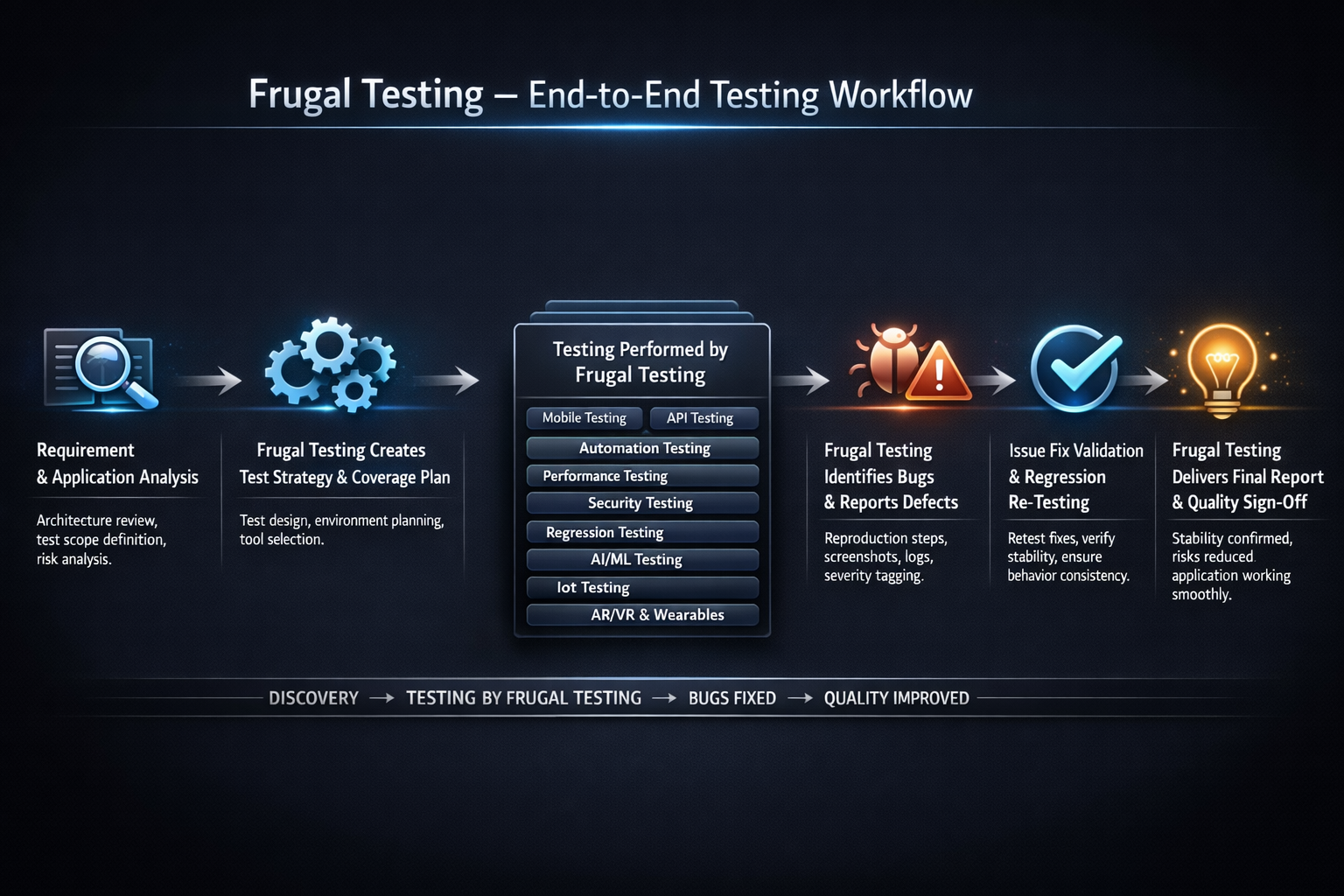
08 Engagement Approach & Next Steps
Our approach is built on collaboration, transparency, and a deep understanding of AAFT Online's mission. We propose a highly iterative and agile engagement, working closely with your development, product, and operations teams.
Our Engagement Model: * Collaborative Workshops: Regular sessions to align on priorities, share insights, and refine strategies. * Dedicated QA Lead: A senior QA consultant will lead the engagement, serving as your primary point of contact and ensuring consistent delivery. * Knowledge Transfer: We will ensure that robust processes and best practices are embedded within your team for sustained quality. * Regular Reporting: Weekly progress updates and detailed monthly reports on KPIs, risks, and achievements.
Next Steps: 1. Proposal Review & Discussion: An opportunity for Mansi & Team to ask questions and provide feedback on this proposal. 2. Initial Discovery Session: A more in-depth discussion to align on initial priorities, key stakeholders, and gather further details on the AAFT Online platform. 3. Define Project Start: Agree on a timeline and resources to kickstart our partnership.
We are excited about the prospect of partnering with AAFT Online to elevate your platform's quality and contribute to your continued success in empowering global learners.
Ready to Strengthen Automation & Performance?
Let’s align on your release pipeline, quality goals, and performance targets.
Limited Q1 2026 Slots Available