

In the fast-changing world of SEO, ranking a website is no longer just about building links or publishing content. By 2025, search engines will rely on AI overviews, evolving SERP features, and real-time data signals that require smarter strategies. To compete effectively, businesses need keyword insights that go beyond surface-level rankings.
Keyword tracking software has become essential for SEO decision-making. Whether you’re a blogger watching content visibility, an agency managing multiple clients, or an enterprise running global campaigns, choosing the right keyword tracking tool affects how well you can handle algorithm updates and beat competitors.
Here’s what this article will cover:
- Why keyword tracking is essential for SEO success in 2025
- Must-have features every keyword tracking tool should include
- The difference between free and paid keyword tracking tools
- Top software recommendations for professionals, agencies, and ecommerce businesses
- How BuildNexTech helps businesses use keyword tracking for long-term growth
Introduction: Why Keyword Tracking Matters in 2025
Keyword tracking in 2025 is more than just checking how high keywords rank. With AI overviews, evolving SERP features, and the rise of programmatic SEO, businesses must dig deeper into keyword performance. Startup founders, small business owners, and SEO specialists alike rely on keyword tracking to optimize content, attract organic traffic, and identify keyword opportunities that lead to measurable growth.
Effective keyword tracking ensures your SEO content strategy isn’t based on guesswork. Instead, it connects data from Google Analytics, Google Search Console, and SEO tools into actionable insights.
Top Features You Need in Keyword Tracking Software
Keyword tracking software goes beyond showing keyword positions - it gives SEO professionals a clear picture of how visibility changes over time, highlights competitor moves, and uncovers growth opportunities. A reliable tool should provide accurate data, easy-to-read dashboards, and integration with other SEO platforms.

Why Daily Rank Tracking Is Essential
Daily rank tracking helps SEO experts see how well keywords are performing in real time. Instead of waiting for weekly updates, businesses can respond immediately to ranking fluctuations caused by competitor moves or algorithm updates.
- Identify drops in keyword rankings before they hurt organic traffic
- Spot opportunities from new SERP features like featured snippets
- It also helps spot problems like duplicate content or broken links.
- Benchmark against competitor keyword strategies
- Improve transparency in keyword ranking reports for clients
By making daily keyword monitoring part of your SEO toolkit, agencies and freelancers can maintain trust with clients and protect long-term ranking stability.
Integration With SEO Management Platforms
Modern rank trackers should not function in isolation—they should integrate with other SEO platforms for complete visibility. Integration saves time, reduces manual reporting, and ensures that keyword tracking connects directly with broader content marketing strategies.
- Tools like Google Analytics, Google Search Console, and Google Trends can be connected for better insights.
- WordPress plugins can help with on-page improvements and checking technical SEO.
- Rank tracker dashboards like SE Ranking or AccuRanker
- Local SEO tools, such as Google Business Profile insights, are also useful.
- Automated reporting through Google Data Studio or third-party APIs
When keyword tracking tools integrate with existing SEO platforms, businesses gain a single source of truth for their SEO metrics and performance monitoring.
Competitor Analysis and Reporting
Competitor keyword analysis is crucial for staying ahead in crowded markets. The best keyword ranking report software highlights what competitors rank for and where your site can gain visibility.
- Competitor keyword research and share of voice tracking
- Backlink analysis for building stronger link profiles
- SERP monitoring for AI visibility and new ranking features
- Content audit reports to uncover optimization opportunities
- Ad hoc keyword research to support lead generation
With this intelligence, SEO professionals can adapt content strategies to target gaps competitors are missing, ensuring more consistent traffic growth.
Comparing Free Vs Paid Keyword Tracking Tools
Free tools are excellent starting points for startups and bloggers, while paid SEO platforms give agencies and enterprises advanced features. The right choice depends on business goals, budgets, and reporting needs.
- Some free tools offer basic keyword research, rank tracking, and analysis of search engine results pages.
- Paid platforms add competitor insights, backlink datasets, and automated reporting
- Agencies and large businesses rely on paid SEO platforms for scale and client cycle management
Best Free SEO Tools for Bloggers and Small Businesses
Free keyword tracking tools are great for beginners, bloggers, and small businesses that want to see their rankings without spending a lot. These tools cover the basics, such as keyword research, rank monitoring, and SERP tracking, while keeping the process simple and affordable.
- Google Search Console provides free data on keyword performance, impressions, and click-through rates. It is essential for monitoring organic visibility.
- Ubersuggest provides simple keyword ideas, SEO checks, and information about backlinks in a friendly and easy-to-use website.
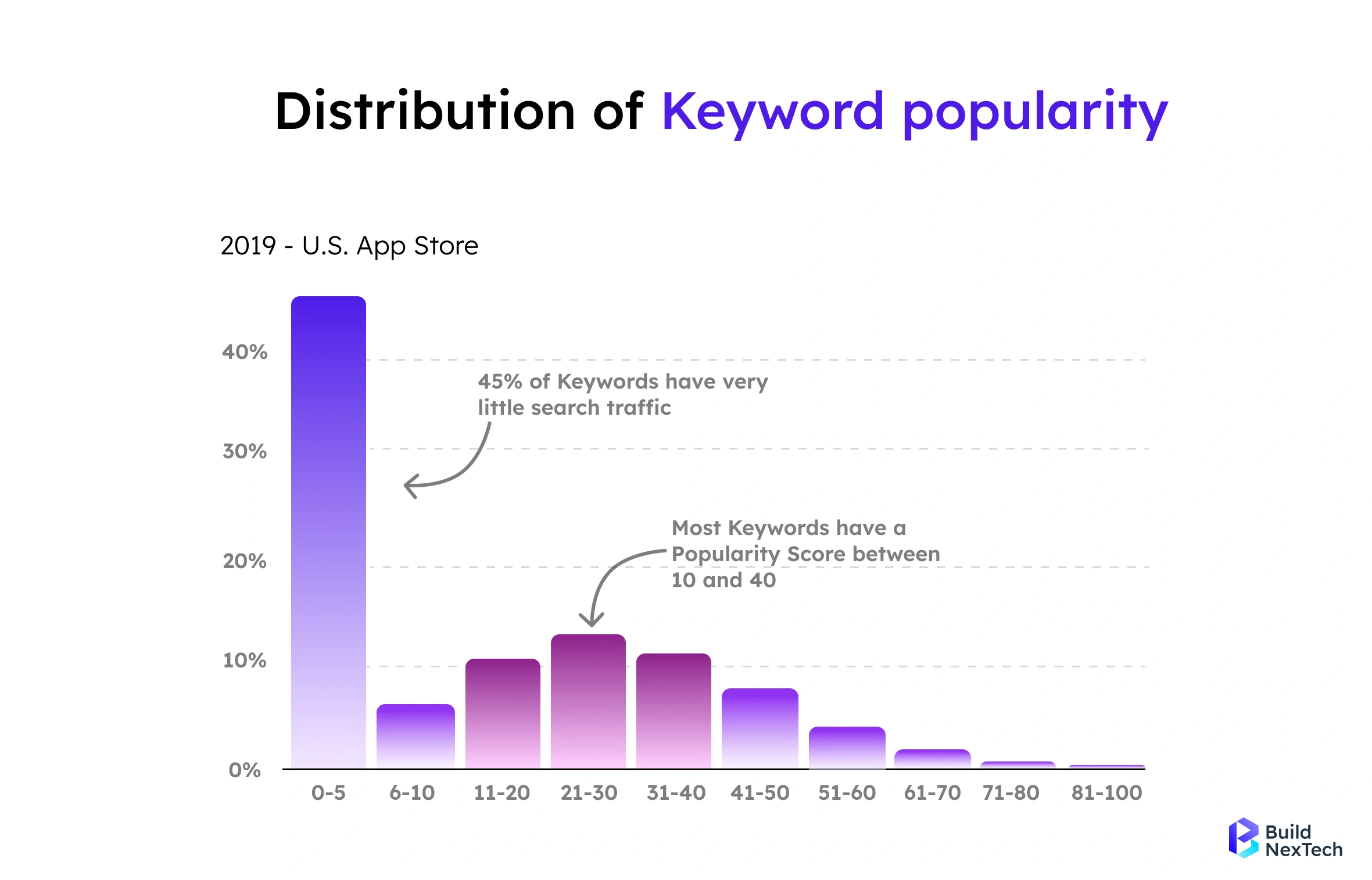
- MozBar is a tool you can add to your browser that shows how hard it is to rank for a keyword, how strong a page is, and link details directly on search engine results pages. For example, a keyword difficulty of 38% tells SEO specialists how competitive a keyword is and whether it’s a viable opportunity to target.
- Google Trends helps track keyword popularity and seasonal changes, which is useful for content planning.
- Free SEO tools online, like SERPRobot and Small SEO Tools, allow limited keyword position checks and site audits for startups.
These tools help small teams find keyword opportunities, track their ranking progress, and improve SEO basics without extra costs. However, they often miss the advanced automation, scalability, and competitor analysis needed for larger campaigns.
Paid SEO Tools for Agencies and Enterprises
For agencies and enterprises managing multiple clients, regions, or thousands of keywords, paid keyword tracking platforms are essential. These tools offer more than just rank tracking. They provide a complete view of SEO strategy, along with automation and detailed reporting.
- SEMrush is a complete SEO suite that includes keyword research, competitor comparisons, PPC insights, and automated reports.
- Ahrefs is well-known for backlink analysis and content gap reporting, and also provides accurate keyword tracking.
- SE Ranking combines daily rank tracking, competitor monitoring, and ready-to-share reports at a reasonable price.
- BrightEdge is an enterprise-level SEO management platform with AI-driven insights, content optimization, and tracking of keyword visibility.
- Conductor focuses on enterprise SEO strategies with in-depth reporting and keyword recommendations.
Paid SEO tools also offer:
- Automated keyword reporting to save time on manual tasks.
- Competitor keyword tracking across different regions and industries.
- API integrations for programmatic SEO and internal dashboards.
- Enterprise-level scalability to support agencies with many clients.
For serious SEO campaigns, investing in paid keyword tracking tools ensures accurate insights, data-driven decision-making, and client trust through clear reporting.
Best Keyword Tracking Software in 2025: Top Recommendations
Choosing the best keyword tracking software in 2025 means finding a balance between accuracy, ease of use, and scalability. The right tool should not only track daily rankings but also provide insights into competitors, content opportunities, and long-term SEO trends.
Best Rank Tracking Tools for Daily Use
Daily-use tools provide straightforward reporting, perfect for bloggers, freelancers, or agencies managing small keyword lists.
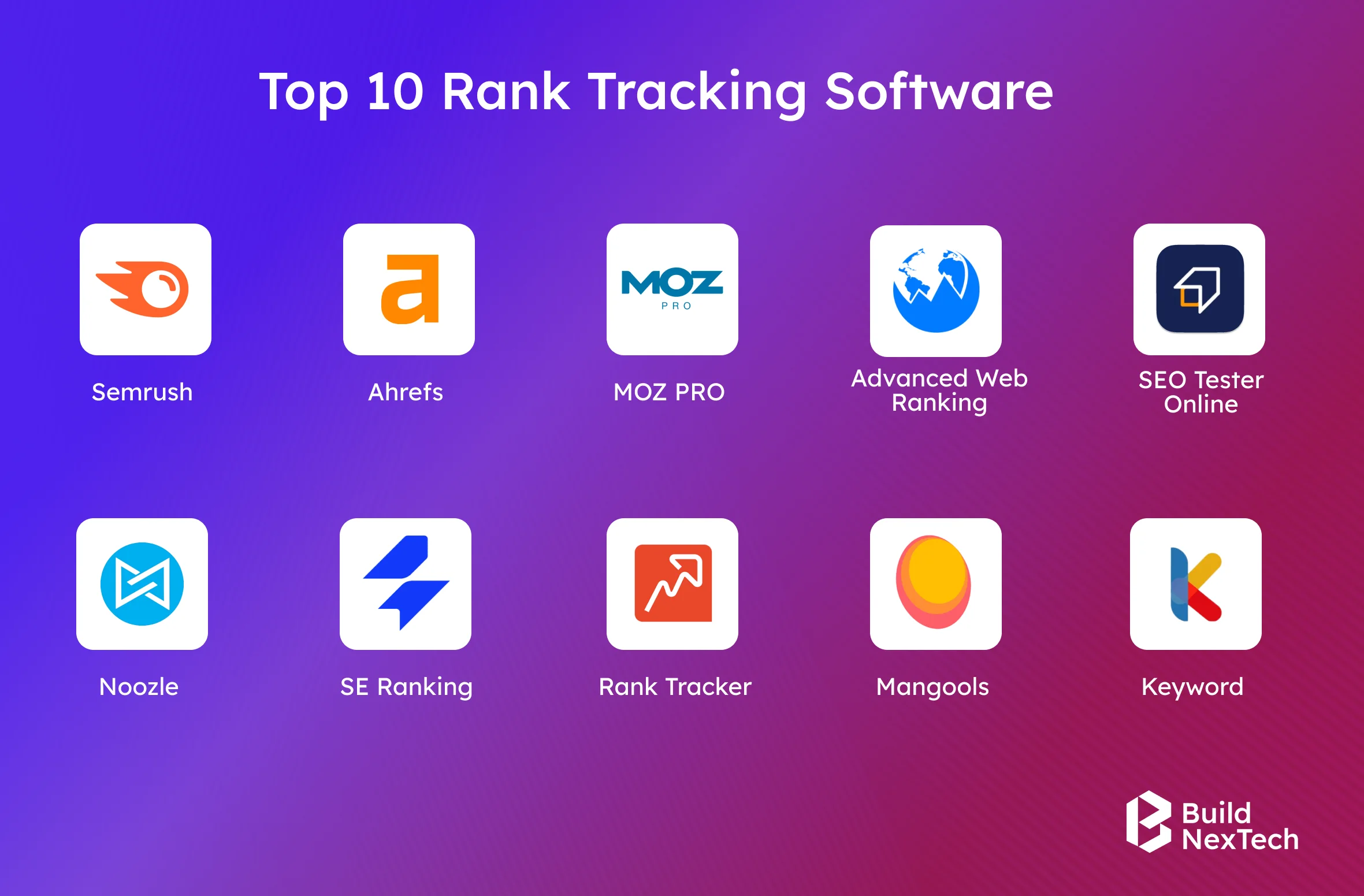
- SE Ranking – reliable daily keyword performance tracking
- SERPWatcher – simple keyword ranking reports for small teams
- AccuRanker – fast keyword position tracker with accurate updates
- Ahrefs Rank Tracker – integrates keyword rankings with backlink analysis
- Google Data Studio connectors – for visualizing keyword ranking reports
Enterprise SEO Platforms for Agencies
Agencies and consultants handling multiple clients need robust SEO platforms that offer scalability, automation, and advanced reporting.
- SEMrush - full SEO toolkit with competitor keyword strategies
- BrightEdge - enterprise-grade keyword ranking and content optimization
- Conductor - helps with researching keywords and creating detailed plans for big content strategies.
- Moz Pro - reliable keyword opportunities, auditing, and link building
- seoClarity - AI-driven keyword ranking reports and automated reporting
New SEO Platforms Worth Exploring
New platforms combine AI with keyword tracking, helping businesses adapt to changes like AI-generated overviews.
- Surfer SEO – keyword optimization guidance with content briefs
- GrowthBar AI – AI-powered keyword research and content optimization
- RankIQ – designed for bloggers and small businesses
- Sistrix – gives in-depth details about search results and lets you track keywords used by competitors.
- AI-powered dashboards – detect keyword cannibalization and reporting opportunities
Choosing the Right Keyword Tracking Software for Your Needs
Selecting the right keyword tracking software depends on your business size, goals, and budget. While freelancers and small businesses often prioritize affordable, easy-to-use tools, agencies and ecommerce brands need advanced platforms that scale with client demands and product-driven strategies. The key is choosing a solution that aligns with your SEO objectives and provides actionable insights without adding unnecessary complexity.
For Small Businesses and Freelancers
Small businesses often balance affordability with functionality. Free and lightweight paid tools work best here.
- Google Keyword Planner – A free tool from Google Ads that helps identify keyword ideas, search volumes, and CPC trends.
- Keyword Magic Tool (SEMrush) – Offers comprehensive keyword clusters, filters, and SERP data.
- SE Ranking – Cost-effective rank tracker with daily updates and on-page audit features.
- WordPress SEO Plugins (Yoast, Rank Math) – For content audits and on-page optimization.
- Free SEO tools online – Lightweight tools such as Ubersuggest or MozBar.
- Email-based ranking reports – Automated keyword alerts easy to share with clients.
For Agencies and Consultants
Agencies need advanced keyword ranking report software to handle larger keyword lists and client reporting.
- Ahrefs – Popular for backlink analysis and competitor insights.
- SEMrush – A full-service SEO suite covering keyword tracking and PPC data.
- SE Ranking – Includes client seat management and reporting automation.
- Google Data Studio – Transforms SEO data into interactive dashboards.
- Keyword API Integrations – For programmatic SEO strategies.
- Backlink profiles & audits – Identify link-building opportunities and broken links.
For E-commerce SEO Services
Ecommerce SEO requires precision since product-focused keywords drive revenue.
- Google Keyword Planner – Discover high-intent product and category keywords.
- Keyword Magic Tool – Find long-tail ecommerce keywords.
- Enterprise SEO platforms (BrightEdge, Conductor, seoClarity) – Track thousands of product keywords.
- Daily keyword ranking reports – Visibility into product page performance.
- Competitor research (Ahrefs, SEMrush) – Identify competitor gaps.
- Google Ads + Google Business integrations – Connect organic and paid insights.
How BuildNexTech Uses Keyword Tracking in Client Engagements
A keyword ranking report is only useful if it connects to something actionable. Here's how we actually use these tools on client projects.
For web development clients, we connect SE Ranking and Google Search Console before the first line of code changes. That way we have a clean pre-launch baseline — ranking positions, impression data, Core Web Vitals — and can measure the real SEO impact of technical changes post-launch. Without that baseline, you're guessing.
For enterprise clients running programmatic SEO (location pages, product category pages at scale), AccuRanker handles the volume. Tracking 5,000+ keywords weekly with manual reporting isn't realistic — AccuRanker's API pushes data directly into dashboards clients can read themselves.
For clients entering new markets — particularly UK, UAE, and Australia, where our work is concentrated — SE Ranking's location-level tracking is accurate enough for regional reporting without the cost of an enterprise license.
The short version: we don't use a single tool. The right stack depends on what the client actually needs to see and how the data will be used. If you're unsure which setup fits your situation, the decision table above is the fastest path to an answer.
If you want to talk through your specific use case — whether that's setting up programmatic SEO tracking, connecting keyword data to your development workflow, or building a clean client reporting stack — get in touch with the BuildNexTech team.
Key Facts & Statistics on Keyword Tracking (2025)
- Backlinko.com (2024 Report): A keyword difficulty score of 38% means the term is moderately competitive but still a viable target. Backlinko also noted that some keywords saw their monthly search volume increase by more than 50% within two months, showing how quickly trends can shift. And for content performance, Clearscope alerts you if an article suddenly loses traction - for example, a 73% drop in traffic.
- Analytify.io(Industry Survey): According to industry research, 68.1% of SEO experts consider Ahrefs the most accurate and comprehensive backlink data provider. On the pricing side, SEO platforms reward long-term commitment: annual billing can save anywhere from 16% to 25%, while multi-year options offer savings of up to 34%, often bundled with 14-day free trials.
- SurferSEO (2024 Report): Surfer SEO was recognized for precision, achieving 96.86% accuracy in rank tracking. This makes it one of the most reliable platforms for professionals who rely on daily keyword accuracy.
- Marketermilk.com: A reminder that no single tool is perfect. As one SEO expert put it, “I don’t want to be 100% biased, so let’s go over some of the pros and cons.” Every platform has strengths and weaknesses, so it’s important to weigh features against your goals.
People Also Ask

What's the most accurate keyword tracking tool available right now?
AccuRanker is consistently rated highest for tracking accuracy, particularly for on-demand updates. Surfer SEO published a 96.86% accuracy figure for its own rank tracking — that's a vendor claim, not an independent audit, but the tool does perform well in practice for content-focused workflows.
Why do free keyword tools fall short for professional use?
Update frequency is the main limitation. Most free tools refresh rankings weekly, which means you're always looking at stale data. For anything competitive — where a ranking change in 48 hours can shift click volume significantly — weekly data is too slow to act on.
Is SE Ranking good enough for a growing agency?
For agencies managing under 30 clients, yes. SE Ranking's daily tracking, white-label reports, and client seat management handle most agency workflows at a fraction of SEMrush's cost. Once you're running competitive research on enterprise accounts or need deep keyword gap analysis, you'll feel the ceiling.
Do any tools track keyword rankings inside ChatGPT or other AI tools?
Keyword.com and Nightwatch both offer this now. The tracking works by monitoring whether your brand or pages appear in AI-generated responses for relevant queries. It's useful for understanding your AI search presence, though the methodology differs from traditional SERP rank tracking and is still evolving.
Do I need local SEO tools for my business?
Yes, CI/CD is highly beneficial for mobile app development, enabling automated builds, testing, and distribution to app stores.


.webp)
.webp)
.webp)

.webp)
.webp)