
.png)
Artificial Intelligence, machine learning algorithms, and AI automation are fundamentally reshaping modern backend architecture. Traditional monolithic, rule-based systems are evolving into intelligent backend AI ecosystems capable of real-time learning, adaptive scaling, and autonomous optimization.
Key Topics Covered in This Blog
- AI-driven infrastructure automation and predictive scalability
- Intelligent CI/CD pipeline automation and self-healing systems
- Machine learning–based autoscaling and resource optimization
- AIOps, intelligent observability, and anomaly detection
- Event correlation and automated root cause analysis
AI technology now transforms backend system development through its application in microservices architecture and Kubernetes optimization and AIOps observability solutions and zero-trust security frameworks.
AI-Driven Infrastructure Automation and Predictive Scalability
The current evolution of backend architecture systems occurs because artificial intelligence technology transforms all aspects of infrastructure development, system deployment, and operational efficiency. The traditional monolithic architecture system depended on manual system deployment together with automatic system expansion to handle increased demand. AI automation together with predictive analytics and machine learning algorithms are transforming backend AI systems into adaptive self-optimizing ecosystems.
- Predictive analytics anticipates user demands
- Serverless architecture improves elasticity
- Edge computing ensures low latency
By embedding backend AI into infrastructure layers, Buildnexttech helps enterprises transition from static system architecture to intelligent, scalable platforms powered by AI agents and machine learning.
Intelligent CI/CD Pipeline Automation and Provisioning
Efficient, cost-effective AI capable of transforming code and AI testing tools are increasingly augmenting continuous integration pipelines. These systems analyze predictable code structures, detect bug detection patterns, and optimize testing frameworks automatically.
- Automated testing systems reduce technical debt
- AI automation accelerates deployment cycles
- Machine learning algorithms improve code patterns
- Intelligent analytics optimize build pipelines
This shift improves Web Development workflows and enables full stack development teams to focus on innovation instead of routine tasks.
Self-Healing Infrastructure and Automated Failure Recovery
Self-healing backend AI systems use predictive monitoring to detect anomalies before they escalate. The AI agents conduct log analysis through Natural Language Processing and Entity extraction to identify the primary causes of problems.
- Server-Side Events trigger recovery workflows
- API gateways reroute traffic dynamically
- Web Application Firewall systems enhance security
- AI-powered chatbots assist internal teams
This results in a resilient backend architecture that maintains stability even under high load.
Machine Learning–Based Autoscaling and Resource Optimization
Predictive scalability is powered by machine learning algorithms that evaluate traffic patterns and database queries. AI automation platforms optimize model sizes, balance Cache API usage, and leverage Azure API Management for resource allocation.
- Vector databases and vector embeddings enhance data efficiency
- Retrieval-Augmented Generation improves query intelligence
- Intelligent analytics optimize compute allocation
- Low latency is maintained through Edge computing
This approach strengthens backend AI capabilities while reducing operational costs.
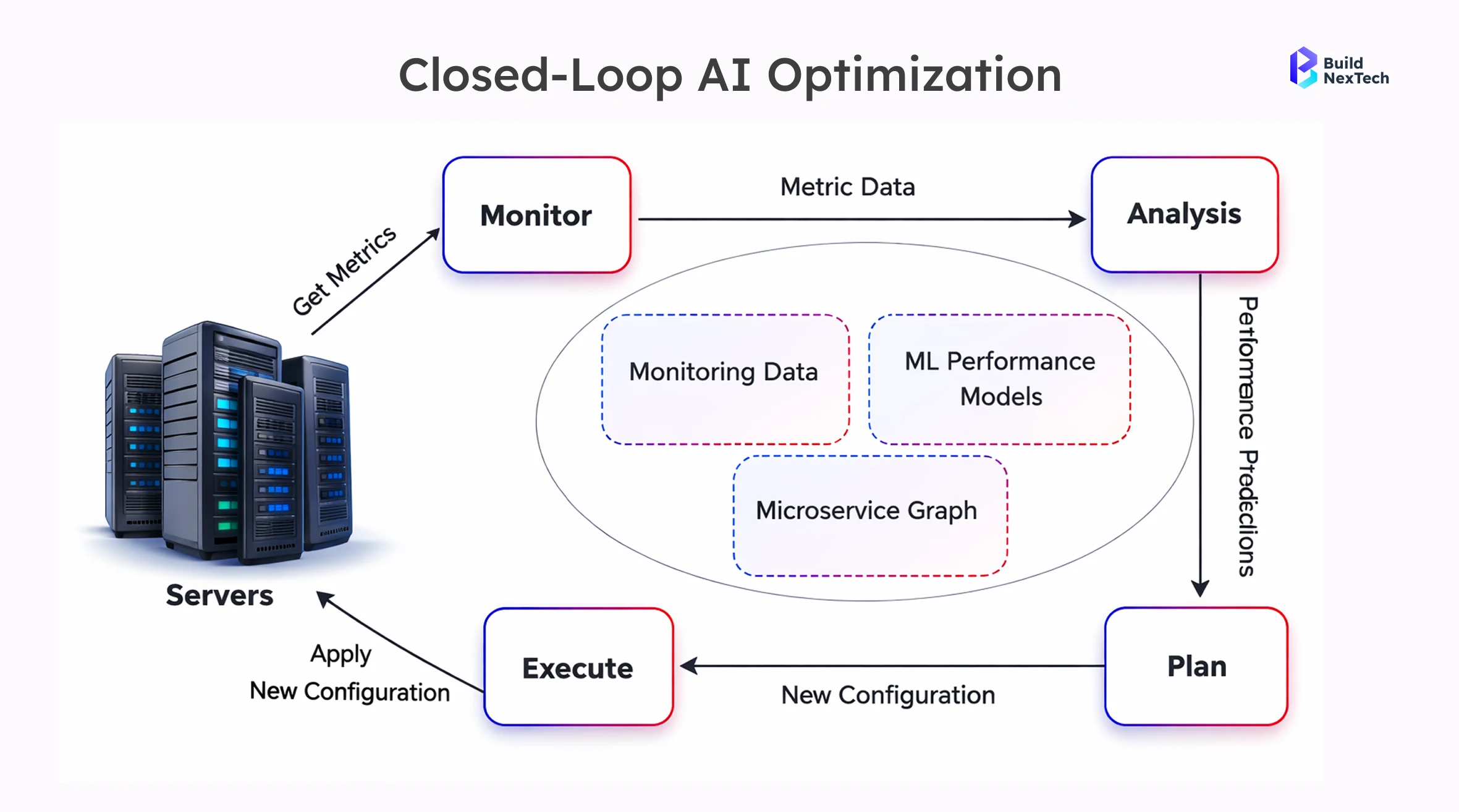
Intelligent Observability and AIOps for Modern Backend Systems
The development of intelligent observability together with AIOps has transformed backend management practices from their traditional system monitoring methods towards the establishment of automated self-repairing systems.
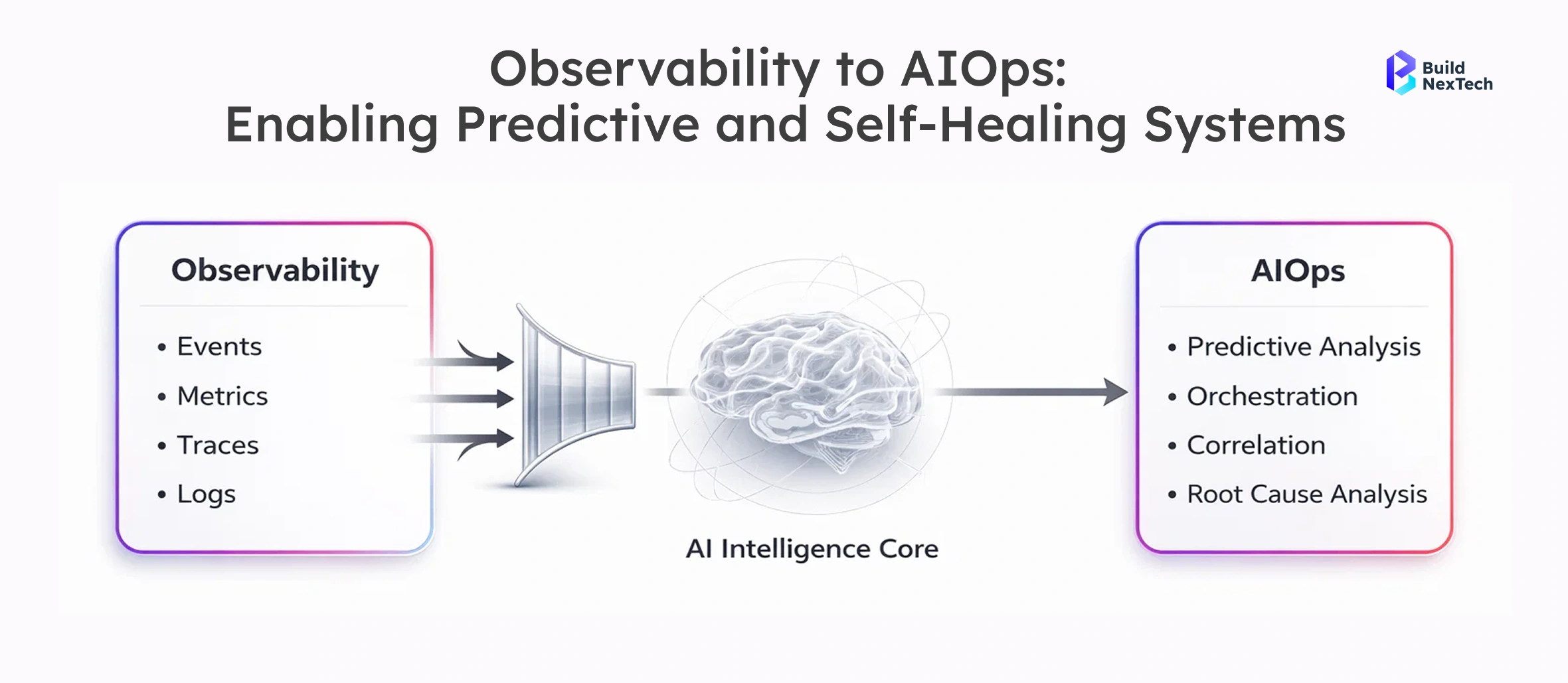
Core Components of Modern Observability
Modern systems rely on the "MELT" telemetry framework which AI upgrades to manage the vast amount of current backend system data.
- Metrics: Quantitative data points (CPU, latency) tracking health over time.
- Events: Discrete actions occurring within a system.
- Logs: Granular, immutable records of specific application events.
- Traces: End-to-end records of user requests as they flow through distributed services.
Key Capabilities of AIOps
AIOps functions as an intelligence system which operates above telemetry data to streamline difficult IT operations.
Anomaly Detection: The system employs machine learning methods to create dynamic baseline models which define normal behavior patterns while the system detects all deviations including minor latency spikes which static thresholds fail to detect.
Noise Reduction: The system consolidates multiple related alerts into one main incident which decreases alert fatigue by more than 90 percent.
Automated Root Cause Analysis (RCA): The system tracks all infrastructure dependencies to identify the precise failure source within a time frame of minutes instead of hours.
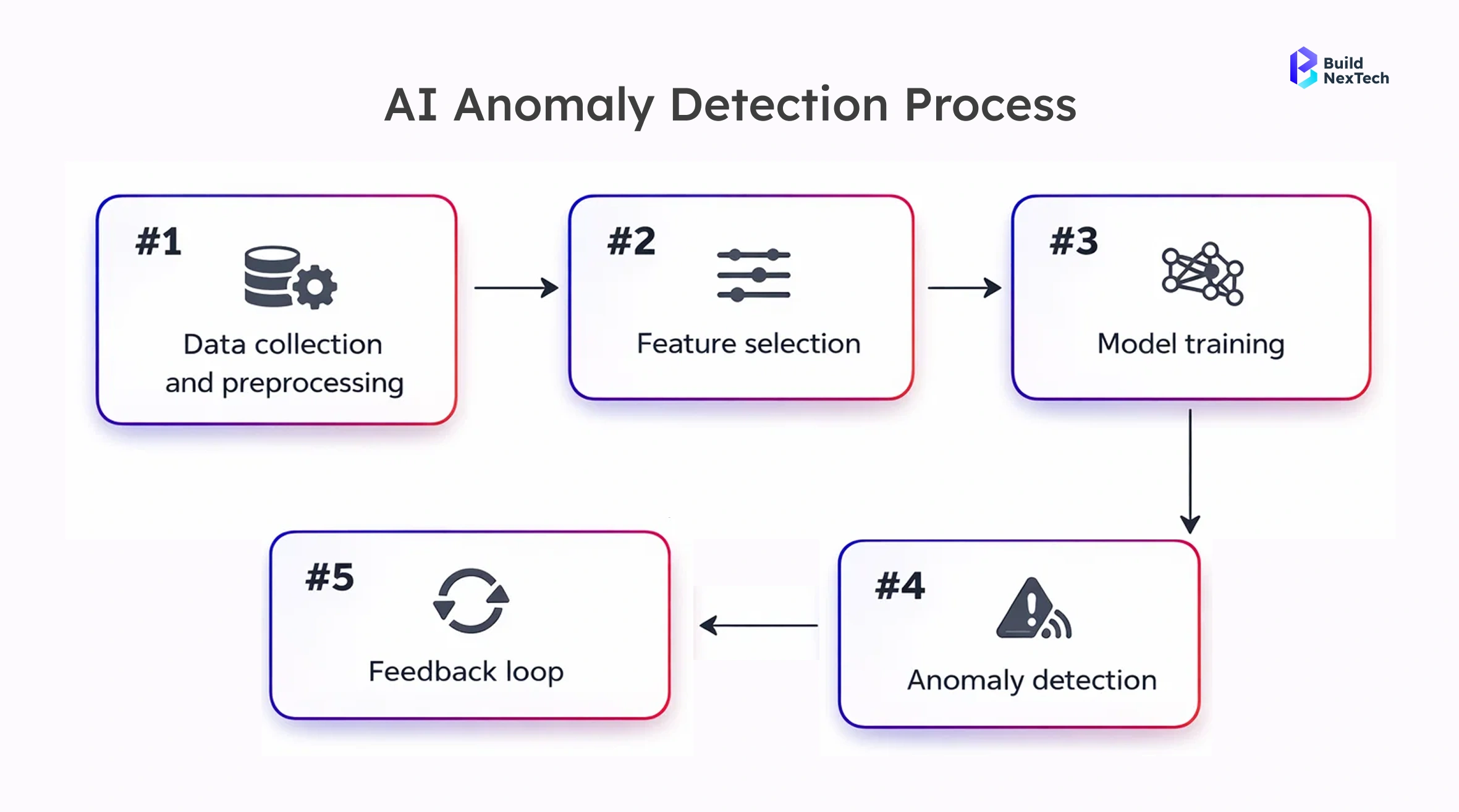
AI-Powered Log Analysis and Anomaly Detection
The Artificial Intelligence systems use Natural Language Processing to understand logs and conversation states which exist in backend systems. The application of machine learning models enables systems to automatically categorize and group and rank log data, which results in expedited investigations.
- Semantic Search improves log analysis
- Bias detection ensures fairness
- AI automation enhances cybersecurity automation
- Content moderation strengthens compliance
This reduces downtime and improves user experiences significantly by enabling faster issue resolution and more accurate anomaly detection.
Event Correlation and Root Cause Analysis
AIOps tools use real-time event data analysis to establish connections between log data and metric data and trace data across all system components.
- The system conducts ongoing surveillance of API endpoints.
- Server-Sent Events enable dynamic updates
- AI agents leverage Transformer architecture models
- GPT series improves contextual understanding
By automating root cause analysis, organizations reduce incident resolution time dramatically and strengthen backend reliability.
Predictive Incident Management and Operational Resilience
The system uses predictive analytics to enable AI agents to predict upcoming failures which will affect users. The AI models use historical trends together with system performance data to identify patterns of risk for detection.
- The workflow orchestration tools use automation to handle response actions which they implement.
- Orchestration platforms coordinate backend AI systems.
- Continuous learning enhances reliability.
This proactive model modernizes traditional backend architecture approaches by developing a new system that uses intelligent predictive operations instead of reacting to events.
AI-Optimized Microservices and Distributed Architecture
The AI-Optimized Microservices and Distributed Architecture framework combines two technologies through containerized services which can be independently deployed to create systems that possess self-healing capabilities and adaptive features that operate with maximum efficiency. The traditional microservices framework experiences high operational complexity which this solution solves through AI agents that perform automatic resource management and traffic balancing together with predictive maintenance tasks.
Key Aspects of AI-Optimized Architecture:
Intelligent Automation: AI agents replace manual intervention through automated load balancing and real-time resource allocation optimization.
Improved Performance: AI-driven systems demonstrate improved performance through their ability to decrease latency by 27.3% and increase throughput by 25.7% during traffic surges when compared to traditional methods.
Predictive Operations: AI models use log files and data streams to identify potential bottlenecks. The AI models use data analysis to create system predictions which enable organizations to maintain operational efficiency.
AI-Enhanced Service Discovery and API Management
Modern orchestration platforms use AI automation to improve their API gateways and Azure API Management systems. The backend systems use service discovery mechanisms to automatically detect and register services which run in dynamic microservices environments.
- AI automation tools monitor API performance
- Predictive analytics forecast usage spikes
- Intelligent analytics optimize throughput
This results in improved system performance and enhanced user experience, especially in high-traffic distributed applications.
Adaptive Load Balancing and Traffic Routing
AI agents use predictive analytics and machine learning to handle traffic flow management through their dynamic traffic control systems. The AI-driven systems use dynamic routing adjustments which operate in real time to change their routing methods based on current workload patterns and infrastructure status.
- Edge computing reduces latency
- Cache API improves response schemas
- Data mesh architectures support scalability
These advancements ensure low latency across distributed systems while maintaining reliability and performance under fluctuating workloads.
Performance Optimization in Microservices vs Monolithic Systems
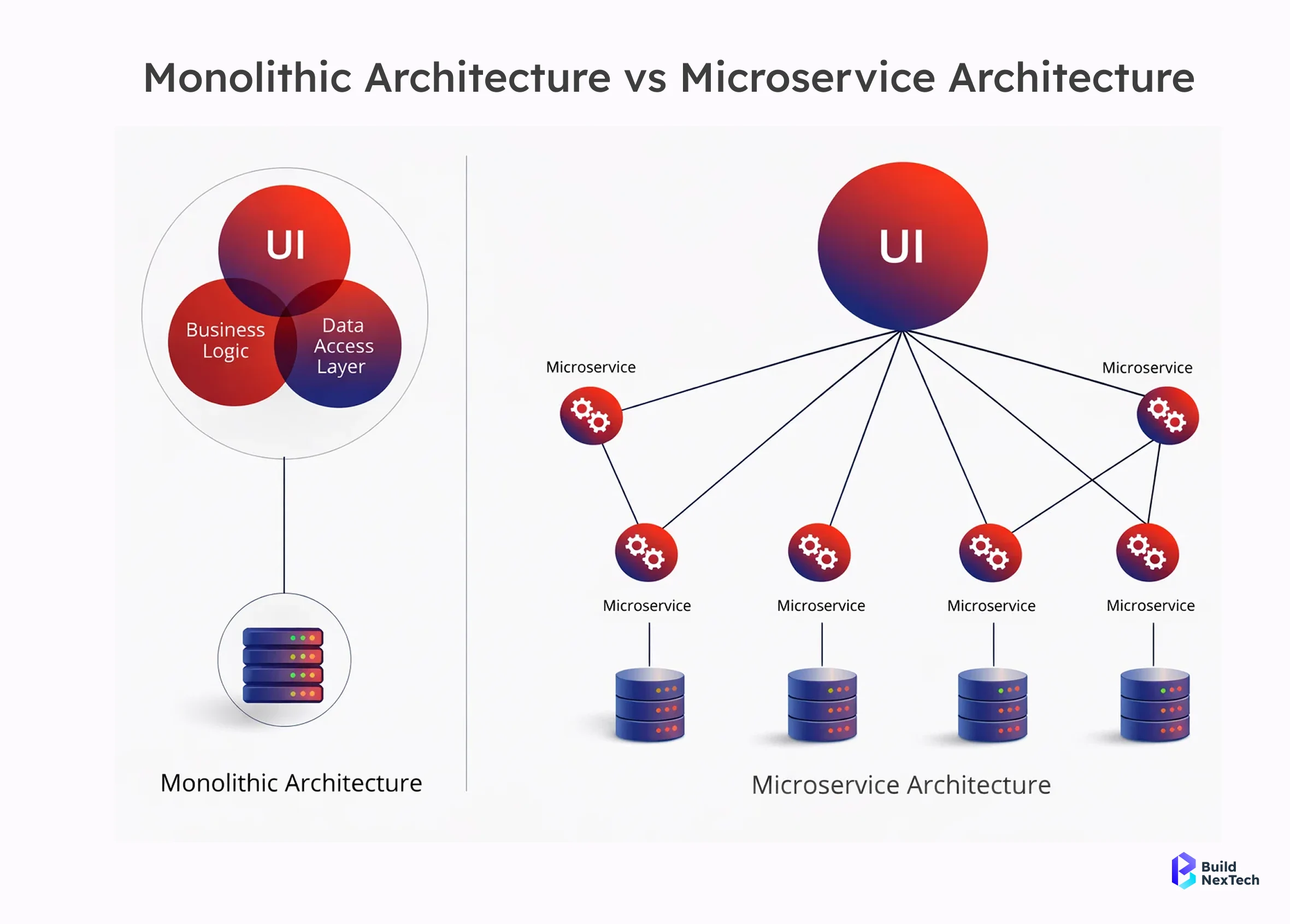
Microservices vs monolithic comparisons show clear AI advantages. The monolithic architecture designates all computational functions to operate as a single deployment unit while microservices architecture enables system components to function as separate services which can be independently expanded.
- Microservices architecture scales horizontally
- Monolithic architecture struggles with rapid scaling
- Backend AI enhances performance tuning
AI-driven microservices architectures outperform traditional models in flexibility and resilience.
AI-Enhanced Orchestration, Workflow, and Data Automation
AI-enhanced orchestration and automation create a new technological framework which replaces fixed rule-based systems with adaptive systems that learn through experience. AI orchestration functions as a conductor which directs multiple AI models and data pipelines and human workers to complete an entire operational workflow while traditional automation RPA executes predetermined "if-then" tasks.
Key Components of AI-Enhanced Systems
- Orchestration Layer: The "brain" that oversees task execution through its control of task sequences and model scheduling and system component dependencies.
- Data Automation: The system uses pipelines which gather and clean various data types including emails and images and PDFs to create structured data which it sends to AI models in real time.
- Agentic AI: The system uses specialized autonomous agents which possess the ability to understand their primary objectives and make autonomous choices while conducting complex operations without needing direct guidance.
- Feedback Loops: The system uses these mechanisms to learn from its actions which help it develop better model accuracy together with improved process efficiency.
Kubernetes Cluster Optimization with AI
AI automation together with predictive monitoring systems provides benefits to Kubernetes clusters. The AI systems use real-time data to analyze workload patterns together with node utilization which enables them to perform automatic pod rebalancing and optimal container placement throughout the cluster.
- Serverless architecture improves scalability
- Edge computing ensures low latency
- Intelligent analytics optimize node allocation
This strengthens backend architecture reliability by ensuring consistent performance, reduced downtime, and optimized infrastructure utilization.
Intelligent Workflow Scheduling and Pipeline Automation
AI agents handle both conversational interactions and their associated tool operations while managing all ongoing work processes to create effective service connections and secure API connections and deployment pipeline operations. The systems adjust their operation according to the evolution of work processes and the demands of current projects.
- GitHub Copilot accelerates development
- AI-powered code transformation improves predictable code structures
- Testing processes are automated
This increases development velocity and reduces technical debt, enabling teams to focus on innovation rather than maintenance.
AI-Driven Data Orchestration and ETL Optimization
Data orchestration software uses machine learning algorithms to process data in real time and to direct data intelligently across various distributed systems. AI models use structured and unstructured datasets to find patterns which they use to improve ETL workflows.
- Vector databases enhance data retrieval
- Retrieval-Augmented Generation supports insights
- Intelligent analytics improves Financial management
AI enhances backend AI intelligence across large-scale systems by enabling scalable, data-driven automation and advanced analytics.
Autonomous Security, Self-Healing Systems, and the Future of Backend Architecture
Security remains central to modern backend architecture. AI strengthens cybersecurity automation and enhances user privacy and data privacy.
The Core Pillars of Future Backend Architecture
Self-Healing (AIOps): The system employs AI to perform continuous health monitoring which enables it to anticipate CPU spikes and memory leaks as potential system failures. The system uses AI to detect system failures which enables automatic service restarts and resource redistributions and deployment rollbacks of faulty systems.
Autonomous Security (ASO): The new security model protects data through "Holographic Protection" which secures data and identity components through integrated security measures. AI-based systems identify security weaknesses while they detect breaches and they establish patches for systems which effectively decrease )exposure times from )days to )seconds.
Cloud-Native & Distributed Systems: Systems now use microservices and service meshes and GitOps pipelines (through ArgoCD) to create decoupled architectures which enable systems to function even when one component experiences a failure.
AI-Based Threat Detection and Zero-Trust Security Models
Neural network and Transformer architecture models power AI-driven threat detection. These models analyze behavioral patterns, access logs, and network activity to identify anomalies that traditional rule-based systems often miss
- Multimodal LLMs analyze diverse data
- Agentic LLMs automate decisions
- AI agents leverage continuous learning
Security becomes predictive rather than reactive, enabling zero-trust architectures that validate every request and interaction within modern backend systems.
Automated Security Policy Enforcement and Risk Mitigation
AI automation platforms enforce policies in real time, ensuring compliance with regulatory standards and internal governance frameworks. These systems dynamically evaluate access controls, authentication flows, and API usage patterns.
- Content moderation prevents misuse
- Cybersecurity automation strengthens defenses
- Enterprise operations become resilient
This modernizes system architecture across industries by embedding intelligent, automated risk management into backend AI systems.
Toward Fully Autonomous and Self-Optimizing Backend Systems
The future includes agent architectures coordinating backend AI systems autonomously. These agent architectures allow AI agents to collaborate, share context, and perform advanced tool use across distributed workflows.
- Model Context Protocol ensures contextual awareness
- AI web development tools enhance design assistance
- Progressive Web Apps leverage client-side AI and frontend AI
As backend AI systems mature, continuous learning and predictive analytics will enable fully self-optimizing architectures that require minimal human oversight while maintaining peak system performance.
Conclusion: The Rise of Intelligent, AI-Native Backend Architecture with bnxt.ai
Artificial Intelligence is fundamentally transforming backend architecture through AI automation, predictive analytics, intelligent orchestration, and autonomous security models. Modern backend AI systems are no longer passive infrastructure layers; they are evolving into adaptive, self-healing ecosystems powered by AI agents, machine learning algorithms, and AIOps platforms.
Key Learnings from This Blog
- AI automation is transforming backend architecture into predictive, self-optimizing systems.
- Machine learning–based autoscaling improves resource efficiency and cost control.
- AIOps strengthens observability with anomaly detection and automated root cause analysis.
- Microservices architecture gains agility through AI-driven service discovery and load balancing.
- AI-enhanced orchestration streamlines workflows, deployments, and data operations.
Buildnexttech’s bnxt.ai platform plays a strategic role in accelerating this transformation. Instead of layering AI on top of legacy systems, bnxt.ai embeds intelligence directly into backend architecture components. It integrates AI agents, large language models, predictive monitoring, and AI automation tools into a unified operational framework designed for modern, scalable infrastructure.
People Also Ask

1)How is AI transforming modern backend architecture?
AI integrates automation, predictive analytics, and AI agents into backend architecture to improve scalability, observability, and security.
2)How does AI improve microservices architecture?
AI enhances service discovery, load balancing, and predictive scalability in microservices environments.
3)What role does AIOps play in backend optimization?
AIOps uses machine learning and predictive monitoring to automate log analysis and incident resolution.
4)How does AI enable predictive scalability in cloud-native systems?
AI analyzes traffic patterns and adjusts serverless architecture resources dynamically.
5)How does AI-native backend architecture differ from traditional backend systems?
Traditional systems rely on static scaling, while AI-native backend architecture uses AI agents, predictive analytics, and automation for intelligent optimization.


.webp)
.webp)
.webp)

.webp)
.webp)