


The global web development market is on track to hit USD 80.60 billion in 2025 and the tech stack you choose will determine whether your application scales with that growth or becomes a bottleneck. Picking between MERN, MEAN, LAMP, JAM stack, or Java Full Stack isn't just a technical decision. It affects how fast you ship, how much it costs to maintain, and how well your app holds up under load. Yet most guides list the options without telling you when to actually use each one.This guide does exactly that. We cover the most widely used stacks in 2025, what each one is built for, and the factors that should drive your final decision whether you're a startup building an MVP or an enterprise modernizing a legacy system.
Choosing the right tech stack is crucial for successful web application development in 2025. Startups and enterprises in India and globally are increasingly seeking custom web application development services that ensure scalability, web application security, and seamless user experiences. Selecting the ideal combination of frontend and backend technologies, including React JS framework, Node.js, and Express.js, or the traditional LAMP stack, can significantly impact project efficiency and long-term maintainability.
Our team helps businesses choose the best web development frameworks and stacks, such as MERN stack development or Jamstack web development, tailored to their industry requirements. With expertise in website programming, React JS development, and LAMP programming, our solutions ensure high-performance and secure web application services for startups and enterprises across Hyderabad and other tech hubs. According to Mordor Intelligence, the global web development market is projected to reach USD 80.60 billion in 2025, growing at a CAGR of 9.30%.
What is a Tech Stack in Web Application Development?
Web application development is the process of creating web applications that run on web browsers, delivering dynamic, interactive, and scalable experiences. It involves using programming languages, frameworks, and tools to build efficient, secure, and high-performing web applications.
About the Tech Stack:
A tech stack refers to the set of technologies, tools, and frameworks used to develop and maintain a web application. The choice of stack impacts development time, scalability, performance, and web application security.
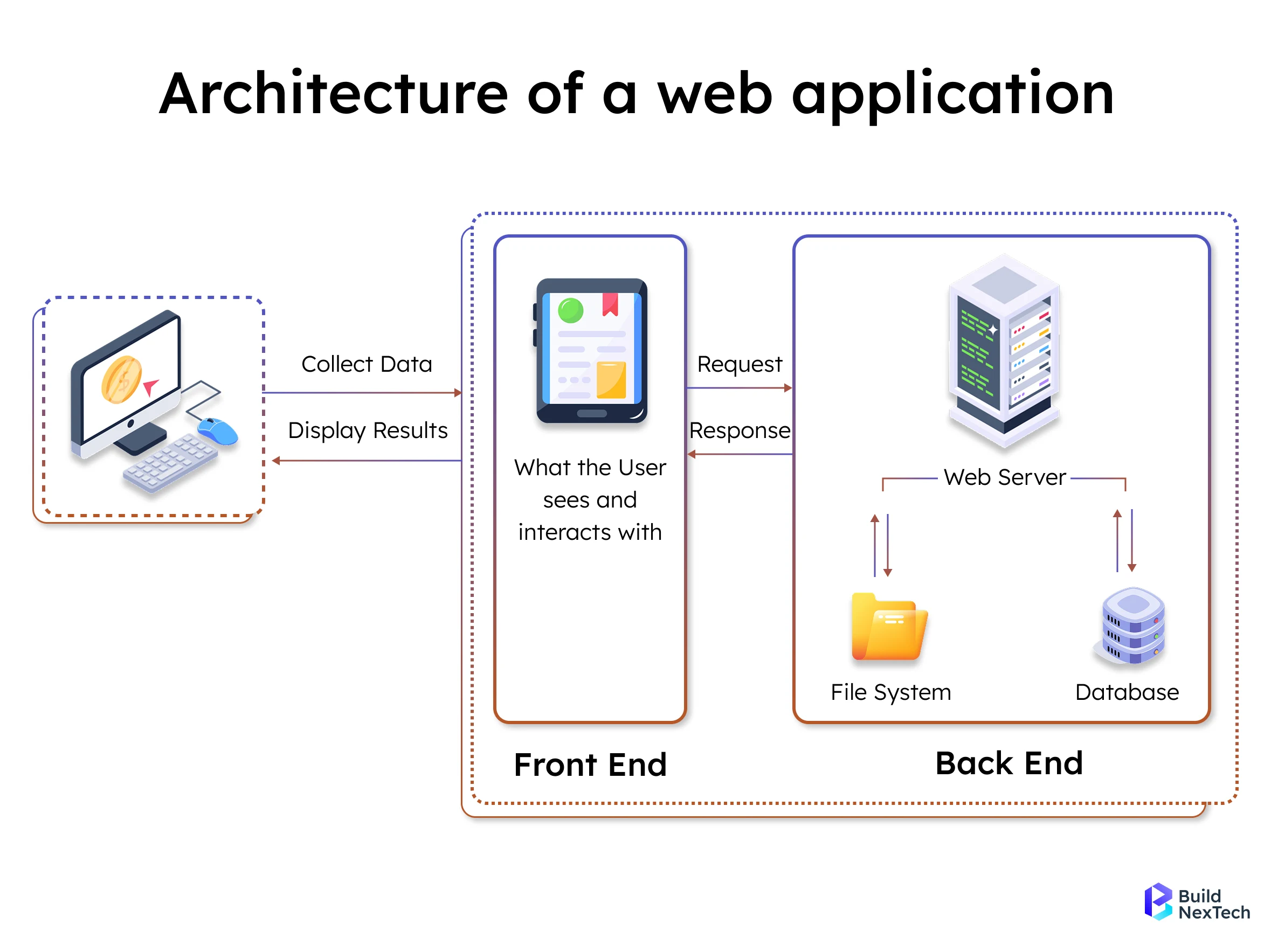
Key components include:
- Frontend & Backend frameworks that power the user interface and server logic
- Databases such as MySQL, MongoDB, or Oracle for data management
- Tools, servers, and libraries that support deployment, monitoring, and maintenance
Modern web development frameworks, including React JS framework, Node.js, and Express.js, MERN stack development, and LAMP stack development, allow businesses to deliver high-quality web application services and custom web application development that meet evolving market demands.
Popular Frontend Technologies and Frameworks
Frontend technologies form the visual and interactive layer of a web application. Choosing the right frontend stack impacts web application design, website programming, and overall user experience. Popular web development frameworks include:
- HTML, CSS, and JavaScript (Core)
- Structure content (HTML), style layouts (CSS), and add interactivity (JavaScript)
- Essential for all custom web application development projects
- Supports responsive and intuitive web application services
- React.js
- React JS framework for dynamic single-page applications (SPAs)
- Enables efficient React JS development with reusable components
- Integrates seamlessly with Node.js and Express.js backend
- Forms the frontend of MERN stack development.
- Angular
- Google-backed framework for large-scale, enterprise-level applications
- Provides two-way data binding, component-based structure, and strong web application security
- Ideal for complex website programming and custom web application development services
- Vue.js
- Lightweight, progressive framework popular for startups and rapid deployment
- Simplifies web application development and interactive web application services
- Can be combined with Node.js and Express.js for full-stack solutions
When to Use These Frontend Technologies
Developers need to select appropriate frontend technologies because these technologies determine the scalability and responsiveness and security of their web applications. The tools enable developers to create custom web applications and build progressive web applications and eCommerce platforms and enterprise-level digital products.
- HTML together with CSS and JavaScript provides the most effective solution to create basic web designs which display properly on different browsers and mobile devices.
- React.js serves as the best solution for building single-page applications and creating dynamic user interfaces and developing interactive dashboards and implementing MERN stack applications.
- Enterprises should use Angular because it provides essential features for building enterprise applications that require strong data handling capabilities and modular system design and secure web application development through framework-based security.
- Vue.js proves to be an excellent choice for startups because it enables them to quickly develop lightweight applications which function as progressive web applications and handle projects of small to medium size.
Popular Backend Technologies and Frameworks
Web applications today use backend technologies for their server operations and database management and API integration functions. Web application development demands developers to choose the appropriate backend stack because it determines system security and scalability and application performance. The following backend frameworks are widely used in the industry.
- Node.js (Express.js)
- The Node.js JavaScript execution platform is designed for creating, fast, scalable event-driven back end applications.
- The Express framework makes routing, middleware, and API development feel easy.
- The Express framework integrates flawlessly with front end frameworks such as React, Angular, & Vue.
- It is what actually forms the back end of the MERN and MEAN stacks.
- Django (Python)
- The Python framework provides high-level development capabilities for building secure and scalable backend systems which can be developed at a fast pace.
- The system includes authentication and ORM functionality along with advanced security mechanisms to protect its users.
- The solution serves as an optimal choice for developing web applications which require extensive data processing and artificial intelligence and machine learning capabilities.
- The system enables developers to connect mobile and web applications through REST API integration.
- Ruby on Rails
- The framework enables developers to build web applications quickly through its preconfigured settings.
- The system includes automatic database management solutions and user authentication methods and web application protection features.
- The solution works best for startup companies and minimum viable product development and software-as-a-service applications that require quick market entry.
- The system uses MVC architectural design to create a backend system that developers can easily maintain and develop.
- Spring Boot (Java)
- The enterprise-level backend development and API services need a Java-based framework for their development process.
- The system delivers strong protection through its modular design which supports microservices architecture.
- The system functions optimally in banking and healthcare environments as well as for large enterprise software applications.
- The system enables effortless database connections together with cloud-based web service integration.
- .NET Core (C#)
- Microsoft-backed, cross-platform framework for high-performance backend systems
- The system provides support for business applications and application programming interfaces and cloud-based enterprise solutions.
- The system delivers security and reliability functions while establishing connections with Azure cloud services.
- Popular for corporate software development and enterprise-grade digital platforms
When to Use These Backend Technologies
The selection of appropriate backend framework enables the development of applications which can handle large scale operations while maintaining security and delivering efficient performance. The backend technologies provide support for enterprise systems and API-first development and cloud integration and contemporary web application services.
- Node.js (Express.js) serves as the optimal framework for creating real-time applications and developing scalable application programming interfaces and building complete JavaScript solutions and designing customized web platforms.
- Django (Python) serves as the perfect framework for developing secure backend services and building data-driven applications and creating enterprise-grade platforms and executing customized development projects.
- Ruby on Rails serves as an ideal solution for startups and minimum viable products and agile development projects and the creation of interactive backend web applications.
- Spring Boot (Java) functions as the ideal solution for creating enterprise applications and developing modular microservices and establishing strong security systems and building financial-grade backend systems.
- .NET Core (C#) operates as the ideal framework for developing enterprise systems and creating cloud-ready applications and building cross-platform web applications and implementing secure digital solutions.
Choosing the Right Tech Stack for Web Application Development
Selecting the right tech stack is crucial for building efficient, secure, and scalable web applications. Whether you are considering MERN stack, LAMP stack, or modern technology stacks like Jamstack, the choice directly impacts development time, production environment, hosting infrastructure, and long-term success.
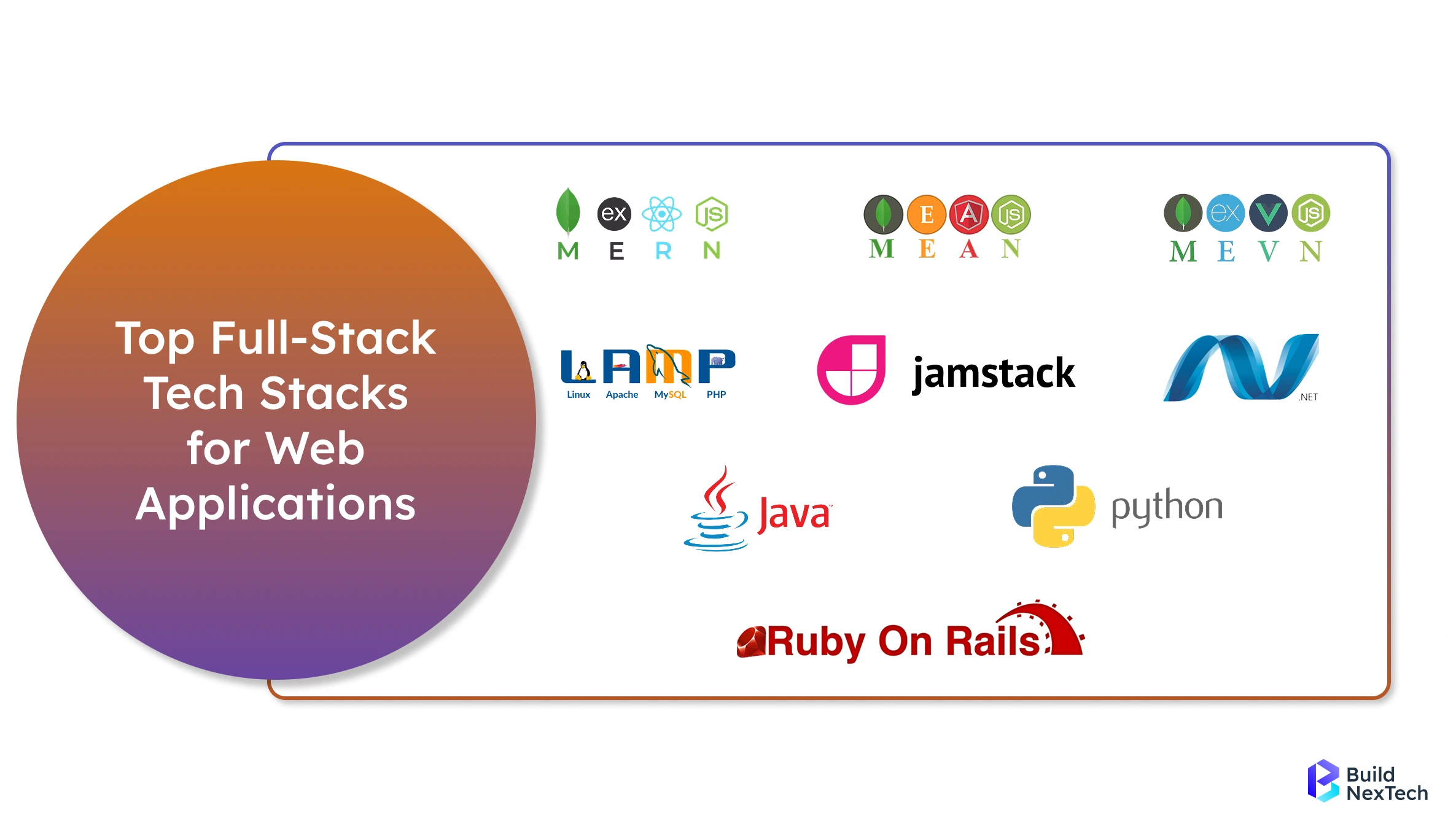
A reliable web application development company must evaluate key factors, such as project complexity, team size, web application security, and future scalability, before selecting the best stack. With expertise in technologies like Java Springboot, Python, React Native, Express.js, MySQL, and AWS Lambda, businesses can deliver custom web application development services tailored to client needs.
MERN Tech Stack (MongoDB, Express.js, React.js, Node.js)
MERN Stack Development - MERN stack development is among the best frameworks for creating the latest, dynamic websites that can grow into multiple pages and multiple devices. Because of its high speed, flexibility, and ability to reuse components, a majority of the existing MERN developers tend to use this framework for their custom web applications when they need great performance and a great user experience.
- MongoDB is classified as a NoSQL and provides a platform to scale up from one server as needed and allows many different types of data, accommodating very large amounts of data and can effectively support live working applications and/or live web applications.
- Express.js is a light-weight back-end framework used to program your website, route to different areas of your website, and provide middleware functionality for Express.js and Node.js.
- React.js is a dynamic React. JS framework that allows reuse of components throughout your site, providing the ability to develop both React and React Native-based web applications, and develop custom web applications in a seamless manner.
- Node.js is a server-side JavaScript runtime environment that enables developers to create scalable MERN-based applications using asynchronous programming. This also makes it possible to develop real-time applications using Node.js.
When to use: Opt for the MERN tech stack when developing web applications that require interactive UI, Express.js APIs, and high scalability. This stack is perfect for companies offering MERN development, MERN stack development, and custom web application development services.
MEAN Stack (MongoDB, Express, Angular, Node.js)
There are many web development frameworks available today that can be used for building dynamic, modern, enterprise-level web solutions. The MEAN stack is one of the most widely used stacks in the world of mean stack development due to its reliability, scalability, and its ability to create single-page applications. Because of these attributes, many mean stack developers choose to use the MEAN stack for providing custom web-based application development services that require real-time performance, seamless integration, and the ability to scale for years to come.
- MongoDB is classified as a NoSQL database and is designed with scalability, flexibility in the schema, and efficient management of data as its primary focus. MongoDB is ideal for any development services that are data-intensive, such as enterprise-level services or web application services.
- Express.js does not have a built-in set of features like most other back-end development frameworks, rather Express allows the developer to create their own.
- Angular is a great framework for building robust and interactive user interfaces because it is easy to use and allows for modular application development with your Angular application design and provides seamless integration into your web application.
- Node.js is an ideal runtime to run mean applications that support asynchronous programming and provide a server-side runtime environment. By doing so, Node.js will allow developers to build high-performance and real-time applications.
When to use: Opt for the MEAN stack when developing web applications that require enterprise-grade scalability, Express.js APIs, and dynamic single-page applications. This stack is perfect for businesses seeking mean development, mean stack development, and custom web application development services.
MEVN Stack (MongoDB, Express, Vue.js, Node.js)
The MEVN Stack is becoming one of the most popular frameworks in web development today for building modern, light and high-performance applications; this is because the MEVN Stack has features making it a great tool for web application development and has gained increasing recognition due to its simplicity, flexibility, and ease of integration into existing systems. So, most MEVN Stack Developers are using this stack to create Web Application Development Services to support the delivery of high-quality, interactive front-end user experience applications and seamless back-end processing.
- MongoDB is a NoSQL database designed to provide a fully-scalable database solution with flexible and powerful handling of very large data sets. MongoDB is therefore uniquely suited for development of real-time applications; this is especially relevant in most web applications, where the database is expected to support fast-paced output.
- Express.js is a front-end backend application framework that provides a limited but very useful API interface; this means it enables developers to simplify the handling of middleware and routing, which is critical for creating applications with Node.js and Express.js.
- Vue.js is an extremely popular component-driven front-end framework that enables rapid creation of lightweight web applications, in addition, Vue.js has the ability to be very performant and enable
- Node.js is a scalable and asynchronous runtime execution environment; because MEVN Development depends heavily on asynchronous programming and the ability to run many operations at once, Node.js has proven to be the most effective tool for MEVN Development and in the creation of real-time solutions.
When to use: Opt for the MEVN stack when creating lightweight, interactive web applications with modular components, Express.js APIs, and real-time scalability. This stack is ideal for companies focusing on MEVN stack development and custom web application development services.
LAMP Stack (Linux, Apache, MySQL, PHP)
The LAMP stack remains a reliable choice for website programming and custom web application development. It forms the backbone of many enterprise systems due to its strong community support and compatibility. A web application development company may recommend this for projects where LAMP programming and LAMP server setups are already established.
- Linux: Provides a stable production environment for the LAMP stack development.
- Apache: A powerful web server offering flexibility in web application design.
- MySQL: A robust database system that supports custom web application development services.
- PHP: A Scripting language that powers dynamic, scalable websites.
When to use: Choose the LAMP tech stack when working with LAMP server environments, LAMP programming, or website lamp services where security and stability are top priorities.
JAMstack (JavaScript, APIs, Markup)
Jamstack web development focuses on delivering modern web application development with speed, scalability, and security. It eliminates the need for traditional servers, using APIs and prebuilt markup instead.
- JavaScript: Powers dynamic interactions in Jamstack web development.
- APIs: Handle backend functionality, ensuring strong web application security.
- Markup: Prebuilt HTML that improves web application performance.
When to use: Choose Jamstack when building high-performance websites that demand scalability, fast hosting infrastructure, and modern web application services.
Java Full Stack (Spring Boot, React, PostgreSQL)
The Java Full Stack combines the stability of Java with modern front-end technologies, making it a preferred choice for developing robust, scalable, and secure enterprise applications. It is well-suited for organizations seeking high-performance and reliable custom web application development. Its versatility allows teams to handle both front-end and back-end seamlessly within a single stack.
- Spring Boot: Simplifies enterprise Java development with pre-configured setups, microservices support, and easy integration.
- React: Enhances UI development through reusable components, scalability, and fast rendering.
- PostgreSQL: A relational database with strong scalability, SQL support, and reliable data handling.
When to use: Choose the Java Full Stack when building secure enterprise applications, scalable microservices, and interactive web applications. It is ideal for companies offering Java full-stack development, enterprise software development, and custom web application development services.
Factors to Consider When Choosing a Tech Stack
Selecting the right tech stack is essential for scalable web application development, efficient software applications, and high-performance enterprise systems. Key factors include:
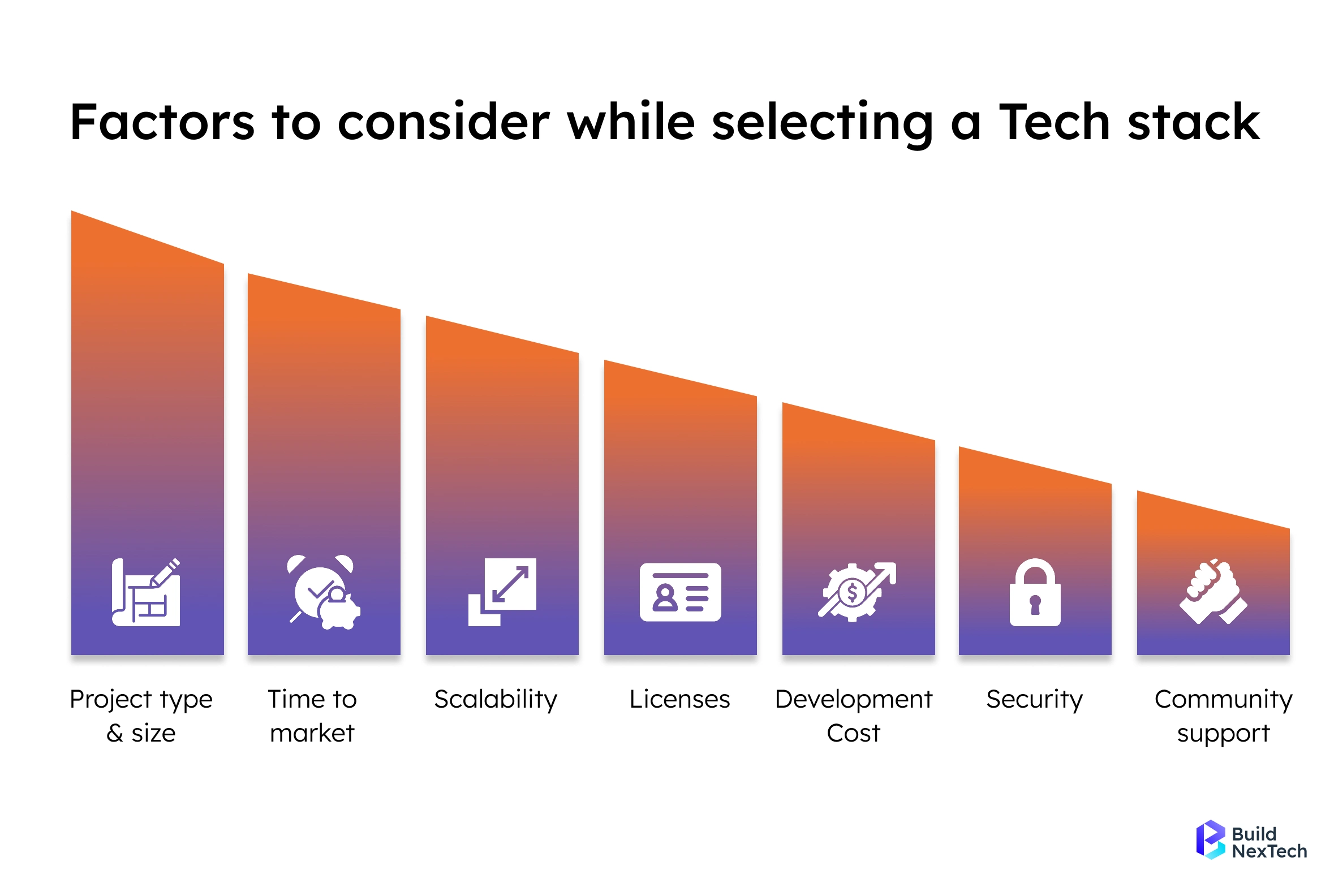
- Application Architecture & Programming Languages - Choose between monolithic or microservices architecture. Select programming languages and frameworks that support stable technology, component reusability, and concurrent users in complex web applications.
- Security & Authentication - Ensure robust web application security using HTTPS, JWT, OAuth, and secure backend APIs to protect data in modern technology stacks and enterprise systems.
- Backend & Frontend Compatibility - Node.js and Express.js, React JS, Angular, or Vue.js should integrate smoothly, supporting real-time applications, interactive web application design, and custom web application development services.
- Deployment & Hosting Infrastructure - Evaluate CI/CD pipelines, cloud platforms like Google Cloud Functions, AWS Lambda, and remote availability for efficient production environment deployment and faster development time.
- Community Support & Ecosystem - A strong ecosystem with reusable libraries, documentation, technical guidance, and modern web development frameworks helps manage project complexity and accelerates web application services delivery.
Conclusion: Building Scalable and Efficient Web Applications
Building scalable and efficient web applications requires selecting the right web development frameworks aligned with business goals. From the MERN stack with React JS to the LAMP stack with the LAMP server, the technology stack directly impacts application performance, reliability, and security, ensuring seamless custom web application development and high-quality web application services.
The choice also depends on the type of software applications, technology & team expertise, project complexity, and concurrent users. Leveraging frameworks like the React JS framework, Node.js, and Express.js, and databases such as Oracle MySQL support robust architecture, secure web application development, and superior user experience across various platforms.
BuildNexTech, a leading software development company based in Hyderabad, provides end-to-end digital solutions, including custom web development services, website development services, enterprise software solutions, progressive web apps, and cloud-based applications. Recognized for excellence in software application development, our team ensures scalable, secure, and high-performance solutions. Trusted by over 150 clients globally, we deliver innovative projects with proven project success, strong client reviews, and unmatched technology & team expertise.
People Also Ask

Is MERN stack good for beginners?
MERN is one of the more beginner-accessible full-stack options because it uses JavaScript across the entire stack — front end (React), back end (Node/Express), and database queries (MongoDB). You only need to learn one language deeply rather than switching between, say, JavaScript and PHP. That said, React has a learning curve of its own, and managing state in larger MERN apps takes time to get right.
MERN vs MEAN — which is better in 2025?
Neither is universally better. MERN uses React on the frontend, which gives you more flexibility and a larger component ecosystem. MEAN uses Angular, which is more opinionated and better suited for large teams that want structure enforced by the framework. If you're building a consumer-facing product with a small team, MERN is typically faster to ship. If you're building a large enterprise app with multiple developers and strict architectural standards, MEAN's structure pays off.
Is LAMP stack still relevant in 2025?
Yes, but with caveats. LAMP powers a huge portion of the internet — WordPress, Drupal, and many legacy enterprise systems run on it. If you're building on top of existing PHP infrastructure or need something well-supported with a low operational overhead, LAMP is still a sound choice. For greenfield projects requiring real-time features or high concurrency, modern stacks like MERN or JAMstack are better starting points.
What tech stack is best for a startup MVP?
For most startups, MERN or MEVN gives the fastest path from idea to working product. Both use JavaScript end-to-end, have large open-source ecosystems, and deploy easily on platforms like Vercel, Render, or AWS. JAMstack is worth considering if the MVP is content-heavy (landing pages, marketing sites, documentation) and doesn't need a custom backend from day one.
Which tech stack do large companies use?
It varies by company and context, but some well-known patterns: Netflix uses Node.js heavily for its API layer; LinkedIn migrated from Ruby on Rails to Node.js for scale; Airbnb uses React on the frontend with a Ruby on Rails backend; many large financial institutions use Java Spring Boot for core banking services. The takeaway is that stack choice at scale is driven by existing infrastructure and team expertise as much as technical capability.


.webp)
.webp)
.webp)

.webp)
.webp)