

Autonomous AI Agents
Supply chains don't break because of single points of failure. They break because no system was watching all the points at once.
Schedule a Technical Scoping Call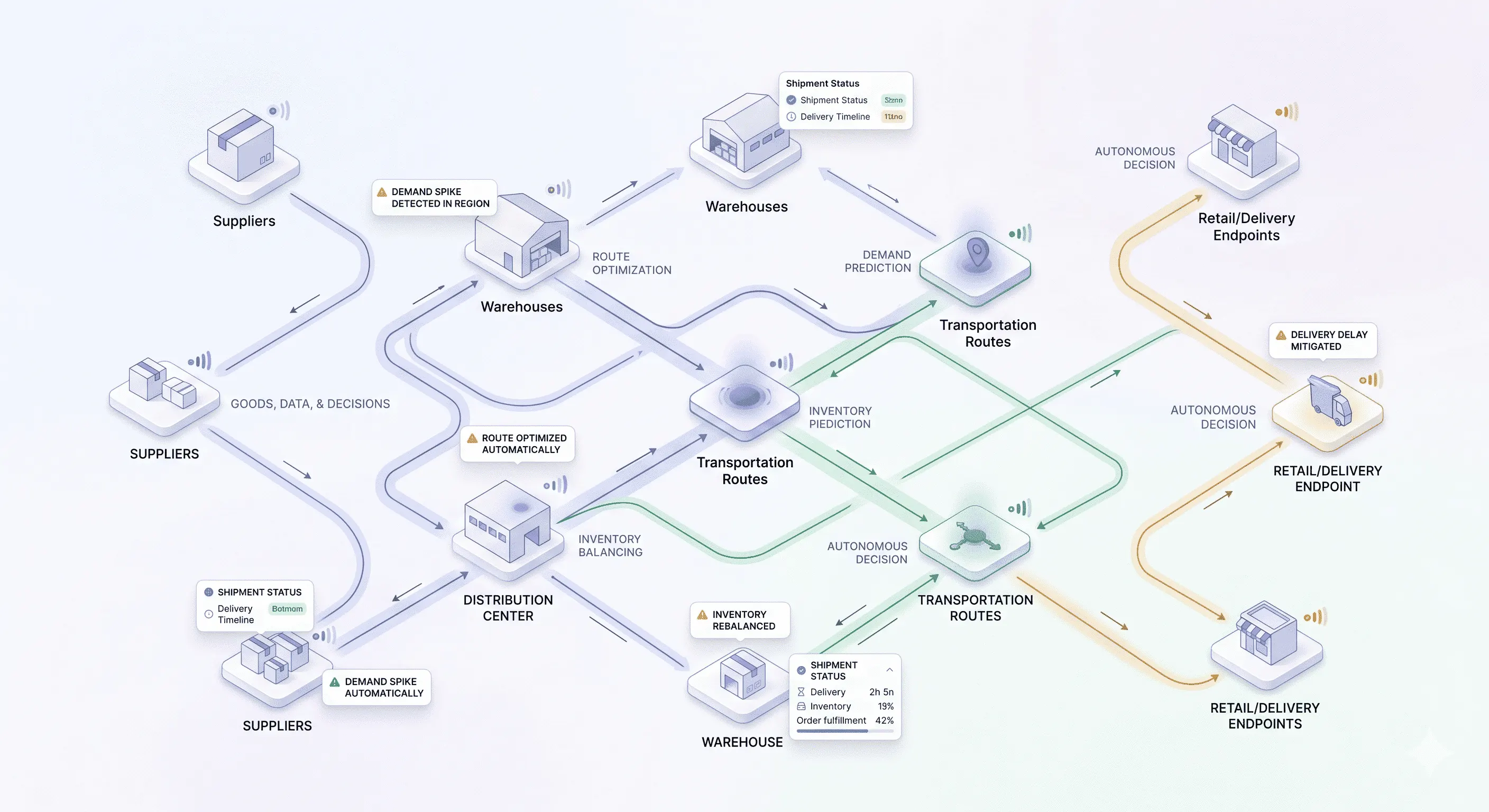
Autonomous AI Agents
Supply chains don't break because of single points of failure. They break because no system was watching all the points at once.
Schedule a Technical Scoping CallModern supply chains run across dozens of vendors, carriers, warehouses, and systems - and most of the coordination between them still happens through email threads, spreadsheet trackers, and phone calls that leave no audit trail and create no shared visibility.
Procurement teams chase purchase order confirmations manually. Logistics coordinators call carriers to get status updates that should arrive automatically. Warehouse managers reconcile inventory counts that diverge from system records without knowing when or why the gap opened. Exceptions - a delayed shipment, a supplier capacity issue, a customs hold - surface too late to reroute without cost and disruption.
The deeper problem is that supply chain workflows generate more data than any team can monitor in real time. Demand signals, inventory levels, supplier lead times, carrier performance, and cost variances are all changing simultaneously - but the decisions that depend on them are made in weekly planning meetings, working from reports that are already out of date by the time they're read.
.webp)
Modern supply chains run across dozens of vendors, carriers, warehouses, and systems - and most of the coordination between them still happens through email threads, spreadsheet trackers, and phone calls that leave no audit trail and create no shared visibility.
Procurement teams chase purchase order confirmations manually. Logistics coordinators call carriers to get status updates that should arrive automatically. Warehouse managers reconcile inventory counts that diverge from system records without knowing when or why the gap opened. Exceptions - a delayed shipment, a supplier capacity issue, a customs hold - surface too late to reroute without cost and disruption.
The deeper problem is that supply chain workflows generate more data than any team can monitor in real time. Demand signals, inventory levels, supplier lead times, carrier performance, and cost variances are all changing simultaneously - but the decisions that depend on them are made in weekly planning meetings, working from reports that are already out of date by the time they're read.
We engineer custom, autonomous supply chain systems where AI agents monitor, decide, and act across your procurement, logistics, and inventory workflows - closing the gap between a supply chain event and an operational response from days to minutes.

Agents ingest real-time data continuously across every node in your supply chain - supplier feeds, carrier APIs, warehouse management systems, demand signals, and cost data.

Anomalies, exceptions, and emerging risks are identified the moment they appear - a supplier delivery delay, an inventory position dropping below reorder threshold, a demand spike diverging from forecast.

Agents evaluate response options against your business rules and cost parameters - identifying the optimal action before a human coordinator would have even seen the alert.
This requires robust AI Integration to connect agent decision logic across your ERP, WMS, TMS, and supplier portals - built on Autonomous AI Agents and Agentic AI infrastructure that can act across systems, not just monitor them. Explore our AI Services.
We reduce operational drag and keep supply chains moving when conditions change.
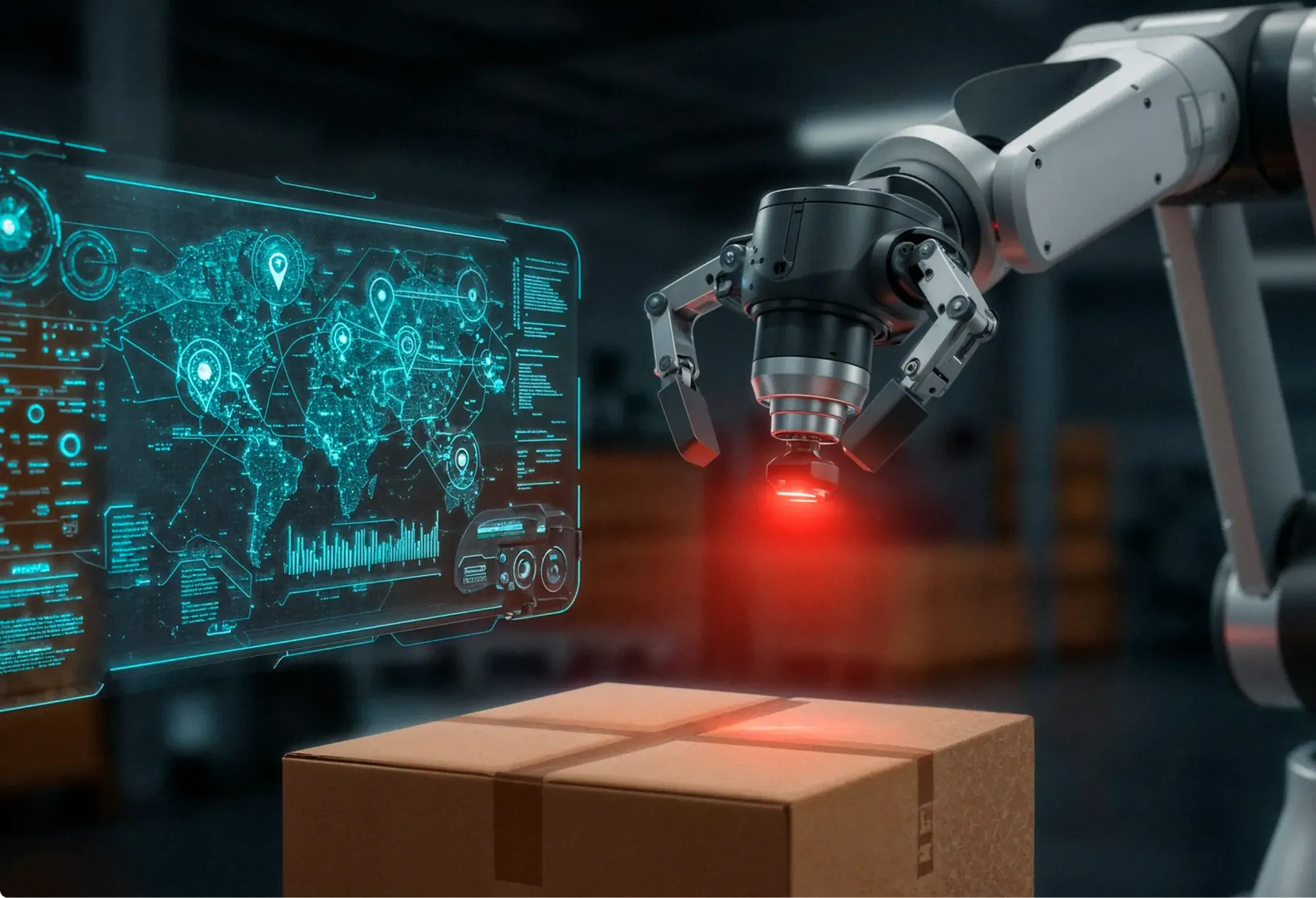
Agentic AI automated routing and exception handling across a logistics platform, improving coordination speed and reducing manual work significantly across operations.
Agentic AI is deployed across the workflows where manual coordination creates the most delay and risk:
Purchase orders generated, sent, and confirmed automatically when inventory positions hit reorder thresholds - with supplier performance scoring informing vendor selection without manual input.
Continuous demand signal processing across sales data, seasonality patterns, and external market indicators - with forecast updates applied to procurement and inventory plans in real time rather than at weekly planning cycles.
Agent-managed inventory positioning across warehouses and distribution centers - reorder points, safety stock levels, and transfer decisions updated dynamically as demand and lead time data shifts. See our Agentic AI Workflow Engine case study.
Automated carrier selection, booking, and rerouting based on real-time capacity, cost, and delivery performance data - exceptions handled before they become customer-facing delays. See our Smart Delivery & Tracking case study.
Automate raw material procurement, production scheduling inputs, and supplier coordination across multi-tier supply networks. See our BI-Powered Manufacturing Efficiency case study.
Manage carrier networks, route optimization, and exception handling across high-throughput shipment volumes without scaling coordinator headcount proportionally. See our Agentic AI Logistics case study.
Keep inventory positions aligned with demand signals across multiple channels and fulfillment locations - reducing both stockouts and overstock positions simultaneously.
Automate cold-chain monitoring, expiry-aware inventory management, and regulatory documentation across complex, compliance-sensitive supply networks.
To build an accurate agentic supply chain automation layer, we require:
.png)
12–24 months of historical procurement records, inventory movements, supplier performance data, and logistics outcomes - including exception logs and resolution actions taken.
API access to your ERP (SAP, Oracle, NetSuite, or equivalent), WMS, TMS, and supplier portal or EDI infrastructure. Carrier API access for real-time shipment tracking where applicable.
All supply chain data is encrypted at rest and in transit. Your agent models, decision logic, and operational data are fully siloed - never shared or used to train systems for other clients.
Off-the-shelf SaaS tools force your data into generic models with escalating per-transaction pricing. BNXT.ai offers
You own the model and IP.
Trained exclusively on your transaction data, not global averages.
Sits natively inside your existing CRM and LOS - no clunky third-party dashboards.

Traditional automation executes fixed rules - if inventory drops below X, trigger a purchase order. Agentic AI evaluates context before acting - considering current supplier lead times, demand forecasts, carrying costs, and alternative sourcing options before deciding whether to trigger an order, how large to make it, and which supplier to place it with. The agent adapts its decisions as conditions change rather than applying a static rule regardless of circumstances.
When a disruption is detected - a delayed shipment, a supplier capacity reduction, a quality hold - the agent evaluates available response options against your business rules and cost parameters before routing a recommendation to the appropriate decision-maker. For well-defined exception types with approved response playbooks, the agent executes autonomously. Novel or high-value disruptions always route to a human with full context and recommended actions attached.
A custom agentic supply chain automation layer typically takes 12 to 16 weeks from data ingestion to live integration, depending on the number of supply chain nodes being connected, the complexity of your ERP and logistics system integrations, and the number of workflow types being automated in the initial deployment.
Yes. We build multi-entity, multi-currency agent logic that applies the correct regulatory, tax, and cost parameters for each jurisdiction in your supply network - so cross-border procurement, customs documentation, and landed cost calculations are handled within the same automated workflow rather than requiring manual intervention at each border.
Every decision the agent makes generates an outcome - a purchase order that arrived on time, a carrier rebook that avoided a delay, a reorder that prevented a stockout. These outcomes feed back into the agent's decision parameters, improving forecast accuracy, refining supplier scoring, and tightening exception response logic the longer the system runs in your environment.

.webp)
.webp)
.webp)

BuildNexTech empowers businesses with expert web development, app development, and cloud migration services.


.webp)

.webp)
.webp)
