

AI Security
Most defects slip through during the window between production and manual review. AI closes that window.
Schedule a Technical Scoping Call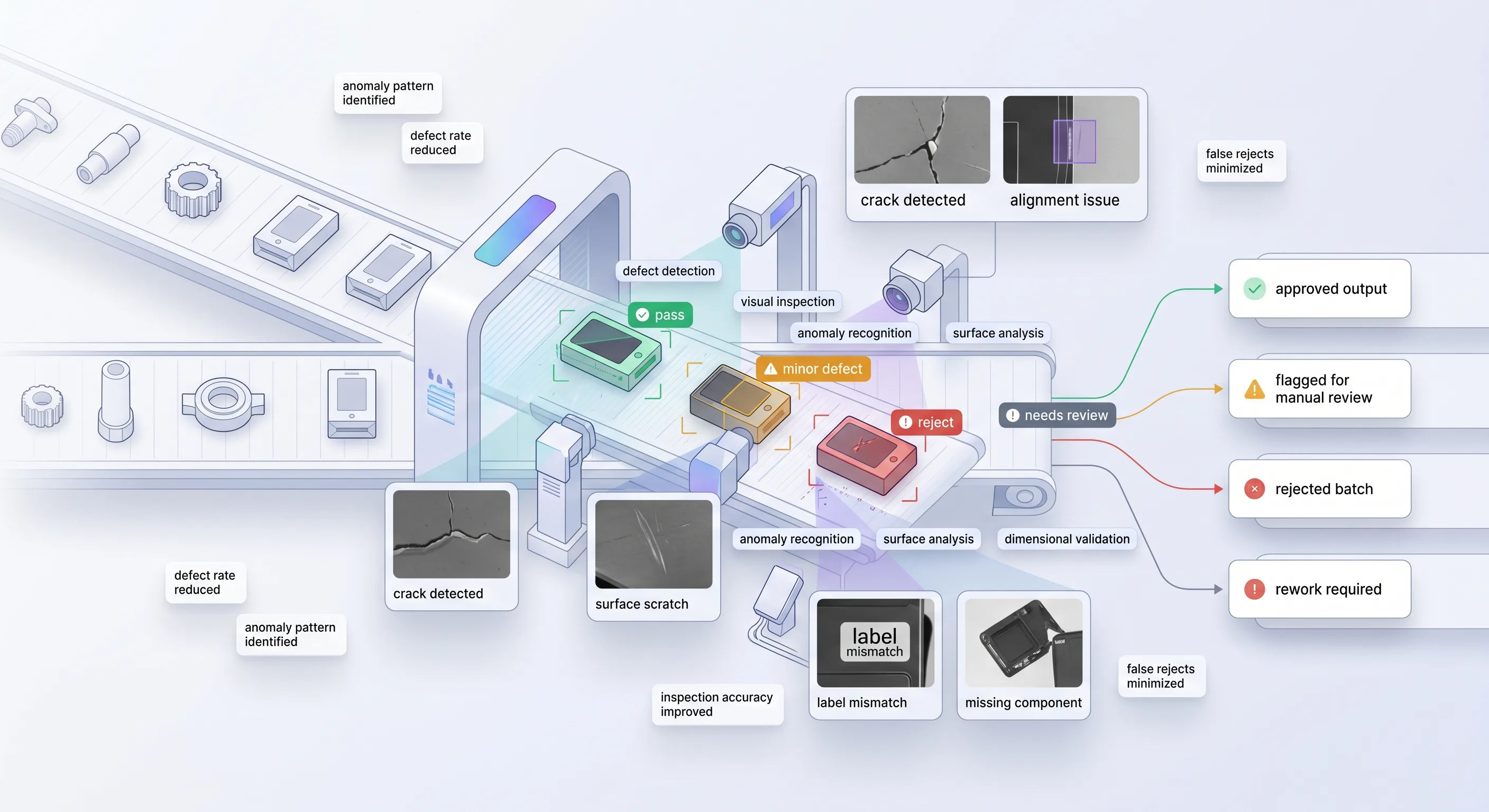
AI Security
Most defects slip through during the window between production and manual review. AI closes that window.
Schedule a Technical Scoping CallRule-based quality inspection trades throughput for operational bottenecks. Static thresholds and manual checklists fail to adapt to new defect patterns, pushing thousands of units into review queues. This operational lag is exactly where defective products reach customers.
Overly rigid inspection criteria also generate high false-rejection rates that waste good product and slow line throughput, while technicians burn out investigating low-confidence alerts. The true cost of inaction isn't just missed defects; it's product liability exposure, rework overhead, and damaged brand trust.
.webp)
Rule-based quality inspection trades throughput for operational bottenecks. Static thresholds and manual checklists fail to adapt to new defect patterns, pushing thousands of units into review queues. This operational lag is exactly where defective products reach customers.
Overly rigid inspection criteria also generate high false-rejection rates that waste good product and slow line throughput, while technicians burn out investigating low-confidence alerts. The true cost of inaction isn't just missed defects; it's product liability exposure, rework overhead, and damaged brand trust.
We engineer custom, automated workflows operating in milliseconds, sitting directly between your production line and your quality management system (QMS).

Real-time image and sensor data ingestion without latency.

Computer vision and ML models assess complex anomalies against your defect baseline.

Dynamic risk scoring is instantly applied per unit or batch.
This requires robust AI Integration& AI Security to connect to legacy MES and QMS infrastructure, often augmented with Agentic AI to autonomously gather defect context before a quality engineer opens the ticket. Explore our AI Services.
We stop defect leakage and accelerate operations.
$1.2M prevented annually in recalls and rework, 55% faster inspection cycles, 40% fewer false rejections. Read Case Study
A custom model learns to identify anomalies across the defect spectrum:
Scratches, dents, discoloration, and contamination on finished goods.
Out-of-tolerance measurements and assembly misalignment.
Missing components, incorrect orientation, or improper fastening.
Identifying process drift patterns before a full batch is compromised.
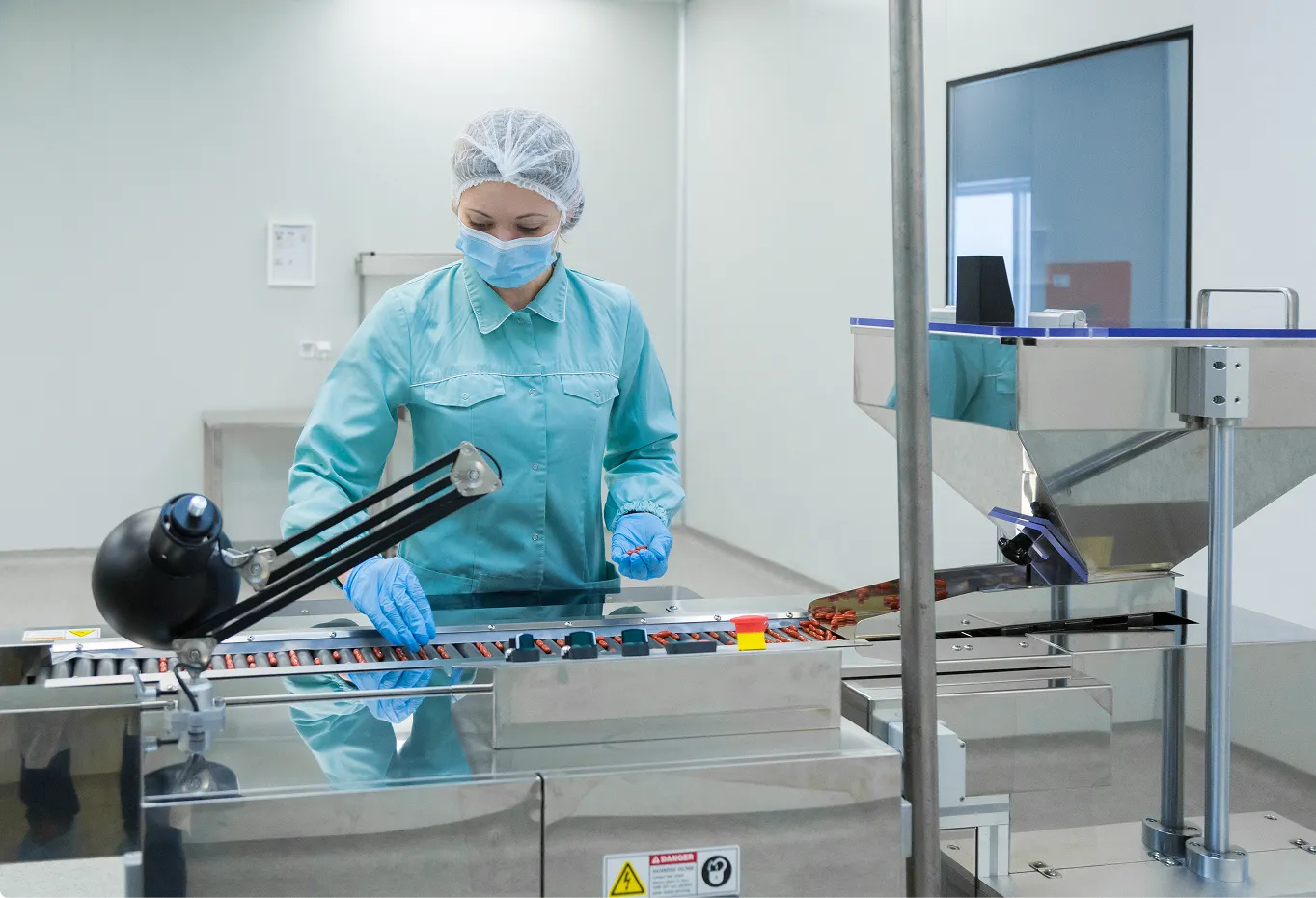
Secure high-throughput production lines with sub-second per-unit inspection latency.
Detect contamination, fill-level variance, and packaging defects prior to distribution.
Flag dosage anomalies and seal integrity failures before packing.
Identify PCB soldering defects, component placement errors, and cosmetic flaws at scale.
To build a highly accurate inspection layer, we require:
.png)
6–12 months of inspection images or sensor logs with labeled defect instances.
API or direct integration with your MES, QMS, or line PLC/SCADA systems.
All data follows strict enterprise standards . Your custom model is siloed - your data is never shared across clients.
Off-the-shelf SaaS tools force your data into generic models with escalating per-transaction pricing. BNXT.ai offers
You own the model and IP.
Trained exclusively on your transaction data, not global averages.
Sits natively inside your existing CRM and LOS - no clunky third-party dashboards.

AI models process hundreds of variables (pixel-level image data, sensor readings, line velocity, environmental conditions) in milliseconds. By scoring these against known defect patterns, the system approves or quarantines units before they advance to the next production stage.
Rule-based systems rely on strict manual thresholds easily bypassed by subtle or novel defect variations. AI is dynamic; it learns hidden relationships between variables, adapting automatically as product specifications or defect patterns evolve.
A custom enterprise model typically takes 8 to 12 weeks from data ingestion to deep MES/QMS integration, depending on data readiness and infrastructure complexity.
Yes. Because machine learning evaluates the entire inspection context rather than triggering on a single strict rule, it accurately differentiates between true defects and acceptable natural variation in materials or finishes.
Yes. We engineer secure API middleware that allows modern machine learning models to communicate seamlessly with legacy PLCs, SCADA systems, and on-premise MES platforms without introducing latency.

.webp)
.webp)
.webp)

BuildNexTech empowers businesses with expert web development, app development, and cloud migration services.




.webp)
.webp)
