

AI Integration
Most reporting errors and compliance risks happen in the window between clinical data capture and manual documentation. AI closes that window.
Schedule a Technical Scoping Call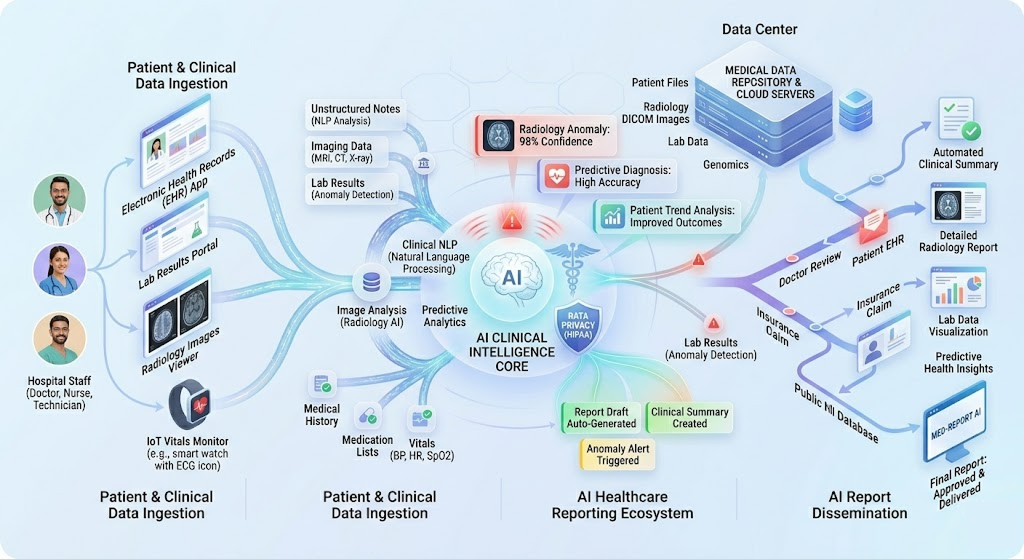
AI Integration
Most reporting errors and compliance risks happen in the window between clinical data capture and manual documentation. AI closes that window.
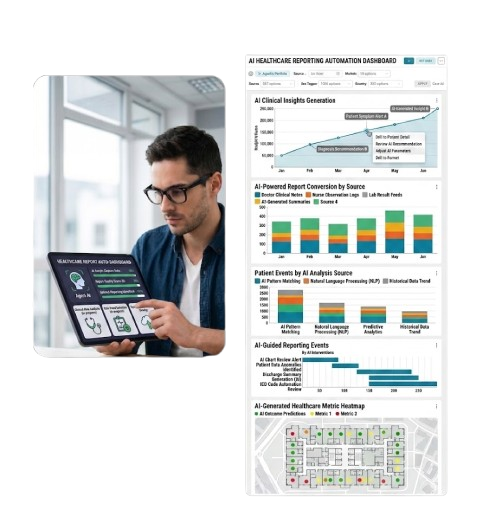
Schedule a Technical Scoping CallRule-based healthcare reporting trades accuracy for operational drag. Static templates and manual data entry workflows fail to adapt to evolving regulatory requirements and cross-system data inconsistencies, pushing thousands of reports into manual review queues. This operational lag is exactly where compliance violations, reimbursement delays, and patient safety risks surface.
Overly manual reporting processes also generate high error rates that trigger costly audits, payer clawbacks, and regulatory penalties, while clinical and administrative staff burn out reconciling data across disconnected EHR, billing, and quality management systems. The true cost of inaction isn't just a delayed report; it's lost reimbursement revenue, regulatory exposure, and clinical bandwidth drained by administrative burden instead of patient care.
Rule-based healthcare reporting trades accuracy for operational drag. Static templates and manual data entry workflows fail to adapt to evolving regulatory requirements and cross-system data inconsistencies, pushing thousands of reports into manual review queues. This operational lag is exactly where compliance violations, reimbursement delays, and patient safety risks surface.
Overly manual reporting processes also generate high error rates that trigger costly audits, payer clawbacks, and regulatory penalties, while clinical and administrative staff burn out reconciling data across disconnected EHR, billing, and quality management systems. The true cost of inaction isn't just a delayed report; it's lost reimbursement revenue, regulatory exposure, and clinical bandwidth drained by administrative burden instead of patient care.
We engineer custom, automated workflows operating continuously, sitting directly between your clinical data systems and your regulatory, payer, and quality reporting obligations.
Real-time and batch ingestion of clinical, operational, and financial data across EHR, billing, and quality management systems without latency.
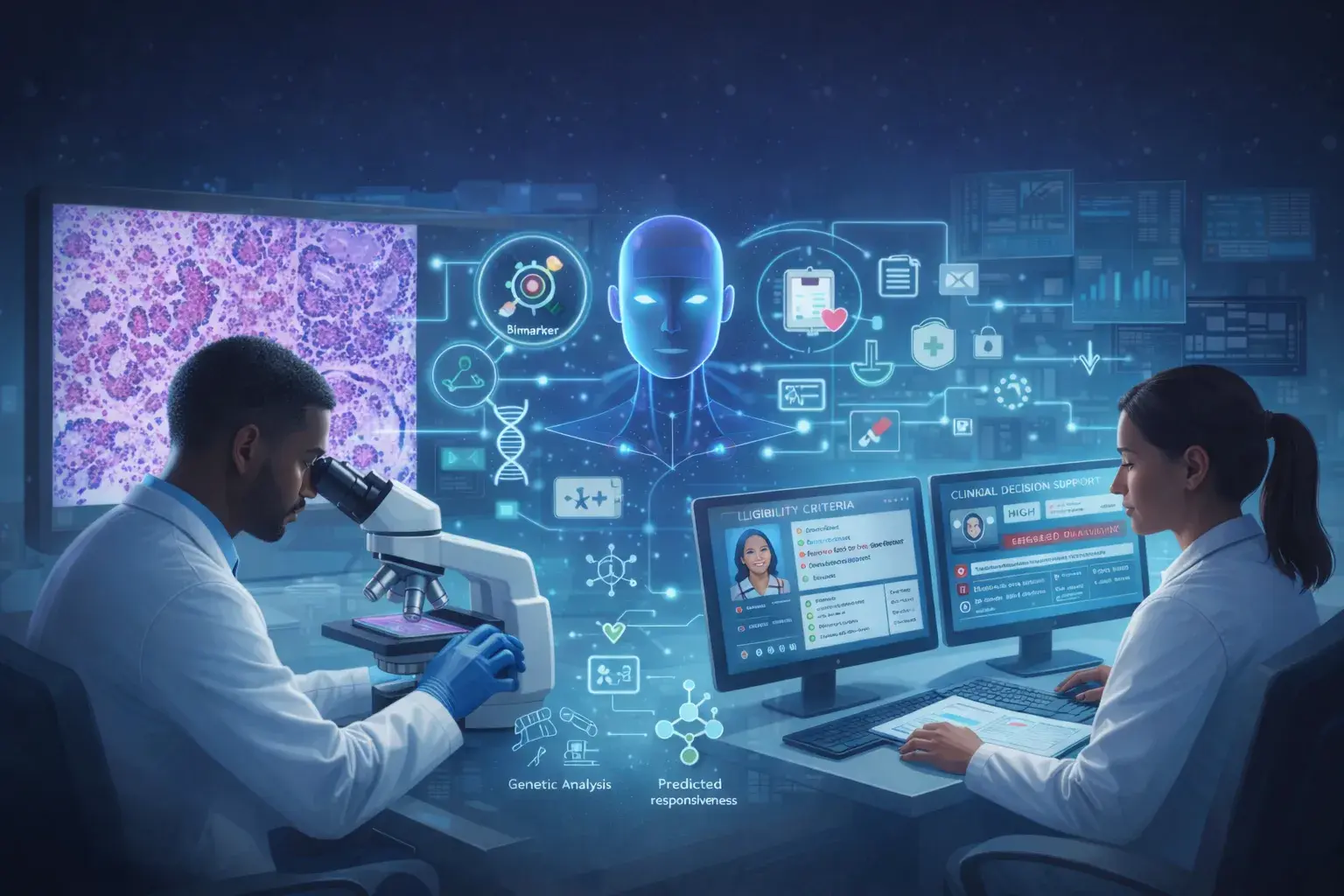
ML models evaluate data completeness, coding accuracy, regulatory compliance, and anomaly signals against your historical reporting baseline.
Dynamic accuracy and compliance risk scoring is instantly applied per report, submission, or data record.
This requires robust AI Integration & AI Security to connect to your EHR, billing, and quality management infrastructure, often augmented with Agentic AI to autonomously gather supporting clinical documentation and cross-system data before a compliance officer opens the case. Explore our AI Services.
We eliminate reporting errors and accelerate reimbursement cycles.
A custom model learns to identify risk and inefficiency across the full healthcare reporting spectrum:
Detecting incomplete or inconsistent clinical notes that trigger claim denials or compliance flags before submission.
Flagging ICD-10, CPT, and HCPCS coding errors and upcoding risks before they reach the payer or auditor.
Automating CMS quality measure reporting, HEDIS submissions, and value-based care performance tracking.
Identifying billing patterns that deviate from historical norms and signal audit risk or reimbursement leakage.
Automate high-volume inpatient and outpatient reporting across clinical, financial, and regulatory obligations at enterprise scale.
Reduce administrative burden on clinical staff by automating quality measure tracking and payer reporting workflows.
Accelerate risk adjustment reporting, utilization management documentation, and CMS compliance submissions.
Automate MDS assessments, quality indicator reporting, and state regulatory submissions without adding administrative headcount.
To build a highly accurate healthcare reporting layer, we require:
.png)
12–24 months of historical clinical, billing, and quality reporting records, including audit outcomes, denial reasons, and regulatory submission history.
API or HL7 FHIR integration with your EHR (Epic, Cerner, Meditech), billing system, and quality management platform.
All data follows strict HIPAA-compliant enterprise standards. Your custom model is siloed - your patient and operational data is never shared across clients.
Off-the-shelf SaaS tools force your data into generic models with escalating per-transaction pricing. BNXT.ai offers
You own the model and IP.
Trained exclusively on your transaction data, not global averages.
Sits natively inside your existing CRM and LOS - no clunky third-party dashboards.

AI models evaluate hundreds of variables - clinical documentation completeness, coding accuracy, payer-specific requirements, regulatory deadlines, and historical denial patterns - continuously. By scoring these against your reporting history, the system completes, validates, and routes reports before errors compound into denials, audits, or compliance violations.
Manual reporting relies on staff to reconcile data across disconnected systems, apply coding rules consistently, and catch errors before submission - a process that is slow, expensive, and inherently error-prone at scale. AI is systematic; it applies your specific payer rules, coding logic, and compliance requirements consistently across every record, every time.
A custom enterprise model typically takes 8 to 12 weeks from data ingestion to full EHR and billing system integration, depending on data readiness, the number of source systems, and the complexity of your regulatory reporting obligations.
Yes. Because machine learning evaluates the full clinical and billing record - cross-referencing documentation against payer-specific coverage rules and coding requirements - it catches denial-triggering gaps before submission, not after the revenue is already lost.
Yes. We engineer secure HL7 FHIR and API middleware that allows modern machine learning models to communicate seamlessly with legacy EHR platforms, on-premise billing systems, and third-party quality management tools without disrupting existing clinical workflows.

.webp)
.webp)
.webp)

BuildNexTech empowers businesses with expert web development, app development, and cloud migration services.




.webp)
.webp)
