

AI Security
Most wasted ad spend happens in the window between a campaign going live and an analyst catching underperformance. AI closes that window.
Schedule a Technical Scoping Call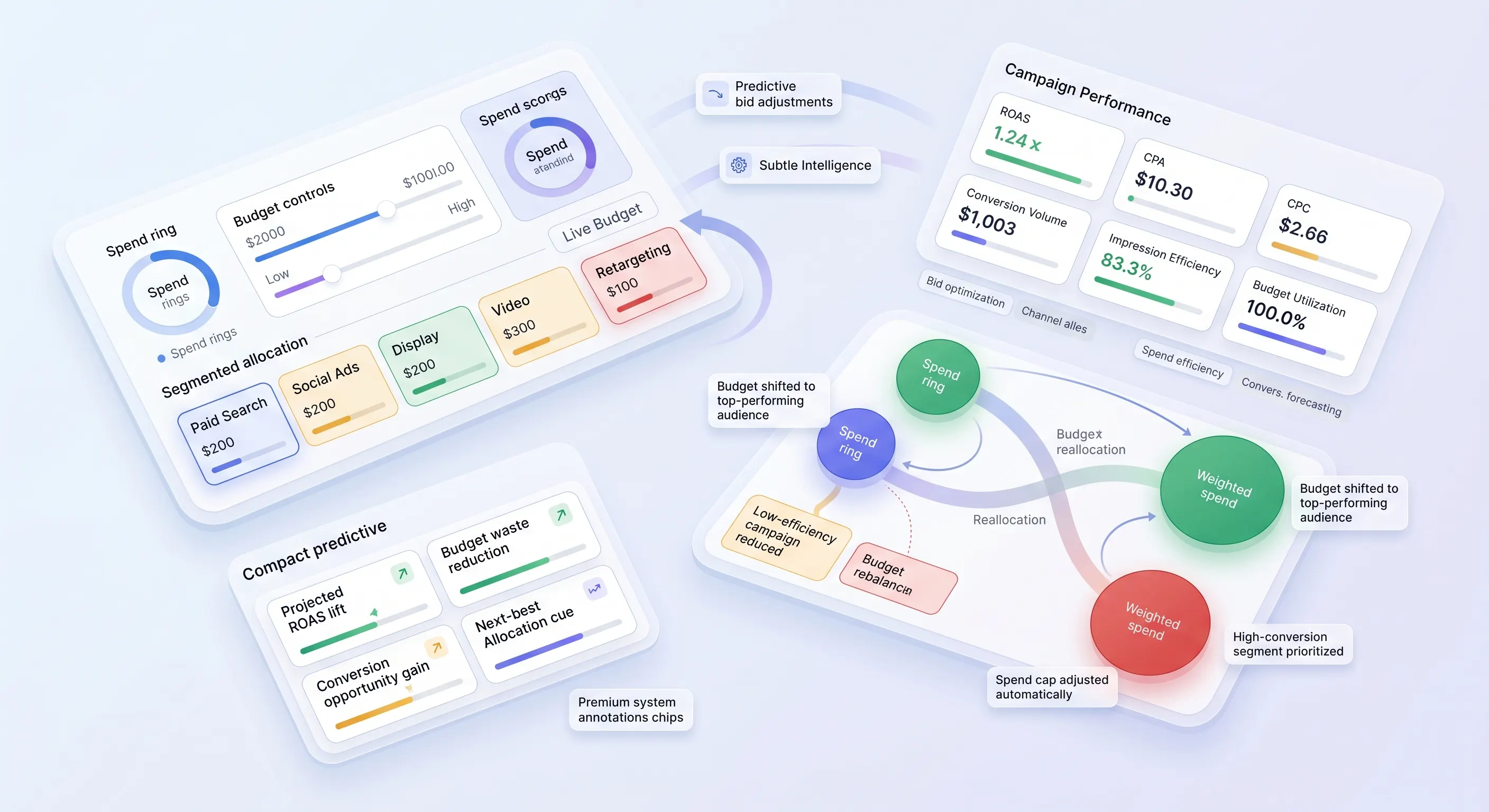
AI Security
Most wasted ad spend happens in the window between a campaign going live and an analyst catching underperformance. AI closes that window.
Schedule a Technical Scoping CallRule-based campaign management trades performance for operational drag. Static bid rules and manual budget caps fail to adapt to shifting auction dynamics, audience behavior, and creative fatigue, pushing thousands of ad dollars into underperforming placements before anyone notices. This optimization lag is exactly where budget leaks and competitor gains happen.
Overly rigid campaign structures also generate high waste rates that burn media budgets on the wrong audiences at the wrong times, while performance marketers burn out manually adjusting bids, budgets, and creative rotations across dozens of campaigns simultaneously. The true cost of inaction isn't just wasted impressions; it's missed revenue, inflated CPAs, and a competitor capturing the demand you paid to generate.
.webp)
Rule-based campaign management trades performance for operational drag. Static bid rules and manual budget caps fail to adapt to shifting auction dynamics, audience behavior, and creative fatigue, pushing thousands of ad dollars into underperforming placements before anyone notices. This optimization lag is exactly where budget leaks and competitor gains happen.
Overly rigid campaign structures also generate high waste rates that burn media budgets on the wrong audiences at the wrong times, while performance marketers burn out manually adjusting bids, budgets, and creative rotations across dozens of campaigns simultaneously. The true cost of inaction isn't just wasted impressions; it's missed revenue, inflated CPAs, and a competitor capturing the demand you paid to generate.
We engineer custom, automated workflows operating in real time, sitting directly between your ad platforms and your revenue attribution data - making optimization decisions faster than any human team can react.

Real-time ingestion of campaign performance data across all paid channels - search, social, programmatic, and retail media - without latency.

ML models evaluate conversion signals, audience quality, creative performance, and auction dynamics against your historical revenue baseline.

Dynamic efficiency scoring is instantly applied per campaign, ad set, keyword, and creative asset.
This requires robust AI Integration & AI Security to connect to your ad platforms, CRM, and revenue attribution infrastructure, often augmented with Agentic AI to autonomously pull competitive intelligence and audience insights before your media team opens the dashboard. Explore our AI Services.
We eliminate wasted spend and accelerate revenue growth.

$1.9M in recovered media efficiency annually, 55% improvement in pipeline-attributed ROAS, 43% reduction in wasted spend on non-converting segments.
A custom model learns to identify waste and opportunity across the full paid media spectrum:
Overpaying in auctions where conversion probability is low based on user, time, device, and contextual signals.
Spend concentrated in underperforming campaigns while high-intent segments hit daily caps and go dark.
Detecting frequency-driven performance decay before it inflates CPCs and collapses CTR.
Identifying campaigns competing against each other in the same auction, inflating your own costs.
Maximize ROAS across Google Shopping, Meta, and retail media networks with SKU-level bid optimization and real-time inventory signal integration.
Optimize pipeline quality over raw lead volume - scoring inbound leads by revenue potential and adjusting spend toward the segments that actually close.
React to demand signals, competitor pricing shifts, and booking window patterns faster than manual campaign management allows.
Navigate strict ad policy environments while maximizing compliant reach and conversion efficiency across search and display.
To build a highly accurate ad spend optimization layer, we require:
.png)
6–12 months of campaign performance history across all active paid channels, linked to downstream conversion and revenue outcomes.
API connections to your ad platforms (Google Ads, Meta, LinkedIn, programmatic DSPs), CRM, and revenue attribution or analytics stack.
All data follows strict enterprise standards. Your custom model is siloed - your performance data and audience intelligence are never shared across clients.
Off-the-shelf SaaS tools force your data into generic models with escalating per-transaction pricing. BNXT.ai offers
You own the model and IP.
Trained exclusively on your transaction data, not global averages.
Sits natively inside your existing CRM and LOS - no clunky third-party dashboards.

AI models evaluate hundreds of variables - auction competitiveness, user intent signals, creative performance, time-of-day conversion patterns, device type, and CRM audience quality - continuously. By scoring these against your historical revenue outcomes, the system adjusts bids and reallocates budgets before underperformance compounds into significant waste.
Platform-native tools like Google Smart Bidding optimize for the signals and objectives the platform can observe - which are inherently biased toward maximizing your spend on their inventory. A custom AI model optimizes for your actual business outcome: pipeline, revenue, or LTV - pulling signals from your CRM and attribution stack that the platform never sees.
A custom enterprise model typically takes 8 to 12 weeks from data ingestion to full cross-channel optimization deployment, depending on the number of platforms, data readiness, and attribution infrastructure complexity.
Yes. Because machine learning identifies which specific signals correlate with your actual revenue outcomes - not just platform-reported conversions - it reallocates budget away from low-quality segments while protecting and scaling the audiences that drive real business results.
Yes. We engineer a unified optimization layer that ingests performance data from all active channels - search, social, programmatic, and retail media - and makes cross-channel budget allocation decisions based on marginal return, rather than managing each platform in isolation.

.webp)
.webp)
.webp)

BuildNexTech empowers businesses with expert web development, app development, and cloud migration services.




.webp)
.webp)
